
Indian Breakfast Recipes Straight from Grandma’s Kitchen
Discover easy Indian breakfast recipes like poha, upma, idli, and aloo paratha passed down from grandmas. These simple, tasty dishes use everyday ingredients, take under 30 minutes, and help beginners create warm, nourishing meals that bring family flavors to your table every morning.
Starting your day with a good breakfast sets the tone for everything. In many Indian homes, grandmas have perfected simple recipes that taste amazing and fill you with energy. These dishes use basic pantry staples and gentle spices, making them perfect for new cooks who want real results without stress.
Whether you are a busy parent, a student rushing to class, or someone new to the kitchen, these recipes will help you feel confident. You will learn step-by-step methods that grandmas swear by — no fancy tools needed. Get ready for soft idlis, tangy poha, fluffy parathas, and more. Let’s bring those comforting morning aromas back into your home.
Why Grandma’s Indian Breakfast Recipes Still Win Hearts
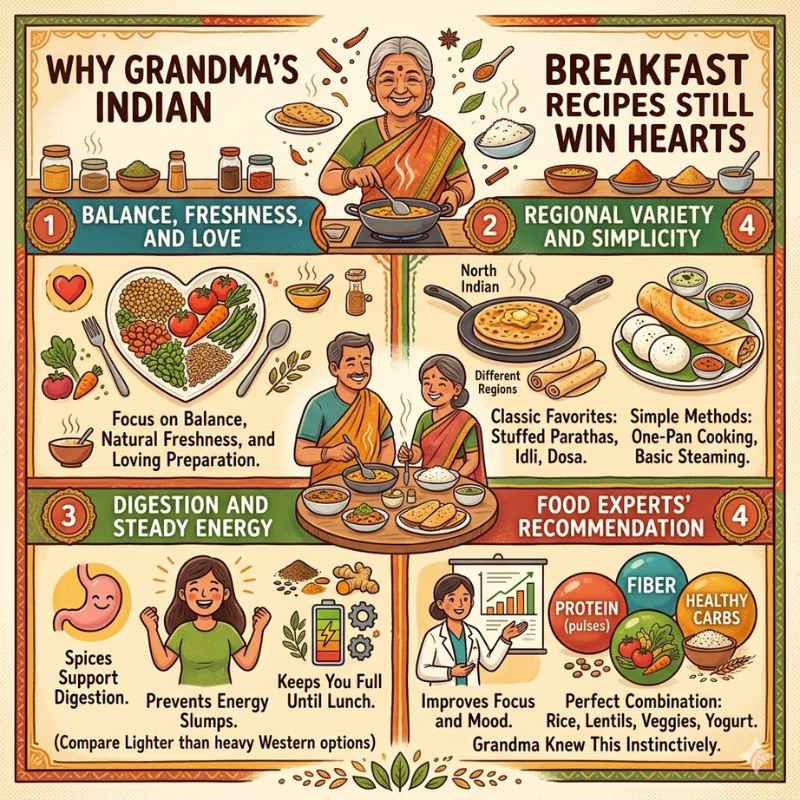
Grandma’s recipes focus on balance, freshness, and love. They use whole grains, lentils, vegetables, and spices that support digestion and give steady energy. Many traditional Indian breakfasts are lighter than heavy Western options yet keep you full until lunch.
These dishes come from different regions of India. North Indian kitchens love stuffed parathas, while South Indian homes start the day with steamed idli or dosa. The beauty lies in their simplicity — most need just one pan or basic steaming.
According to food experts, starting the day with protein, fiber, and healthy carbs improves focus and mood. Grandma knew this instinctively by combining rice, lentils, veggies, and yogurt.
Essential Kitchen Tips Before You Start
Always wash your hands and surfaces before cooking. Keep raw ingredients separate from ready-to-eat foods. Cook thoroughly and store leftovers in the fridge within two hours. For safe cooking temperatures, check guidelines from trusted sources like the USDA Food Safety Basics.
Use fresh ingredients when possible. Keep spices in airtight containers. Taste as you go — that’s how grandmas cook!
1. Classic Kanda Batata Poha (Flattened Rice Breakfast)
Poha is a light, fluffy Maharashtra-style breakfast loved across India. It cooks in 15 minutes and feels comforting like a warm hug.
Ingredients (Serves 2)
| Item | Quantity |
|---|---|
| Thick poha (flattened rice) | 2 cups |
| Onion (finely chopped) | 1 medium |
| Potato (small cubes) | 1 small |
| Green chilies | 2 |
| Curry leaves | 1 sprig |
| Mustard seeds | 1 tsp |
| Turmeric powder | ½ tsp |
| Lemon juice | 1 tbsp |
| Peanuts | 2 tbsp |
| Oil | 2 tbsp |
| Salt | To taste |
Step-by-Step Instructions
- Rinse poha gently in a colander under running water for 1-2 minutes. Drain and set aside for 5 minutes to soften.
- Heat oil in a pan. Add mustard seeds and let them crackle.
- Add peanuts and fry until golden. Then add curry leaves, green chilies, and chopped onion.
- Sauté onions until soft. Add potato cubes and a splash of water. Cover and cook until potatoes soften (about 5 minutes).
- Stir in turmeric and salt.
- Add the drained poha and mix gently. Cook on low heat for 3-4 minutes.
- Turn off heat, add lemon juice, and garnish with fresh coriander.
Serve hot with a cup of chai. Add grated coconut or sev for extra crunch on special days.
Nutrition Snapshot (Approximate per serving)
| Nutrient | Value |
|---|---|
| Calories | 280 |
| Protein | 6g |
| Fiber | 4g |
2. Vegetable Rava Upma (Semolina Breakfast)
Upma is a South Indian favorite that’s quick, wholesome, and great for using leftover vegetables.
Ingredients (Serves 3)
- 1 cup rava (semolina)
- 2 cups water
- 1 onion, chopped
- 1 carrot, peas, beans (mixed veggies, 1 cup)
- Green chilies, ginger, curry leaves
- Mustard seeds, urad dal
- 2 tbsp oil or ghee
- Salt to taste
Steps:
- Dry roast rava on low flame until aromatic (5 minutes). Keep aside.
- Heat oil, temper mustard seeds, urad dal, curry leaves, chilies, and ginger.
- Add onions and sauté, then add mixed vegetables. Cook for 3 minutes.
- Pour 2 cups water, add salt, and bring to boil.
- Lower heat and slowly add roasted rava while stirring continuously.
- Cover and cook on low for 5-7 minutes until fluffy.
Finish with a squeeze of lemon and serve with coconut chutney.
3. Soft Idli with Coconut Chutney
Idli is steamed, fluffy, and one of the healthiest Indian breakfast options. It is naturally gluten-free and probiotic-rich.
You can use ready-made batter for beginners or make your own with rice and urad dal (soak 3:1 ratio overnight, grind, and ferment 8 hours).
Quick Steps for Steaming Idli
- Grease idli molds lightly with oil.
- Fill each mold ¾ with batter.
- Steam in idli cooker or regular steamer for 10-12 minutes.
- Check doneness with a toothpick.
- Serve with sambar and coconut chutney.
Tip: Add grated carrot or chopped spinach to batter for colorful, nutritious variations.
4. Aloo Paratha (Stuffed Potato Flatbread)
This North Indian classic is filling and perfect for weekends.
Simple Filling and Steps
- Boil and mash 2 potatoes. Mix with salt, cumin, chili powder, coriander, and garam masala.
- Make whole wheat dough with 2 cups atta, water, and pinch of salt.
- Roll small dough ball, place potato filling, seal, and roll gently into circle.
- Cook on hot tawa with ghee until golden spots appear on both sides.
Serve with yogurt, pickle, or butter.
Comparison of Popular Grandma Breakfast Recipes
| Recipe | Time | Best For | Key Benefit |
|---|---|---|---|
| Poha | 15 min | Busy mornings | Light & quick energy |
| Upma | 20 min | Vegetable lovers | High fiber |
| Idli | 12 min (steaming) | Light eaters | Gut-friendly |
| Aloo Paratha | 30 min | Hearty appetite | Satisfying & filling |
Creative Variations to Try
- Add boiled moong dal to poha for extra protein.
- Make masala upma with tomatoes and pav bhaji masala.
- Try ragi idli for iron-rich twist.
- Stuff paratha with paneer or cauliflower.
These small changes keep breakfast exciting while staying true to grandma’s wisdom of using what’s available at home.
Common Beginner Mistakes and How to Avoid Them
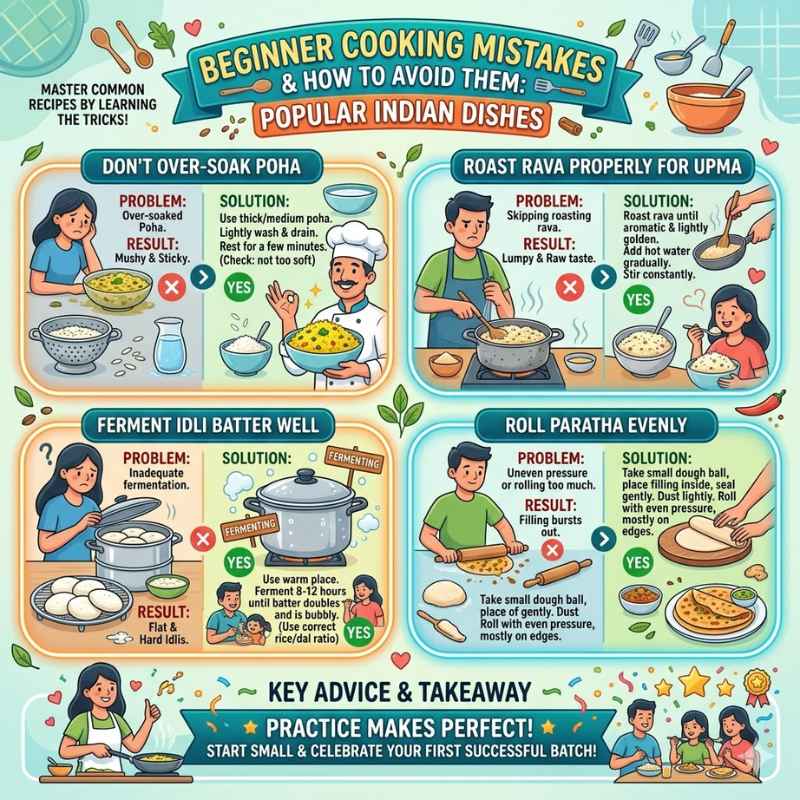
Don’t over-soak poha or it turns mushy. Roast rava properly to avoid lumps in upma. Ferment idli batter well for soft texture. Roll paratha evenly so filling doesn’t come out.
Practice makes perfect. Start small and celebrate your first successful batch!
FAQ
1. What makes these recipes beginner-friendly?
They use simple steps, common Indian pantry items, and need no special equipment. Clear measurements and tips build your confidence quickly.
2. Can I make these recipes in under 20 minutes?
Yes! Poha and instant rava idli or upma are ready in 15-20 minutes. Pre-made batter or roasted rava saves time.
3. Are these breakfasts healthy?
They balance carbs, protein from lentils, and vegetables. They provide sustained energy and are lighter than many processed options.
4. How do I store leftover idli or poha?
Refrigerate in airtight containers. Reheat poha in pan with sprinkle of water. Steam idli again for best texture.
5. What if I don’t have an idli steamer?
Use any steamer or pressure cooker (without whistle) with a stand. Small stainless steel plates or katoris also work.
6. Can I make these recipes vegan?
Most are naturally vegan. Use oil instead of ghee in paratha and skip yogurt sides or use plant-based alternatives.
7. How can I add more protein?
Add sprouts, roasted peanuts, paneer, or serve with dal and yogurt. Besan chilla is another high-protein option.
Conclusion
Cooking Indian breakfast recipes from grandma’s kitchen is more than just making food — it’s about creating warm memories and caring for your body with love. These dishes prove that you don’t need to be an expert cook to serve delicious, satisfying meals.
Start with one recipe this week. Maybe tomorrow’s poha or weekend aloo paratha. Taste the joy of homemade food and watch your kitchen confidence grow. Your family will thank you for bringing these timeless flavors home.
Happy cooking! May your mornings be filled with good food, big smiles, and the sweet aroma of spices. From my heart to your kitchen — enjoy every bite.