High Protein Low Calorie Breakfast For Weight Loss
A high protein, low calorie breakfast helps you feel full longer, reduces overall calorie intake, and supports muscle mass during weight loss. It provides sustained energy and can prevent mid-morning cravings, making healthy eating easier throughout the day.
The Power of Protein in the Morning
Let’s dive into why protein is your morning best friend when you’re aiming for weight loss. It’s more than just building muscles. Protein has a powerful effect on your body and your appetite.
What is a High Protein, Low Calorie Breakfast?
Simply put, it’s a breakfast that gives you a good amount of protein. At the same time, it doesn’t pack too many calories. This means you feel full and satisfied.
You also give your body the building blocks it needs. For weight loss, this combination is key. It helps you eat less later in the day.
Why Protein Makes You Feel Full
Protein works on your hunger hormones. It tells your brain you’re full. This feeling lasts longer than it does with carbs or fats.
Think of it like this: protein takes longer to digest. This means your stomach stays fuller for a longer time. Studies show that people who eat a high protein breakfast tend to eat fewer calories throughout the day.
This is a big win for weight loss.
Protein and Metabolism
Your body uses energy to digest food. This is called the thermic effect of food. Protein has a higher thermic effect than carbs or fats.
This means your body burns more calories breaking down protein. So, eating protein can slightly boost your metabolism. Over time, this small boost adds up.
It helps your body burn more calories even at rest.
Muscle Preservation During Weight Loss
When you lose weight, you don’t want to lose muscle. Muscle helps burn calories. Protein is essential for building and maintaining muscle.
Eating enough protein while in a calorie deficit helps protect your muscle mass. This is vital for keeping your metabolism high. It also helps you look more toned as you lose fat.

My Own Breakfast Battle: A Real Story
I remember one particularly tough week when I was trying to shed a few extra pounds. My go-to breakfast was a couple of slices of toast with jam. It tasted good, sure.
But by 9:30 AM, I’d be staring longingly at the office vending machine. My stomach would rumble like a tiny earthquake. I felt tired and unfocused.
One morning, I saw an article about protein at breakfast. I was skeptical. Could a simple change like scrambled eggs instead of toast really make that much difference?
That day, I made a quick omelet with spinach and a sprinkle of cheese. The difference was amazing. I felt solid, not stuffed, but satisfied.
I didn’t even think about snacks until lunch. It was a small change, but it felt like a huge unlock for my weight loss journey. That’s when I knew I had to share this.
Protein Power-Ups: Quick Breakfast Swaps
Instead of: Sugary Cereal
Try: Greek Yogurt with Berries
Instead of: Pastries or Muffins
Try: Scrambled Eggs with Veggies
Instead of: White Toast with Butter
Try: Cottage Cheese with Fruit
Instead of: Juice and a Donut
Try: Protein Smoothie
Delicious High Protein, Low Calorie Breakfast Ideas
Now for the fun part! Let’s explore some tasty meals that fit the bill. These are simple to make and use common ingredients.
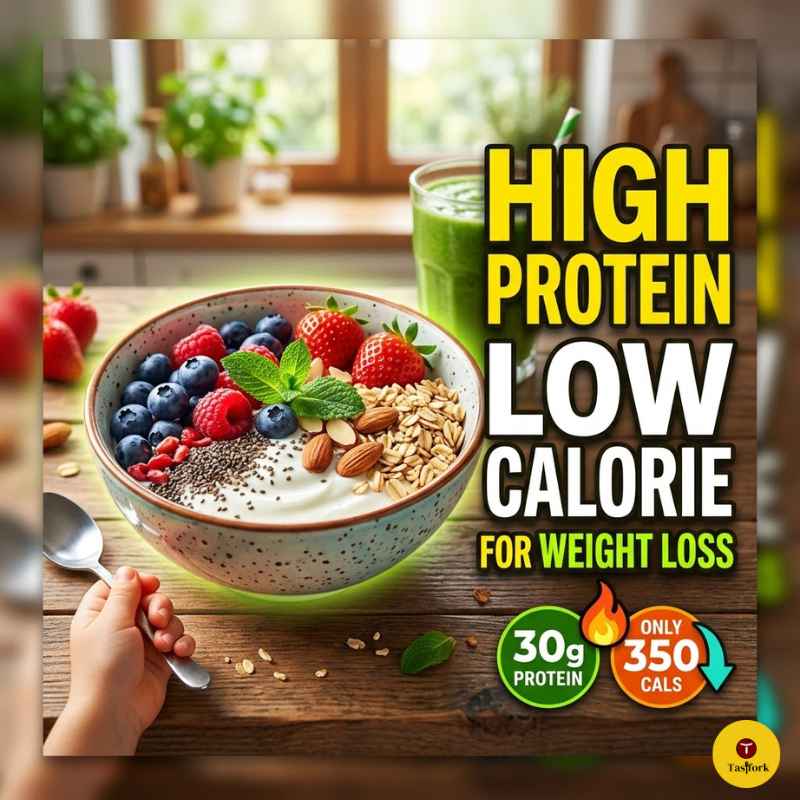
1. Greek Yogurt Parfait with Berries and Nuts
This is a classic for a reason. It’s quick, customizable, and packed with protein.
- Ingredients: Plain non-fat Greek yogurt, mixed berries (fresh or frozen), a small handful of almonds or walnuts, a sprinkle of chia seeds.
- How to make it: Layer the yogurt, berries, and nuts in a glass or bowl. Add chia seeds on top.
- Why it works: Greek yogurt is very high in protein. Berries add fiber and antioxidants. Nuts provide healthy fats and a bit more protein.
- Tips: You can add a tiny drizzle of honey if you need a touch of sweetness. Avoid pre-sweetened yogurts; they have extra sugar and calories.
2. Scrambled Eggs with Spinach and Feta
Eggs are a breakfast champion. They’re full of protein and nutrients.
- Ingredients: 2-3 large eggs, a handful of fresh spinach, 1 oz crumbled feta cheese, salt, pepper.
- How to make it: Whisk eggs with salt and pepper. Wilt spinach in a non-stick pan. Pour in eggs and scramble. Add feta cheese towards the end.
- Why it works: Eggs are a complete protein source. Spinach adds volume and nutrients without many calories. Feta gives great flavor.
- Tips: You can add other low-calorie veggies like mushrooms or bell peppers. Serve with a small side of whole-wheat toast if desired, but keep the portion small.
3. Cottage Cheese with Pineapple and Walnuts
Don’t dismiss cottage cheese! It’s a protein powerhouse.
- Ingredients: 1 cup low-fat cottage cheese, ½ cup diced pineapple (fresh or canned in juice), 1 tablespoon chopped walnuts.
- How to make it: Mix cottage cheese and pineapple. Top with walnuts.
- Why it works: Cottage cheese is incredibly protein-dense. Pineapple adds natural sweetness and enzymes. Walnuts offer crunch and healthy fats.
- Tips: If pineapple is too sweet, try peaches or melon. A sprinkle of cinnamon can also add flavor without sugar.
4. Protein Smoothie with Spinach and Banana
Smoothies are great for busy mornings. Just blend and go!
- Ingredients: 1 scoop of your favorite protein powder (whey, plant-based), 1 cup unsweetened almond milk, ½ banana, a large handful of spinach, 1 tablespoon chia seeds or flaxseeds.
- How to make it: Combine all ingredients in a blender. Blend until smooth.
- Why it works: Protein powder is a concentrated protein source. Spinach is almost tasteless when blended. Banana adds creaminess and natural sweetness. Seeds boost fiber and omega-3s.
- Tips: For a thicker smoothie, add a few ice cubes. You can swap almond milk for water or other unsweetened plant milks.
Quick Scan: Protein Sources for Breakfast
| Food Item | Approx. Protein (per serving) | Calories (approx.) |
|---|---|---|
| Greek Yogurt (1 cup, plain, non-fat) | 20-23g | 130-150 |
| Eggs (2 large) | 12g | 140-160 |
| Cottage Cheese (1 cup, low-fat) | 25-28g | 160-180 |
| Protein Powder (1 scoop) | 20-30g | 100-150 |
| Lean Turkey Sausage (2 oz) | 12-14g | 80-100 |
| Smoked Salmon (3 oz) | 17-20g | 110-130 |
5. Overnight Oats with Protein Powder
Prep this the night before for a super-easy morning.
- Ingredients: ½ cup rolled oats, 1 scoop protein powder, 1 cup unsweetened almond milk (or water), 1 tablespoon chia seeds, optional: cinnamon, vanilla extract.
- How to make it: Combine all ingredients in a jar or container. Stir well. Refrigerate overnight.
- Why it works: Oats provide complex carbs for energy. Protein powder boosts the protein content significantly. Chia seeds add fiber and healthy fats.
- Tips: In the morning, you can top with fruit or a few nuts. Adjust the milk amount for your desired consistency.
6. Tofu Scramble
A great plant-based option that’s satisfying and versatile.
- Ingredients: ½ block firm tofu, crumbled, 1 tablespoon nutritional yeast (for cheesy flavor), ½ teaspoon turmeric (for color), black salt (kala namak for eggy flavor, optional), chopped vegetables (onions, peppers, mushrooms), salt, pepper.
- How to make it: Sauté vegetables in a non-stick pan. Add crumbled tofu, nutritional yeast, turmeric, salt, and pepper. Stir well and cook until heated through.
- Why it works: Tofu is a complete plant-based protein. Nutritional yeast adds a savory, cheesy taste without dairy.
- Tips: Serve with avocado or a side of whole-grain toast. You can add black beans for extra fiber and protein.
7. Turkey Sausage and Veggie Skillet
A hearty meal that feels like a weekend brunch.
- Ingredients: 2 oz lean turkey sausage, chopped, ½ cup mixed low-calorie vegetables (broccoli florets, bell pepper strips, zucchini slices), 1-2 eggs, salt, pepper.
- How to make it: Brown the turkey sausage in a skillet. Add vegetables and cook until tender. Make a well in the center and crack in eggs. Cook until eggs are set. Season with salt and pepper.
- Why it works: Lean turkey sausage offers protein. A variety of vegetables adds fiber, vitamins, and minerals. Eggs complete the protein profile.
- Tips: You can use pre-cooked chicken breast instead of sausage. A dash of hot sauce can add extra flavor.
Myth vs. Reality: Breakfast Edition
Myth
Breakfast should always be small and light for weight loss.
Reality
A satisfying, protein-rich breakfast can prevent overeating later and support weight loss.
Myth
All calories are the same, so it doesn’t matter what you eat.
Reality
The type of calories matters. Protein calories are more satiating and metabolically active.
Real-World Context: Making it Fit Your Life
We all have different lives. Some mornings are rushed. Others offer more time.
The best breakfast is one you can consistently eat.
Your Morning Routine Matters
If you have a busy commute, a smoothie or overnight oats might be perfect. You can make them the night before. If you have a bit more time, a scramble or omelet might be enjoyable.
Think about your typical morning. What’s realistic for you?
Grocery Shopping and Meal Prep
Buying ingredients in bulk can save money. Things like oats, eggs, Greek yogurt, and frozen berries are good staples. Spending just 30 minutes on Sunday prepping some ingredients can save you a lot of time during the week.
Wash and chop veggies. Portion out nuts. Make a big batch of overnight oats.
Understanding Serving Sizes
Even healthy foods have calories. Paying attention to portion sizes is important. Measure out your nuts, seeds, and any additions like cheese or oils.
This helps keep your meal truly low calorie. For example, a small handful of nuts is usually about 1 ounce. That’s enough for flavor and healthy fats without excess calories.
Considering Dietary Needs and Preferences
Are you vegetarian? Vegan? Do you have allergies?
There are options for everyone. Tofu scramble is great for vegans. For those avoiding dairy, almond milk and plant-based yogurts are good choices.
Always check labels for hidden sugars or allergens.
What This Means for You: When to Feel Good About Your Breakfast
Knowing what to eat is one thing. Understanding how it benefits your specific weight loss goals is another.
When is Your Breakfast Helping Weight Loss?
If you feel satisfied after eating. If you don’t crave snacks an hour later. If you have sustained energy through the morning.
If you’re eating fewer total calories throughout the day. These are all good signs that your high protein, low calorie breakfast is working.
When Should You Adjust?
If you’re still feeling hungry soon after breakfast. If you’re struggling with energy levels. If you find yourself overeating at lunch or dinner to compensate.
These might mean your breakfast needs more protein, fiber, or healthy fats. Or perhaps the calorie count is still too low for your individual needs.
Simple Checks You Can Do
Track your hunger levels. Use a simple scale of 1-10. Note how you feel an hour after breakfast.
Monitor your energy. Are you focused or sluggish? Keep a food journal for a few days.
See how your breakfast impacts your food choices later. These simple checks are powerful tools.
Tips for Success: Building a Better Breakfast
Plan Ahead: Decide what you’ll eat the night before.
Keep it Simple: Don’t aim for complicated meals on busy days.
Listen to Your Body: Adjust portion sizes and ingredients based on your hunger.
Hydrate: Drink a glass of water with your breakfast.
Be Patient: It takes time to find what works best for you.
Quick Fixes & Tips for High Protein, Low Calorie Mornings
Sometimes you just need a little nudge. Here are some easy tips to boost your breakfast game.
Boost Protein Without Adding Many Calories
Add a scoop of protein powder to yogurt or oatmeal. Stir in some chia seeds or flaxseeds. Use egg whites for part of your scramble if you want to reduce fat calories while keeping protein high.
A small amount of lean deli meat can also add protein.
Incorporate More Fiber
Fiber helps you feel full. Berries, oats, and chia seeds are excellent sources. Adding a side of vegetables to your breakfast, like in an omelet or scramble, also boosts fiber.
Aim for whole, unprocessed foods as much as possible.
Watch Out for Hidden Sugars and Fats
Many breakfast cereals, flavored yogurts, and pastries are loaded with sugar. Pre-made breakfast bars can also be calorie bombs. Read nutrition labels carefully.
Choose plain versions of products and add your own natural sweeteners sparingly.
Make it Taste Great!
Weight loss doesn’t have to be tasteless. Use herbs, spices, and natural flavor enhancers like cinnamon, vanilla extract, or a squeeze of lemon. A little creativity can make healthy food exciting.

Frequently Asked Questions
Is it okay to eat eggs every day for weight loss?
Yes, for most people, eating eggs every day is perfectly healthy and beneficial for weight loss. Eggs are a great source of protein and nutrients, which help with satiety. Just be mindful of how you prepare them and what you pair them with to keep calories low.
For instance, frying them in a lot of oil or serving them with large amounts of bacon and fried potatoes would add more calories than a simple scramble or boiled egg.
Can I have coffee or tea with my high protein breakfast?
Absolutely. Black coffee and plain tea have virtually no calories and can even offer some health benefits. If you add sugar, cream, or milk, these can add up quickly.
Try to keep your morning beverage simple to maintain the low-calorie aspect of your meal. A splash of unsweetened almond milk in your coffee is a good low-calorie option.
What if I don’t like Greek yogurt or cottage cheese?
Don’t worry! There are many other high-protein, low-calorie options. Consider eggs prepared in different ways (boiled, poached, scrambled with lots of veggies), lean turkey or chicken sausage, smoked salmon, or plant-based options like tofu scramble or a protein smoothie with plant-based protein powder.
The key is finding sources you enjoy and can stick with.
How much protein do I actually need at breakfast for weight loss?
A good target is typically between 20 to 30 grams of protein. This amount has been shown in studies to significantly increase feelings of fullness and reduce calorie intake later in the day. However, individual needs can vary based on your overall calorie goals, activity level, and body weight.
It’s about finding a balance that keeps you satisfied.
Can I prepare my high-protein breakfast ingredients in advance?
Yes, meal prepping is a fantastic strategy! You can hard-boil eggs, pre-chop vegetables for scrambles or omelets, portion out yogurt and berries, or make overnight oats the night before. This saves a lot of time on busy mornings and makes sticking to your healthy breakfast routine much easier.
What are some good low-calorie toppings for my breakfast?
Excellent low-calorie topping options include fresh berries, a sprinkle of cinnamon, a squeeze of lemon or lime juice, a few sprigs of fresh herbs (like chives or parsley for savory dishes), or a light dusting of black pepper. If you use nuts or seeds, stick to a small, measured portion (about 1 tablespoon) to manage calories. Avoid sugary syrups, jams, and excessive amounts of cheese or butter.
Conclusion: Fueling Your Success
Starting your day with a high protein, low calorie breakfast is a smart move for weight loss. It keeps you full, energized, and in control of your hunger. Experiment with these ideas.
Find what you love. You’ve got this!