30 Grams Of Protein Breakfast Ideas You Will Love
Discover easy and satisfying breakfast recipes designed to hit 30 grams of protein. These ideas focus on delicious flavors and simple preparation to power your morning. Fuel your day right with these high-protein options.
The Power of Protein at Breakfast
Why is protein so important for your first meal? Think of your body like a car. Protein is the fuel that keeps the engine running smoothly.
When you wake up, your body has been fasting all night. It needs energy and building materials. Protein helps rebuild tissues.
It also plays a role in making enzymes and hormones.
Eating protein at breakfast helps manage your hunger. This is thanks to a hormone called ghrelin. Protein helps lower ghrelin levels.
Ghrelin is known as the hunger hormone. When ghrelin is lower, you feel less hungry. You also feel more satisfied.
This feeling of fullness is called satiety.
Protein also helps control your blood sugar. This means you avoid those sharp spikes and crashes. You know, the ones that leave you feeling tired and craving sweets?
A balanced breakfast with protein supports steady energy levels throughout your morning. This is good for your mood and focus too.
For many people, reaching 30 grams of protein at breakfast feels like a challenge. It might seem like a lot. It can also feel complicated to track.
But with the right choices, it’s very doable. You don’t need fancy ingredients. Simple, everyday foods can help you hit that goal.
This goal of 30 grams of protein is often suggested by nutritionists. It’s a good target for many adults. It supports muscle health.
It aids in weight management. It can even boost metabolism slightly. It sets a positive tone for your nutrition for the rest of the day.
Let’s explore how to make this happen with real food. We’ll look at common ingredients. We will also talk about how to combine them.
The aim is to create meals that are not only healthy but also genuinely enjoyable. You should look forward to eating them!
Understanding the basics of protein content in foods is helpful. For example, a large egg has about 6 grams of protein. A cup of Greek yogurt can have 20 grams or more.
A serving of lean meat or fish often has 25-30 grams. Nuts and seeds add some protein too, but usually in smaller amounts.
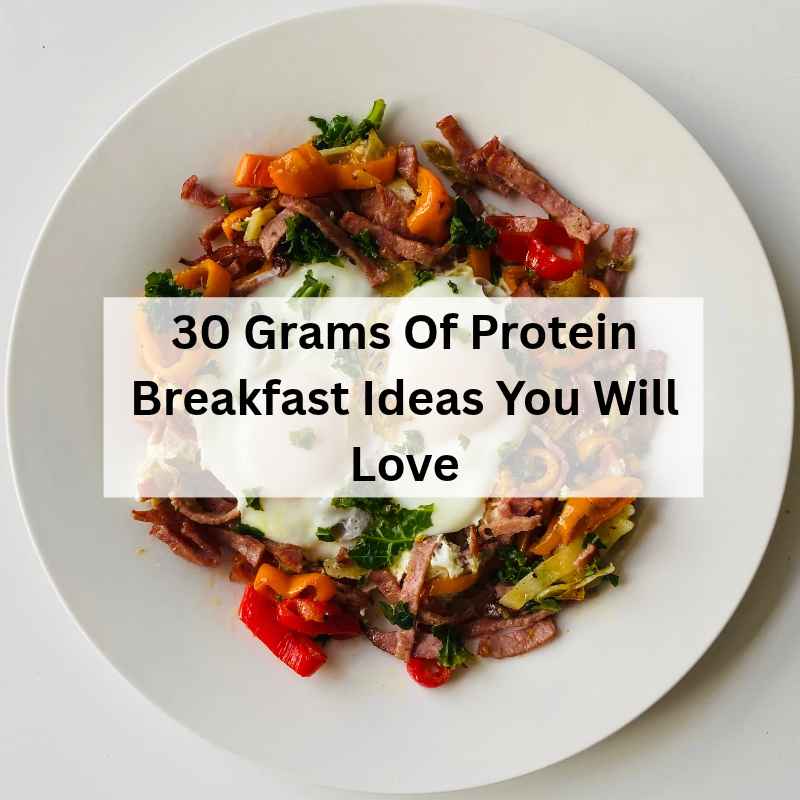

Loaded Protein Scramble (30g+ Protein)
Ingredients
Method
- Heat the olive oil in a non-stick pan over medium heat. Add the turkey sausage and cook for 3 minutes, breaking it up, until browned.
- Add the mushrooms and cook for 1–2 minutes until soft. Stir in the spinach and let it wilt for 30 seconds.
- In a small bowl, whisk the eggs with the cottage cheese, salt, and pepper until well combined.
- Lower the heat and pour the egg mixture over the sausage and veggies.
- Gently fold with a spatula for 2–3 minutes, until the eggs are just set but still soft and creamy.
- Sprinkle with cheddar if using, then serve right away, on its own or with a slice of whole-wheat toast.
Notes
- Protein: About 30 g without the cheddar, and around 36 g with it. Check your sausage label, since protein varies by brand.
- Creamy eggs: Keep the heat on low once the eggs go in. High heat makes them dry and rubbery.
- Smoother texture: Blend the cottage cheese with the eggs if you don’t like the curds.
- Meal prep: Cook the sausage and veggies ahead of time, so you only need to scramble the eggs in the morning.
- Vegetarian swap: Replace the sausage with 1/2 cup black beans or crumbled firm tofu.
- Storage: Best eaten fresh. Leftovers keep in the fridge for 1 day and reheat gently in the microwave.
My Own Protein Quest
I remember a time when my mornings were a blur. I’d grab whatever was fastest. Often, it was a bowl of sugary cereal or a plain bagel.
I’d be hungry again by 10 AM. I’d feel a bit foggy. Then I started hearing about high-protein breakfasts.
I was skeptical. It sounded like a lot of work. Or maybe it meant eating bland chicken breast first thing in the morning.
Ugh!
One day, I was trying to find a recipe. I wanted something quick before heading out for a busy day. I stumbled upon a recipe for Greek yogurt with berries and nuts.
It looked good. I decided to try it. I measured out the Greek yogurt.
I added some chia seeds and a handful of almonds. I also threw in some fruit. It was surprisingly filling!
I tracked the protein. It was close to 25 grams. That was way more than my cereal ever gave me.
Over the next few weeks, I experimented more. I learned to combine different protein sources. I found out that eggs could be made in many ways.
I discovered that cottage cheese wasn’t as bad as I thought. It was a journey of small discoveries. Now, I feel so much better in the mornings.
I have more steady energy. I don’t get those mid-morning hunger pangs as much. It really changed how I felt all day long.
It wasn’t about perfection, but about making smarter choices that tasted good.
Breakfast Protein Powerhouses
Here are some foods that are great sources of protein for breakfast:
- Greek Yogurt: About 20-25 grams per cup.
- Eggs: Around 6 grams per large egg.
- Cottage Cheese: About 25 grams per cup.
- Tofu: Roughly 20 grams per cup (firm or extra-firm).
- Smoked Salmon: About 20 grams per 3 ounces.
- Lean Meats (e.g., turkey bacon, chicken sausage): Varies, but often 15-20 grams per serving.
- Protein Powder: Can add 20-30 grams per scoop.
- Nuts and Seeds: Add a few grams per tablespoon.
- Whole Grains (like oats): Offer some protein, about 5-6 grams per serving.

Delicious 30 Gram Protein Breakfast Ideas
Let’s get to the good stuff! Here are some actual meal ideas that can get you to your 30 grams of protein. We’ll break down how you can build them.
Idea 1: The Loaded Scramble
Scrambled eggs are a breakfast classic. To boost their protein content, we add more. Start with 3 large eggs.
That gives you about 18 grams of protein. Then, add about 2 ounces of lean turkey sausage or ham. This adds another 10-15 grams.
You can also mix in a quarter cup of cottage cheese into the eggs before scrambling. This adds about 6-7 grams more.
To make it even better, stir in some chopped spinach or mushrooms. These add nutrients without many calories. A sprinkle of cheese on top adds a little more protein and flavor.
You can serve this with a slice of whole-wheat toast. Or enjoy it on its own. This meal is very adaptable.
Protein breakdown:
- 3 large eggs: ~18g
- 2 oz turkey sausage: ~12g
- Optional: 1/4 cup cottage cheese: ~6g
Total: ~30-36 grams of protein. It’s a hearty and satisfying option.
Idea 2: Power Greek Yogurt Bowl
Greek yogurt is a protein superstar. A full cup of plain, non-fat Greek yogurt typically has 20-25 grams of protein. To reach our 30-gram goal, we need to add a bit more.
Stir in a tablespoon of chia seeds. This adds about 2 grams of protein and some fiber. Then, top it with a quarter cup of almonds or walnuts.
This adds another 6-8 grams of protein.
Add your favorite fruits like berries or sliced banana for sweetness and vitamins. A drizzle of honey or a sprinkle of cinnamon can enhance the flavor. This bowl is quick to assemble.
It’s perfect for busy mornings when you need something fast but filling.
Protein breakdown:
- 1 cup Greek yogurt: ~22g
- 1 tbsp chia seeds: ~2g
- 1/4 cup almonds: ~6g
Total: ~30 grams of protein. Plus, it’s packed with healthy fats and antioxidants.
Greek Yogurt vs. Regular Yogurt
Greek Yogurt:
- Thicker Texture: Strained more, which removes whey.
- Higher Protein: About twice the protein of regular yogurt.
- Tangier Taste: Can be more tart.
Regular Yogurt:
- Thinner Texture: Less processed.
- Lower Protein: Still a good source, but less concentrated.
- Milder Taste: Often sweeter or creamier.
For a high-protein breakfast, Greek yogurt is the clear winner.
Idea 3: Protein Smoothie Boost
Smoothies are incredibly versatile. You can pack a lot of nutrition into one glass. Start with a base of unsweetened almond milk or water.
Then, add a scoop of your favorite protein powder. Most protein powders offer 20-30 grams of protein per scoop. If your scoop is on the lower side, like 20 grams, we need to add more.
Add half a cup of Greek yogurt. That’s another 10-12 grams. Or blend in a quarter cup of cottage cheese for about 6-7 grams.
For healthy fats and a bit more protein, add a tablespoon of peanut butter or almond butter. Add your favorite fruits like spinach, berries, or a banana for flavor and fiber. A few ice cubes make it nice and cold.
Protein breakdown (example with protein powder + Greek yogurt):
- 1 scoop protein powder: ~20g
- 1/2 cup Greek yogurt: ~11g
Total: ~31 grams of protein. You can adjust the powder and yogurt to fine-tune the protein count.
Idea 4: Savory Oatmeal with an Egg
Oatmeal isn’t just for sweet toppings. You can make savory oatmeal. Start with 1/2 cup of rolled oats, cooked with water or broth.
Oats provide about 5-6 grams of protein. To significantly boost this, top your cooked oatmeal with a fried or poached egg. One large egg adds about 6 grams of protein.
For more protein, add 2 ounces of smoked salmon on the side. That’s another 10-15 grams.
You can also stir in some nutritional yeast for a cheesy flavor and some B vitamins. Add a handful of chopped spinach or kale. A sprinkle of everything bagel seasoning or black pepper adds zest.
This might sound unusual, but it’s delicious and very filling. It’s a complete meal.
Protein breakdown:
- 1/2 cup oats: ~5g
- 1 large egg: ~6g
- 2 oz smoked salmon: ~12g
- Optional: 1/4 cup cottage cheese stirred in: ~6g
Total: ~23-29 grams of protein. Add another half egg or a bit more salmon to easily reach 30g.
Quick Protein Boosters
Need a little extra protein? Keep these on hand:
Stacked Micro-Sections:
- Greek Yogurt: A dollop adds 10+ grams.
- Hard-Boiled Eggs: Keep a few ready for a quick side.
- Cottage Cheese: A small container is easy to take.
- Protein Bars: Choose wisely, check labels for sugar.
- Nuts & Seeds: A small handful adds protein and healthy fats.
Idea 5: Cottage Cheese Power Bowl
Cottage cheese is an unsung hero of high-protein breakfasts. A cup of full-fat cottage cheese can have around 25 grams of protein. To get to 30 grams, you can add a few things.
Stir in a tablespoon of chopped nuts like pecans or walnuts. This adds about 2-3 grams. Then, add a tablespoon of hemp seeds.
Hemp seeds add another 3-4 grams of protein.
You can make this sweet or savory. For a sweet bowl, add berries, a drizzle of honey, and a sprinkle of cinnamon. For a savory bowl, mix in chopped chives, black pepper, and maybe a few cherry tomatoes.
It’s surprisingly delicious both ways. This is incredibly simple to prepare.
Protein breakdown:
- 1 cup cottage cheese: ~25g
- 1 tbsp chopped walnuts: ~2g
- 1 tbsp hemp seeds: ~3g
Total: ~30 grams of protein. Easy, fast, and effective.
Idea 6: Tofu Scramble with Veggies
For those who prefer plant-based options, tofu is a fantastic choice. A cup of firm or extra-firm tofu can contain about 20 grams of protein. To boost this, you can add nutritional yeast for flavor and some extra nutrients.
Mix in some black beans. Half a cup of black beans adds about 7-8 grams of protein.
Sauté some chopped onions, bell peppers, and spinach. Add this to the tofu scramble. Season with turmeric for color, cumin, and a pinch of salt and pepper.
This makes for a colorful and flavorful breakfast. It’s a great way to start the day with plant-powered protein.
Protein breakdown:
- 1 cup firm tofu: ~20g
- 1/2 cup black beans: ~7g
- Optional: 1/4 cup nutritional yeast: ~5g
Total: ~32 grams of protein. A satisfying vegan option.
Plant-Based Protein Sources
Contrast Matrix: Tofu vs. Beans
| Feature | Tofu (Firm) | Black Beans |
|---|---|---|
| Protein per Cup (Approx.) | 20g | 15g |
| Fiber per Cup (Approx.) | 2g | 15g |
| Versatility | Scrambles, baked, added to smoothies | Added to scrambles, bowls, side dishes |
| Key Nutrients | Calcium, Iron | Iron, Folate, Magnesium |
Both are excellent for boosting plant-based protein.
Building Your Perfect 30 Gram Protein Breakfast
It’s not just about the specific meals. It’s about understanding how to build them. Think of it like building blocks.
You have your protein base. Then you add other elements for flavor, fiber, and nutrients.
The Protein Base: This is where your main protein comes from. It could be eggs, yogurt, cottage cheese, tofu, or protein powder. Aim for at least 20-25 grams from this source if possible.
The Protein Booster: If your base isn’t quite 30 grams, add a little extra. This could be a second egg, a bit more yogurt, a spoonful of nut butter, or a sprinkle of seeds. Nuts, seeds, and nut butters are great for this.
They add protein, healthy fats, and a nice texture.
The Flavor & Nutrient Add-ins: This is where fruits, vegetables, spices, and herbs come in. They make your breakfast exciting. They also add vitamins, minerals, and fiber.
Fiber is crucial for keeping you full. It also helps with digestion. Don’t skip this part!
Healthy Fats: Fats help with satiety. They also help your body absorb certain vitamins. Sources include nuts, seeds, avocado, and nut butters.
Use them in moderation. They are calorie-dense.
Hydration: Don’t forget to drink water or herbal tea with your breakfast. Staying hydrated is important for overall health. It also contributes to feeling full.
Tips for Maximizing Breakfast Protein
Quick-Scan Table:
| Strategy | How it Helps |
|---|---|
| Combine Protein Sources | Eggs + Turkey Sausage, Yogurt + Nuts, Tofu + Beans |
| Add Seeds or Nuts | Chia, flax, hemp, almonds, walnuts add protein and healthy fats. |
| Use Protein Powder Wisely | Can be added to smoothies, oatmeal, or even baked goods. |
| Choose High-Protein Dairy | Greek yogurt and cottage cheese are protein powerhouses. |
| Don’t Forget Veggies | Spinach, peppers, and onions add nutrients and volume without many calories. |
Real-World Scenarios
Let’s think about different mornings and how these breakfasts fit in. What works for one person might not work for another. It depends on your lifestyle, your cooking skills, and what you have on hand.
The Early Riser: If you wake up before dawn, you need something quick. A pre-made protein smoothie or a bowl of Greek yogurt with pre-portioned nuts is perfect. You can even prepare overnight oats with protein powder the night before.
The Busy Commuter: For those rushing out the door, grab-and-go options are key. A hard-boiled egg and a small container of cottage cheese. Or a high-quality protein bar (check the sugar content!).
A thermos of protein-rich coffee might even work if you add protein powder or collagen peptides.
The Weekend Cook: If you have more time on weekends, you can enjoy a more elaborate meal. A loaded scramble with plenty of veggies. Or perhaps a tofu scramble with toast.
These take a bit more time but can be very rewarding.
The Health-Conscious Athlete: Athletes often need even more protein. They might aim for 30-40 grams at breakfast. They can easily scale up these ideas.
For example, add an extra egg or two to the scramble. Or use two scoops of protein powder in a smoothie.
The Budget-Conscious Eater: Eggs are usually quite affordable. Oats and cottage cheese are also budget-friendly protein sources. Buying larger tubs of Greek yogurt can be cheaper than single servings.
Buying nuts and seeds in bulk also helps save money.
It’s all about making these ideas work for your life. The goal is consistency. Finding meals you enjoy makes it easier to stick to your protein goals.
When Is 30 Grams of Protein Enough (or Too Much)?
For most adults, aiming for 30 grams of protein at breakfast is a good target. It helps with satiety and energy. It supports muscle maintenance.
The U.S. Department of Agriculture (USDA) recommends about 0.8 grams of protein per kilogram of body weight for sedentary adults. This means a 150-pound person needs about 55 grams per day.
However, active individuals, athletes, or those trying to build muscle may need more. Some recommendations for these groups go up to 1.6 grams per kilogram. This would mean closer to 100-110 grams for that 150-pound person.
So, 30 grams at breakfast is a significant chunk of that daily goal.
Is 30 grams too much for breakfast? For most people, no. Your body is very efficient at using protein.
If you consume more than your body needs at one meal, it’s usually just used for energy. Or it can be converted to glucose. However, extremely high protein intake over long periods could potentially strain the kidneys in individuals with pre-existing kidney issues.
It’s always best to talk to a doctor or registered dietitian if you have health concerns.
What if you can’t quite reach 30 grams? Don’t stress! Even 15-20 grams of protein at breakfast is much better than a carb-only meal.
Focus on making progress. Add one more egg, or a handful of nuts. Small changes add up over time.
Listen to your body. If you feel satisfied and energized, you’re likely on the right track. Some people might feel better with slightly less protein and more healthy fats or complex carbs.
There’s no one-size-fits-all rule for everyone.
Normal vs. Concerning Protein Intake
Observation Flow:
Normal:
- Feeling full for several hours.
- Steady energy levels throughout the morning.
- Reduced cravings for sugary snacks.
- Good muscle recovery after exercise.
Concerning (Rare for most):
- Digestive upset (bloating, constipation).
- Unexplained weight gain (if total calories are too high).
- Kidney strain symptoms (only in pre-existing conditions, or extreme intake).
- Nutrient deficiencies (if focusing ONLY on protein and missing other food groups).
For typical diets hitting around 30g protein at breakfast, concerns are very unlikely.
Quick Fixes and Tips for More Protein
Sometimes you just need a little nudge. Here are some simple tips to increase your protein intake at breakfast without a whole new recipe.
- Add an Egg: Simply adding one extra hard-boiled or fried egg to your existing breakfast can add 6 grams of protein.
- Stir in Seeds: A tablespoon of chia seeds, flax seeds, or hemp seeds into yogurt, oatmeal, or even a smoothie adds 2-4 grams.
- Nut Butter Spoonful: A tablespoon of peanut butter, almond butter, or sunflower seed butter adds about 3-4 grams of protein and healthy fats.
- Boost Your Oats: Cook your oatmeal with milk (dairy or soy) instead of water for extra protein. Stir in protein powder or chopped nuts.
- Cheese Please: A sprinkle of cheese on eggs or toast adds a few grams of protein.
- Choose Greek Yogurt: If you usually buy regular yogurt, switch to Greek yogurt. The protein difference is significant.
These small additions can make a big difference. They help you get closer to that 30-gram goal without feeling like you’re overhauling your entire diet.

Frequently Asked Questions About 30 Gram Protein Breakfasts
Is 30 grams of protein too much for breakfast?
For most adults, 30 grams of protein at breakfast is a healthy and beneficial amount. It helps with satiety and energy. It’s well within general protein recommendations.
If you have specific health concerns, like kidney issues, it’s always best to consult a healthcare provider.
What if I don’t like eggs or yogurt?
No problem! There are many other great sources. Try cottage cheese, tofu scrambles, lean turkey sausage, or even adding protein powder to your oatmeal or smoothie.
Explore options like smoked salmon or lean meats if they fit your dietary preferences.
How can I make my breakfast protein tasty?
Use herbs and spices! For savory dishes, try garlic powder, onion powder, black pepper, or chili flakes. For sweet dishes, cinnamon, nutmeg, vanilla extract, and fruit are great.
Don’t forget a touch of honey or maple syrup if needed. Roasting vegetables for scrambles adds flavor too.
Can I use flavored Greek yogurt?
Flavored yogurts often contain added sugars, which can negate some health benefits. Plain Greek yogurt is usually the best choice. You can add your own fruit for sweetness and flavor.
This gives you more control over the sugar content.
Is 30 grams of protein enough for muscle building?
For muscle building, 30 grams at breakfast is a great start, but your total daily protein intake is more important. Athletes and bodybuilders often aim for higher daily protein totals (e.g., 1.6-2.2 grams per kilogram of body weight). Breakfast is one meal to contribute to that goal.
How quickly can I prepare a 30g protein breakfast?
Many options are very quick! A Greek yogurt bowl with nuts and seeds takes 2-3 minutes. A protein smoothie can be blended in 5 minutes.
Scrambled eggs or a tofu scramble can be ready in about 10-15 minutes. Meal prep like overnight oats or pre-cooked hard-boiled eggs makes mornings even faster.
Conclusion
Reaching 30 grams of protein for breakfast is achievable and rewarding. It sets you up for a day of steady energy and reduced cravings. The key is choosing protein-rich foods and combining them wisely.
Whether you love eggs, yogurt, tofu, or smoothies, there are delicious ways to meet your protein goals. Experiment with these ideas and find what works best for you!