Breakfast Around The World: Every Morning Meal You Must Try
Globally, breakfast meals are incredibly diverse, ranging from savory rice dishes and noodle soups to sweet pastries and hearty egg preparations. These morning traditions reflect local ingredients, cultural habits, and daily rhythms, offering a fascinating glimpse into the world’s culinary tapestry.
Understanding Global Breakfast Traditions
Breakfast is often called the most important meal. It gives us energy for the day. But what that energy looks like varies a lot.
In some places, breakfast is light. It might be just a drink and a small bite. Other places have a large, filling meal.
This is often the biggest meal of their day. It’s interesting to see how different cultures start their mornings. This can depend on many things.
Things like local farming, what’s easily grown, and even history play a role.
The foods we eat for breakfast often tell a story. They tell a story about where we live and how we live. Think about your own morning.
What do you usually eat? Now imagine eating something totally different. That’s what we’ll explore today.
We’ll travel the world, one breakfast at a time. We’ll see what delights people’s taste buds when they wake up. It’s a journey of flavors and customs.

A Taste of Europe: Hearty Mornings
Europe has many different breakfast styles. But often, they are quite filling. Many European breakfasts include bread or pastries.
These are often very fresh. People might also have cheese or cured meats. Eggs are common too.
They are cooked in various ways. Coffee or tea is almost always a part of it. This gives a good start to a busy day.
It’s a contrast to lighter meals elsewhere.
In France, for instance, a croissant is a classic. Or perhaps a pain au chocolat. These are buttery, flaky pastries.
They are often enjoyed with coffee. Sometimes people have a simple baguette with jam. It’s a simpler but still delicious start.
This sweet beginning sets a lovely tone.
Germany offers a more substantial meal. Think about rye bread or whole-grain rolls. These are served with a variety of cheeses.
There are also cold cuts like ham and salami. Hard-boiled eggs are very popular. Sometimes there’s a sweet spread like honey or fruit preserves.
This kind of breakfast is very energy-rich. It’s perfect for a day of hard work.
The United Kingdom has its famous Full English breakfast. This is a very hearty affair. It typically includes fried eggs, bacon, and sausage.
Black pudding is also common. Baked beans in tomato sauce are a staple. Fried bread or toast makes it complete.
It’s a meal that truly sticks with you. It’s often enjoyed on weekends.
European Breakfast Snapshot
France: Sweet pastries (croissants, pain au chocolat), baguette with jam, coffee.
Germany: Rye bread, cheese, cold cuts, hard-boiled eggs, honey, tea.
United Kingdom: Full English (eggs, bacon, sausage, beans, toast), tea or coffee.
These European examples show a common theme. Breakfast is often a savory and filling meal. It uses local dairy and meats.
Bread is a central element. It’s about fueling up for the day. It’s a tradition many people abroad enjoy too.
Asia: Rice, Noodles, and Flavorful Starts
Asia presents a completely different breakfast world. Rice is a very common base for many Asian morning meals. It might be plain steamed rice.
Or it could be a flavorful rice porridge. Noodle soups are also very popular. These meals are often savory and warm.
They can be quite complex in flavor. This is a big change from sweet pastries.
In China, congee is a breakfast favorite. This is a rice porridge. It can be made with different grains.
People add toppings like shredded meat, ginger, or scallions. Some enjoy it with a fried dough stick called a youtiao. It’s a comforting and easy-to-digest meal.
It warms you up from the inside.
Japan has a traditional breakfast called washoku. This includes steamed rice. It also has grilled fish, often salmon.
Miso soup is usually served. Pickled vegetables add a salty, tangy crunch. A common side is tamagoyaki.
This is a rolled omelet. It’s slightly sweet. This meal is balanced and nutritious.
Vietnam is famous for its pho. This is a flavorful noodle soup. It’s often eaten for breakfast.
The broth is rich and aromatic. It’s made with beef or chicken. Rice noodles are the base.
Fresh herbs, lime, and chili are added. It’s a bright and awakening dish. It’s a great way to start the day.
In the Philippines, they have a unique tradition called Silog meals. This is a combination of garlic fried rice (sinangag). It also includes fried egg (itlog).
The ‘si’ comes from sinangag. The ‘log’ comes from itlog. People often add a side of cured meat like tocino or longganisa.
It’s a very satisfying and savory start.
Asian Breakfast Variety
China: Congee (rice porridge) with toppings, youtiao (fried dough stick).
Japan: Steamed rice, grilled fish, miso soup, pickled vegetables, tamagoyaki.
Vietnam: Pho (noodle soup with herbs and meat).
Philippines: Silog meals (garlic rice, egg) with cured meats.
The Asian approach to breakfast often focuses on warm, savory, and rice-based dishes. These meals are typically very flavorful. They provide sustained energy.
They are a cornerstone of morning life for millions. It’s amazing how rice can be so versatile.
The Americas: Diverse and Evolving Tastes
The Americas, both North and South, showcase a huge range of breakfast options. This is due to diverse cultures and immigrant influences. In North America, the traditional “American breakfast” is well-known.
It often includes eggs, bacon or sausage, and toast or pancakes. Hash browns are also a common side.
Canada shares many breakfast traditions with the US. Pancakes are popular, sometimes served with maple syrup, of course. Poutine, a dish of fries, cheese curds, and gravy, is sometimes enjoyed for breakfast, especially after a late night.
This is a very hearty choice.
Mexico offers vibrant and flavorful morning meals. Huevos rancheros are a classic. This dish features fried eggs served on tortillas.
They are topped with a spicy tomato salsa. Often, it includes refried beans and avocado. It’s a delicious and energizing meal.
In Central America, like in Costa Rica, the national dish is Gallo Pinto. This is a mix of rice and black beans. It’s seasoned with cilantro and other spices.
It’s often served with eggs, fried plantains, and sour cream. It’s a very typical and filling breakfast.
South America has its own unique tastes. In Colombia, arepas are a breakfast staple. These are cornmeal cakes.
They can be grilled or fried. People fill them with cheese, butter, or meat. They are a simple but satisfying start to the day.
They are often eaten with a hot beverage.
Brazil often enjoys a lighter breakfast. Pão de queijo are small cheese rolls. They are a popular choice.
People also eat fruits and cakes. Coffee with milk is a common drink. It’s a sweet and simple start for many Brazilians.
Americas Breakfast Highlights
USA/Canada: Eggs, bacon, pancakes, toast, hash browns, maple syrup.
Mexico: Huevos rancheros (eggs on tortillas with salsa and beans).
Costa Rica: Gallo Pinto (rice and beans) with eggs and plantains.
Colombia: Arepas (corn cakes) with cheese or fillings.
Brazil: Pão de queijo (cheese rolls), fruits, cakes, coffee.
The Americas show a mix of tradition and innovation. You see influences from many cultures. This creates a very dynamic breakfast landscape.
From spicy to sweet, there’s something for everyone. These meals are designed to give people energy.
Africa: Simple Staples and Community Meals
Africa, being a vast continent, has incredibly diverse breakfast customs. Yet, many traditions revolve around staple grains and local ingredients. Simple, energy-rich foods are common.
These often vary by region and climate.
In North Africa, like Morocco, breakfast often includes bread. This is sometimes a flatbread called Msemen. It can be served with honey or jam.
Mint tea is a popular drink. Sometimes there are fried eggs. It’s a pleasant way to begin the day.
West Africa often features grain-based dishes. In Nigeria, for example, Akara is popular. These are deep-fried bean cakes.
They are made from peeled black-eyed peas. They have a crispy exterior and a soft interior. They are often eaten with a side of pap, which is a cornmeal porridge.
This is a hearty and protein-rich start.
East Africa, particularly Kenya and Tanzania, often has Ugali. This is a stiff maize porridge. It’s a staple food.
It’s often eaten with a vegetable stew or meat. For breakfast, it might be a simpler version. Sometimes it’s served with milk or sugar.
It’s a filling and affordable option.
Ethiopia has a unique breakfast culture. Fit-fit or Fir-fir is common. This dish is made from shredded injera.
Injera is a sourdough flatbread. It’s mixed with spices and sometimes meat or vegetables. It’s a flavorful and tangy meal.
It’s often enjoyed with coffee. Coffee ceremonies are also a big part of Ethiopian culture.
In South Africa, breakfast might include Mieliepap. This is a porridge made from maize meal. Similar to ugali or pap.
It can be served sweet or savory. Sometimes it’s topped with milk, sugar, or butter. It’s a simple, energy-giving meal.
It’s a traditional comfort food.
African Breakfast Staples
Morocco: Msemen (flatbread) with honey, mint tea, eggs.
Nigeria: Akara (bean cakes) with pap (cornmeal porridge).
Kenya/Tanzania: Ugali (maize porridge) with stew or milk.
Ethiopia: Fit-fit (shredded injera with spices).
South Africa: Mieliepap (maize porridge) with toppings.
African breakfasts often prioritize sustenance. They use readily available grains. These meals provide the energy needed for daily tasks.
They are often communal. Sharing food in the morning is important. It builds connections among people.
The Middle East: Rich Flavors and Shared Plates
The Middle East offers a breakfast experience rich in flavor and tradition. Many meals involve a variety of small dishes. This allows for diverse tastes in one sitting.
Bread is a key component, much like in other regions.
In Turkey, a Turkish breakfast is a feast. It usually includes fresh bread. There are several types of cheese.
Olives are always present. Fresh tomatoes and cucumbers add brightness. Hard-boiled eggs are common.
Honey and clotted cream are served. Sometimes pastirma (cured beef) or sucuk (spicy sausage) is included. Turkish tea, çay, is the essential beverage.
Lebanon also has a diverse breakfast spread. Manakish is very popular. This is a flatbread topped with za’atar, a spice blend.
It can also have cheese or minced meat. Fattoush salad, made with mixed greens and vegetables, is a refreshing side. Hummus and foul medames (fava bean stew) are also common.
Yogurt is often part of the meal.
In Iran, a common breakfast is Halim. This is a hearty wheat and meat porridge. It’s slow-cooked for hours.
It’s often topped with cinnamon and sugar or butter. It’s very filling and comforting. Another option is Naneh Shirini, a sweet bread.
It’s enjoyed with tea.
In Israel, a common breakfast is shakshuka. This dish consists of eggs poached in a spicy tomato and pepper sauce. It’s typically served with bread for dipping.
It’s flavorful and satisfying. This dish has gained popularity worldwide. It’s a delightful and warming meal.
The UAE and surrounding Gulf states often have a breakfast rich in flavors. Harees is a traditional dish. It’s made from wheat and meat, cooked until tender.
It’s seasoned and often served with ghee. Luqaimat, small sweet dumplings, might also be enjoyed. It’s a taste of regional heritage.
Middle Eastern Breakfast Delights
Turkey: Bread, cheeses, olives, tomatoes, cucumbers, eggs, honey, tea.
Lebanon: Manakish (za’atar flatbread), foul medames, hummus, salad, yogurt.
Iran: Halim (wheat and meat porridge), sweet bread, tea.
Israel: Shakshuka (eggs in tomato sauce), bread.
UAE: Harees (wheat and meat dish), Luqaimat (sweet dumplings).
Middle Eastern breakfasts often emphasize sharing. The table is filled with many small plates. This encourages conversation.
It creates a communal dining experience. The flavors are bold and aromatic. It’s a true culinary adventure.
Oceania: Freshness and Tropical Flavors
The islands of Oceania, including Australia and New Zealand, offer a blend of influences. Their breakfasts can be quite varied. They often feature fresh ingredients.
Tropical fruits play a significant role. You also see influences from British traditions.
In Australia, a typical breakfast might include toast. This can be with Vegemite or jam. Avocado toast is very popular.
Eggs are common, often served with bacon. Muesli or granola with yogurt and fruit is another healthy option. Fresh fruit salads featuring tropical fruits are a refreshing choice.
New Zealand shares many breakfast customs with Australia. A “big breakfast” might be similar to a Full English. However, seafood is more prominent.
Smoked salmon with eggs is a treat. Pavlova, a meringue-based dessert, is sometimes enjoyed for breakfast, especially on special occasions. It’s a light and sweet option.
On Pacific Islands like Fiji, breakfast might be simpler. Fresh tropical fruits are abundant. Bananas, papayas, and mangoes are common.
Coconut milk is often used in dishes. Taro or yam porridge can be a staple. It’s a nutritious start using local produce.
In Samoa, Umu cooked foods might be part of breakfast. This is food cooked in an underground oven. Fish and root vegetables are common.
It’s a traditional way of preparing meals. This provides a grounding and authentic start to the day.
Oceania Breakfast Notes
Australia: Toast with Vegemite/jam, avocado toast, eggs, bacon, muesli, fresh fruit.
New Zealand: Big breakfast, smoked salmon, pavlova (occasional).
Fiji: Tropical fruits, coconut milk, taro/yam porridge.
Samoa: Umu cooked foods (fish, root vegetables).
The breakfasts in Oceania often highlight the natural bounty. The emphasis is on fresh, local ingredients. This creates meals that are both healthy and delicious.
The tropical influence is undeniable. It makes for vibrant and tasty mornings.
Personal Experience: A Morning in Marrakech
I remember one crisp morning in Marrakech. I was staying in a small riad. The air was still cool.
I stepped out onto the rooftop terrace. The sun was just beginning to paint the sky. The call to prayer echoed softly in the distance.
It was a magical moment. Then, the aroma of mint tea wafted up.
My host brought out a tray. It was laden with breakfast delights. There was fresh, warm bread.
It was soft inside with a slightly chewy crust. Alongside were small bowls. One had creamy, sweet honey.
Another held creamy cheese. There were also plump, black olives. Bright red tomatoes and crisp cucumber slices added color.
I watched as they poured hot, fragrant mint tea into tiny glasses. I broke off a piece of bread. I dipped it into the honey.
The sweetness was intense and pure. Then I tried the cheese. It was mild and creamy.
The olives added a salty counterpoint. The vegetables were so fresh. They tasted like they were just picked.
This simple meal felt like a celebration. It wasn’t rushed. Every bite was savored.
It felt connected to the place. It was a true taste of Morocco. I felt so grounded and happy.
It was a reminder that breakfast is more than just food. It’s an experience. It’s a way to connect with culture.
It’s a peaceful start to the day.
What This Means for Your Breakfast Routine
Seeing all these global breakfast traditions might make you think. Your own breakfast routine might feel a bit plain. Or maybe it feels just right for you.
Either way, there’s no single “correct” way to eat in the morning. What matters is what works for you. And what feels good.
It’s normal for breakfast habits to change. Your needs might be different. Some days you need a quick bite.
Other days you have more time. Maybe you want something light. Or perhaps you need something very filling.
That’s perfectly okay.
If you’re feeling inspired, you can try something new. Maybe add a new fruit to your cereal. Or try a different type of bread.
You could even try making a simple dish from another country. Like a small bowl of congee. Or some huevos rancheros.
Just a little change can be exciting.
Don’t feel pressured to eat a huge meal. Especially if you don’t feel like it. Or if you have a sensitive stomach in the morning.
Listen to your body. What does it need to start the day? Focus on balance.
And on enjoying your food.
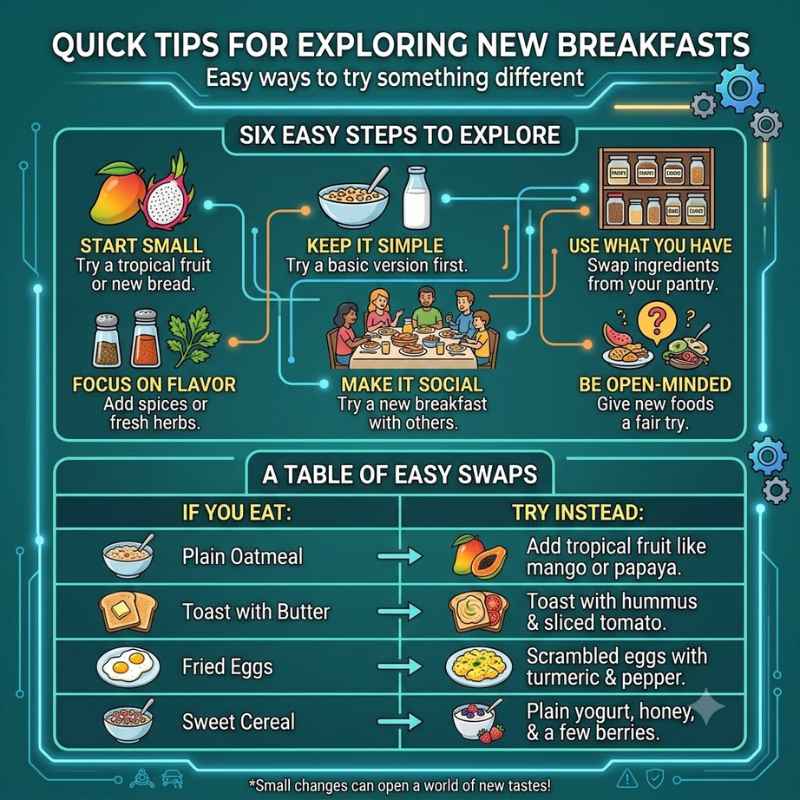
Quick Tips for Exploring New Breakfasts
Ready to try something different? Here are some easy ways to explore new breakfast ideas. You don’t need to be a chef.
- Start Small: Pick one new food to try. Maybe a tropical fruit. Or a different kind of bread.
- Keep it Simple: Don’t try to make a complex dish right away. Try a basic version.
- Use What You Have: Look at recipes. Can you swap ingredients? Use what’s in your pantry.
- Focus on Flavor: Add new spices. Try fresh herbs. Even a little change can be nice.
- Make it Social: If you have family or friends, try a new breakfast together. Make it an event!
- Be Open-Minded: Some foods might seem strange. Give them a fair try. You might be surprised!
A Table of Easy Swaps
| If You Eat: | Try Instead: |
| Plain Oatmeal | Add some tropical fruit like mango or papaya. |
| Toast with Butter | Toast with a thin layer of hummus and sliced tomato. |
| Fried Eggs | Scrambled eggs with a pinch of turmeric and black pepper. |
| Sweet Cereal | Plain yogurt with a drizzle of honey and a few berries. |
These small changes can open up a world of new tastes. They can make your mornings more interesting. And more delicious.
It’s about enjoying the journey of food.
Frequently Asked Questions About Global Breakfasts
What is the most common breakfast food worldwide?
It’s hard to say one single food is the most common worldwide. However, grains like rice and wheat are foundational for breakfast in many cultures. Things like bread, porridge, and rice-based dishes are eaten by billions of people daily.
Are savory breakfasts healthier than sweet ones?
Not necessarily. The healthiness depends on the ingredients. A sweet breakfast of fresh fruit and yogurt can be very healthy.
A savory breakfast of processed meats and white bread might not be. Focus on whole grains, fruits, vegetables, and lean proteins for a healthy start.
Why do some cultures eat soup for breakfast?
In many cultures, especially in Asia, warm soups are comforting and easy to digest. They provide hydration and nutrients to start the day. They are often made with simple ingredients and are a staple food, making them a natural choice for breakfast.
Is it okay to eat dinner leftovers for breakfast?
Absolutely! Many people around the world do this. It’s a practical way to avoid food waste.
And it can be a quick and easy breakfast option. Just make sure the food is stored properly.
Why are European breakfasts often so heavy?
Historically, European breakfasts were designed to provide sustained energy for manual labor. They often feature hearty breads, meats, and cheeses. This tradition continues today, especially in countries like Germany and the UK, where a substantial breakfast is common.
What is a healthy and quick breakfast option for busy mornings?
A good option is overnight oats made with milk or yogurt, chia seeds, and fruit. Another is a smoothie with fruit, spinach, and protein powder or yogurt. Hard-boiled eggs are also a great grab-and-go choice.
Fresh fruit with a handful of nuts is also quick and healthy.
Conclusion: A World of Morning Flavors
Exploring breakfast around the world shows us a vibrant picture. Food connects us. It tells stories of where we come from.
From hearty European plates to light Asian noodle bowls, each meal has its own charm. It’s a reminder of the diversity of human life. And the simple joy of starting the day with something delicious.