McDonald’s Breakfast Sausage Recipe: Make Savory Breakfast Patties at Home
There is something irresistible about a McDonald’s breakfast sausage recipe—those golden, juicy, perfectly seasoned pork patties that make a simple breakfast sandwich taste unforgettable. This homemade version captures that savory, slightly sweet, peppery flavor with everyday pantry spices and fresh ground pork.
Whether you are building a copycat Sausage McMuffin, meal-prepping weekday breakfasts, or serving a cozy weekend brunch, these patties deliver restaurant-style comfort without leaving your kitchen.
1. Start With the Right Ground Pork
The foundation of a great McDonald’s breakfast sausage recipe is the meat itself. Use 1 pound of ground pork with an 80/20 lean-to-fat ratio, meaning 80 percent lean meat and 20 percent fat. That fat content is essential because it keeps the patties juicy, tender, and flavorful as they cook.
If the pork is too lean, the sausage can become dry and crumbly, especially after pan-frying. If it is too fatty, the patties may shrink dramatically and release excessive grease. The 80/20 balance gives you the best texture for a classic breakfast sausage patty.
Ask your butcher for freshly ground pork shoulder if possible, or choose a good-quality package from the grocery store. Fresh pork has a cleaner, more natural flavor, while pre-seasoned sausage meat should be avoided because it already contains salt and spices that can throw off the balance of this recipe.
For a lighter variation, you can substitute ground turkey or chicken, but add one tablespoon of olive oil or butter to the mixture. Poultry is leaner than pork, so a little added fat helps recreate the rich, satisfying mouthfeel of traditional McDonald’s-style sausage.
2. Build the Signature Breakfast Sausage Seasoning
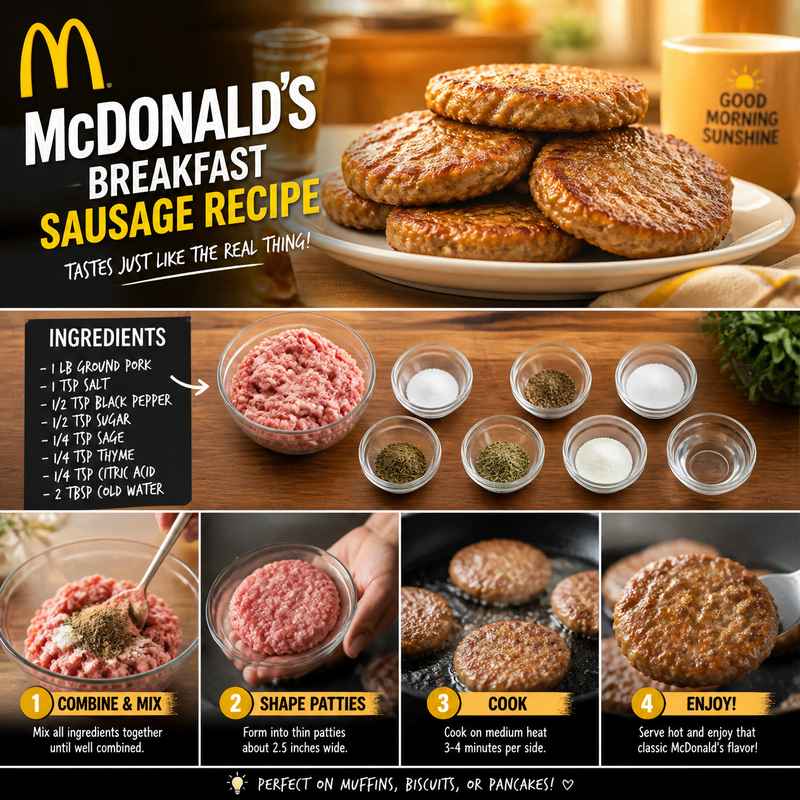
The magic of this homemade McDonald’s breakfast sausage comes from a simple but well-balanced spice blend. Sage leads the flavor profile, giving the sausage its warm, savory, slightly earthy character. Black pepper adds gentle heat, while garlic powder and onion powder create that familiar savory depth.
A small amount of brown sugar is important too. It does not make the sausage taste sweet; instead, it rounds out the saltiness and enhances the caramelized edges when the patties hit the hot pan. A touch of paprika adds color and mild warmth without overpowering the classic breakfast flavor.
Use dried rubbed sage, not fresh sage, for the most consistent result. Dried herbs distribute more evenly through ground meat and hold up better during cooking. If you only have fresh sage, use about three times the amount and chop it very finely.
The table below shows exactly how each seasoning contributes to the final flavor:
| Ingredient | Amount | Purpose in the Recipe |
|---|---|---|
| Ground pork, 80/20 | 1 lb | Juicy base for the sausage patties |
| Kosher salt | 1 ½ tsp | Enhances all the savory flavors |
| Black pepper | ½ tsp | Adds gentle heat and aroma |
| Dried sage | 1 tsp | Provides classic breakfast-sausage flavor |
| Dried thyme | ½ tsp | Adds subtle earthiness |
| Garlic powder | ½ tsp | Creates savory depth |
| Onion powder | ½ tsp | Adds sweetness and aroma |
| Brown sugar | 1 tsp | Balances salt and helps browning |
| Paprika | ¼ tsp | Adds mild color and warmth |
| Ground nutmeg | ⅛ tsp | Optional; adds warmth and complexity |
| Cold water | 1 tbsp | Helps bind the mixture and keep patties tender |
This seasoning blend makes the sausage taste familiar without trying to copy an exact commercial formula. It is savory, aromatic, lightly sweet, and ideal for breakfast sandwiches, biscuits, pancakes, and meal prep.
3. Mix Gently for Tender, Juicy Patties
Once your ingredients are ready, place the ground pork in a large mixing bowl. Sprinkle the salt, pepper, sage, thyme, garlic powder, onion powder, brown sugar, paprika, and nutmeg evenly over the meat. Add one tablespoon of cold water to help the seasoning distribute smoothly.
Mix with your hands or a sturdy spoon just until everything is combined. This step matters more than many home cooks realize. Overmixing ground meat develops the proteins too much, which can make the finished patties dense, springy, or tough.
Aim for a mixture that looks evenly seasoned but still feels loose and natural. You should not see large streaks of spice, but you also do not need to knead it like bread dough. Gentle mixing is the secret to a tender breakfast sausage patty.
If you want an even deeper flavor, cover the bowl and refrigerate the seasoned pork for 30 minutes to 1 hour before shaping. This resting time allows the spices to bloom and meld into the meat, producing a more rounded, restaurant-style sausage flavor.
4. Shape Uniform Patties for Even Cooking
Divide the seasoned pork into four equal portions, each weighing approximately 4 ounces. This size creates thick, satisfying patties similar to those used in a classic Sausage McMuffin. If you prefer smaller patties for sliders or kids’ breakfasts, divide the mixture into six portions instead.
Roll each portion gently into a ball, then flatten it into a patty about 3 inches wide and ½ inch thick. Try to keep the edges smooth and the thickness even so every patty cooks at the same rate.
Here is a helpful trick: sausage patties often puff up in the center while cooking. Press a small dimple into the middle of each raw patty using your thumb. As the meat cooks and contracts, the dimple helps the patty stay flat, making it perfect for sandwiches.
Place the shaped patties on a parchment-lined plate or tray. If you are not cooking them immediately, cover and refrigerate them for up to 24 hours. For longer storage, freeze them individually and transfer the frozen patties to a freezer-safe bag once solid.
5. Pan-Fry for Golden, Caramelized Edges
Heat a large skillet, preferably cast iron, over medium heat. Add one tablespoon of neutral oil, such as vegetable or canola oil. Let the oil warm for about one minute before adding the patties; a properly heated pan encourages browning instead of sticking.
Cook the patties for 4 to 5 minutes on the first side. Avoid moving them too soon. Letting them sit undisturbed allows a beautiful golden-brown crust to develop, which adds tremendous flavor to this copycat McDonald’s breakfast sausage.
Flip carefully with a spatula and cook for another 4 to 5 minutes, or until the patties are deeply browned and cooked through. The internal temperature should reach 160°F (71°C) for ground pork. A digital meat thermometer is the most reliable way to check doneness.
If the patties brown too quickly before the center cooks through, reduce the heat slightly and cover the skillet for the final few minutes. The trapped steam helps the inside finish cooking while preserving the crisp, caramelized exterior.
6. Master the Perfect Breakfast Sandwich
These sausage patties are delicious on their own, but they truly shine inside a homemade Sausage McMuffin. Toast an English muffin until golden, add a slice of American cheese, then place the warm sausage patty on top. The gentle heat softens the cheese just enough to create that creamy, melty texture.
For a fuller breakfast sandwich, add a folded egg or a freshly cooked egg ring. Butter the English muffin lightly before toasting for extra richness. A small swipe of butter mimics the comforting, indulgent flavor people love in fast-food breakfast sandwiches.
If you prefer a McGriddle-style sandwich, serve the patty between two small maple pancakes. The sweet pancake and savory sausage combination is especially popular for weekend brunch. Add cheese and egg for a more filling version.
These patties also work beautifully on biscuits, bagels, toast, or English muffins. For meal prep, cook the patties ahead of time and assemble sandwiches in the morning; the sausage reheats well and keeps its flavor remarkably well.
7. Use the Oven for Easy Batch Cooking
When you need to make a larger batch, oven-baking is one of the easiest ways to prepare homemade breakfast sausage patties. Preheat your oven to 400°F (200°C) and line a rimmed baking sheet with parchment paper or a wire rack.
Arrange the patties in a single layer, leaving a little space between each one. Bake for 18 to 22 minutes, flipping halfway through, until they are browned and reach an internal temperature of 160°F. Baking produces slightly less crisp edges than pan-frying, but it is excellent for hands-off cooking.
This method is perfect for feeding a family, preparing brunch for guests, or stocking the freezer with ready-to-cook patties. Because there is no need to stand over the stove, you can prepare eggs, toast, fruit, or coffee while the sausage bakes.
For extra browning in the oven, broil the patties for the final one to two minutes. Watch them closely during this step, since broiling can move quickly from golden to overly dark.
8. Freeze Patties for Quick Weekday Breakfasts
One of the biggest advantages of making this McDonald’s breakfast sausage recipe at home is freezer convenience. You can prepare a double batch on the weekend and enjoy quick breakfasts all week long without sacrificing flavor.
To freeze raw patties, shape them first and place them on a parchment-lined tray. Freeze until firm, about one to two hours, then transfer them to a freezer bag. Separate layers with parchment paper so the patties do not stick together.
Raw patties keep well for up to three months in the freezer. Cook them straight from frozen over medium-low heat, allowing a few extra minutes per side. Covering the pan helps the center cook evenly before the outside becomes too brown.
Cooked patties can also be frozen. Cool them completely, wrap each one tightly, and store them in a freezer-safe container. Reheat in a skillet, oven, air fryer, or microwave until steaming hot. This makes breakfast meal prep simple, affordable, and far tastier than many store-bought options.
9. Adjust the Flavor to Suit Your Table
The beauty of a homemade breakfast sausage recipe is flexibility. If you enjoy a spicier patty, add a pinch of red pepper flakes or a small dash of cayenne pepper. Start with just ⅛ teaspoon, because ground pork carries spice very well.
For a sweeter, maple-inspired flavor, replace the brown sugar with one teaspoon of pure maple syrup. This variation pairs especially well with pancakes, waffles, and French toast. The syrup adds subtle sweetness without making the sausage overly sugary.
If you prefer a more herb-forward sausage, increase the sage slightly or add a small pinch of rosemary. Rosemary has a strong flavor, so use it sparingly. A tiny amount can make the sausage taste more rustic and aromatic.
For a lower-sodium version, reduce the salt to one teaspoon and taste the cooked patty before adjusting future batches. Avoid removing all the salt, though, because it is essential for bringing out the natural flavor of the pork and spices.
10. Serve Them Like a Cozy Breakfast Café
Presentation can turn simple sausage patties into a memorable breakfast. Serve them warm with scrambled eggs, crispy hash browns, fresh fruit, buttered toast, or fluffy pancakes. A small dish of maple syrup or hot sauce on the side lets everyone customize their plate.
For a classic copycat McDonald’s breakfast, build a Sausage McMuffin with a toasted English muffin, American cheese, and a folded egg. Wrap it in parchment paper for a few minutes after assembling; the gentle steam helps the cheese melt and makes the sandwich feel bakery-fresh.
These patties are also excellent beyond breakfast. Crumble cooked sausage over breakfast tacos, fold it into omelets, add it to breakfast burritos, or serve it alongside grits and biscuits. The savory seasoning makes it versatile enough for brunch, lunch, and even casual dinner.
For a beautiful brunch board, arrange warm patties with mini pancakes, fruit, cheese, hard-boiled eggs, and small jars of syrup or jam. It is an easy way to make a homemade breakfast feel special without complicated cooking.

Frequently Asked Questions (FAQs)
Can I make this McDonald’s breakfast sausage recipe ahead of time?
Yes. Shape the raw patties and refrigerate them for up to 24 hours before cooking. You can also cook them ahead and refrigerate for up to four days.
Can I use ground turkey instead of pork?
Yes, ground turkey works well, but it is leaner. Add one tablespoon of olive oil or melted butter to keep the patties moist and flavorful.
How do I know when the sausage patties are done?
Cook them until they reach an internal temperature of 160°F (71°C). They should be browned on both sides with no pink in the center.
Can I cook these patties from frozen?
Yes. Cook frozen patties over medium-low heat and allow extra cooking time. Covering the skillet helps them cook through evenly.
What cheese works best for a copycat Sausage McMuffin?
American cheese is the closest match because it melts smoothly and has a mild, creamy flavor. Cheddar also works if you prefer a sharper taste.
Why did my sausage patties shrink?
Some shrinking is normal as the fat renders. Using 80/20 ground pork, shaping even patties, and avoiding excessively high heat helps control shrinkage.
Conclusion
This McDonald’s breakfast sausage recipe proves that you do not need a drive-thru to enjoy juicy, savory, perfectly seasoned breakfast patties. With simple ground pork, sage, black pepper, garlic, onion, and a touch of brown sugar, you can create a homemade version that tastes comforting, satisfying, and remarkably close to the fast-food favorite.
The recipe is flexible enough for pan-frying, oven baking, meal prep, and freezing, making it ideal for busy mornings and relaxed weekend brunches alike. Once you try these homemade breakfast sausage patties, you may never look at store-bought sausage the same way again.
Save this recipe, try it for your next breakfast sandwich, and share it with someone who loves a hearty morning meal. For more cozy copycat breakfast ideas, explore related recipes and keep building your collection of homemade favorites.