High-Protein Meal Prep Breakfast Ideas to Fuel Your Week
Aim for 25 to 35 grams of protein at breakfast, then prep 3 to 5 portions of one or two recipes for the week so you can grab, reheat, and eat in minutes. Skip that plan and breakfast often turns into sugar-heavy mornings, more takeout, and a faster return to hunger before lunch. This guide covers low-cost recipe ideas, protein counts, storage and reheating rules, diet swaps, and the mistakes that waste time and food.
This guide is part of our keto mcdonalds lunch series.
How these breakfast picks were chosen
The list was created using five main criteria: protein per serving, prep time, storage duration, cost, and dietary compatibility. That keeps the options useful for people who need a breakfast that works on a Tuesday, not only on a calm weekend.
Each pick had to fit at least one real use case: quick morning grab-and-go, freezer backup, family-friendly batch cooking, or higher-protein fuel for longer gaps between meals.
Quick view of the list
| Recipe | Protein | Calories | Prep time | Storage life | Cost/serving | Diet fit |
|---|---|---|---|---|---|---|
| Greek yogurt berry parfait jar | 22g | 310 | 10 min | 2 days chilled | $1.75 | Vegetarian, gluten-free |
| Protein overnight oats | 28g | 380 | 10 min | 4 days chilled | $1.35 | Vegetarian, gluten-free |
| High protein tiramisu overnight oats | 42g | 424 | 12 min | 4 days chilled | $1.80 | Vegetarian |
| Chia protein pudding | 31g | 340 | 10 min | 4 days chilled | $1.60 | Vegan, gluten-free |
| Peanut butter banana baked oatmeal | 18g | 290 | 15 min | 4 days chilled | $1.05 | Vegetarian, gluten-free |
| Egg white frittata squares | 19g | 169 | 15 min | 2 days chilled | $1.10 | Vegetarian, gluten-free |
| Sausage egg muffins | 12g | 180 | 20 min | 4 days chilled, 2 months frozen | $1.25 | Kid-friendly |
| Sheet pan eggs and vegetables | 24g | 260 | 20 min | 4 days chilled | $1.45 | Vegetarian, gluten-free |
| Freezer breakfast burrito | 27g | 360 | 25 min | 2 months frozen | $1.90 | Kid-friendly, gluten-free option |
| Breakfast burrito bowl | 26g | 330 | 20 min | 4 days chilled | $1.70 | Gluten-free |
| Cottage cheese fruit bowl | 24g | 240 | 5 min | 2 days chilled | $1.50 | Vegetarian, gluten-free |
| Tofu veggie scramble box | 20g | 280 | 15 min | 3 days chilled | $1.40 | Vegan, gluten-free |
| Tofu breakfast burrito | 21g | 340 | 25 min | 2 months frozen | $1.85 | Vegan |
| Quinoa yogurt breakfast jar | 18g | 300 | 12 min | 3 days chilled | $1.55 | Vegetarian, gluten-free |
| Egg muffin, spinach, and cheddar cup | 14g | 160 | 20 min | 4 days chilled | $1.20 | Vegetarian, gluten-free |
| Turkey spinach breakfast wrap | 29g | 350 | 15 min | 3 days chilled | $2.10 | Gluten-free option |
| Smoked salmon cucumber rye box | 23g | 280 | 10 min | 2 days chilled | $2.85 | Pescatarian |
| Nutty yogurt crunch jar | 20g | 320 | 8 min | 2 days chilled | $1.70 | Vegetarian |
| Protein smoothie pack | 18-25g | 260 | 5 min | 2 months frozen pack | $1.95 | Vegan if plant-based milk used |
| Berry cottage cheese blender cup | 27g | 290 | 5 min | 2 days chilled | $1.60 | Vegetarian, gluten-free |
| Almond butter baked oatmeal cups | 16g | 275 | 20 min | 4 days chilled, 2 months frozen | $1.10 | Vegetarian, gluten-free |
The best high-protein breakfast meal prep ideas, one by one
Sweet make-ahead breakfasts
Protein overnight oats. This works because oats, Greek yogurt, milk, and protein powder can push one jar into the 25 to 30 gram range without much work. It suits busy professionals who need a cold breakfast they can eat at a desk. The catch is texture: too much liquid leaves the oats loose and soggy.
High protein tiramisu overnight oats. The 42g protein and 424 kcal per serving make this a strong pick for long mornings or harder training days. It suits people who want dessert-style breakfast prep without guessing on protein. The drawback is that it is heavier than many people need on lighter days.
Chia protein pudding. Protein chia seed pudding can have over 30g protein per serving and keeps well refrigerated, so it works for plant-based eaters who want a make-ahead jar. The drawback is thickness; if the ratio is off, it can turn pasty instead of spoonable.
Peanut butter banana baked oatmeal. Baked oatmeal travels well, slices cleanly, and is easy to portion for families. It suits readers who want a mild sweet breakfast that kids will recognize. The drawback is lower protein unless you add yogurt on top or mix in extra protein powder.
Quinoa yogurt breakfast jar. Quinoa adds a firmer bite and more protein than fruit-only jars, while yogurt brings creaminess and dairy protein. It suits people who want a less sweet jar. The catch is that quinoa can dry out if you skip enough moisture.
Nutty yogurt crunch jar. This fits readers who want a fast, no-cook breakfast with more staying power than plain yogurt. It suits snacky eaters and anyone who wants a simple grab-and-go box. The drawback is that crunchy toppings lose texture quickly once they touch yogurt.
Savory, egg-based options
Egg white frittata squares. F1 gives you a clear baseline: 19g protein and 169 kcal per serving, with storage up to 2 days refrigerated. It suits people who want a lean, lower-calorie option. The drawback is a short refrigerator window, so it is best for early-week use.
Sausage egg muffins. F3 notes 12g protein and 180 kcal per muffin, and they are quick to make and store. They suit parents who need something portable and kid-friendly. The drawback is that one muffin often falls short of the 15 to 25 gram target, so most adults need two.
Sheet pan eggs and vegetables. F7 puts sheet pan eggs in the 20 to 25 gram range per serving, which makes them a practical batch-cooking choice. They suit anyone who wants a savory tray that can be cut into squares. The drawback is rubbery texture if they bake too long.
Egg muffin, spinach, and cheddar cup. This is a flexible, low-mess option for single-serve portions. It suits readers who need a freezer backup or a lunchbox-style breakfast. The drawback is that muffins dry out more than a sliced frittata if reheated too long.
Turkey spinach breakfast wrap. Turkey is one of the easiest ways to get a higher-protein, savory breakfast into one portable wrap. It suits fitness-focused readers who want more protein in fewer bites. The drawback is a higher cost than egg-only recipes, especially if you use premium deli slices.
Wraps, bowls, and freezer meals
Freezer breakfast burrito. F5 says a high protein breakfast burrito with eggs and veggies provides about 27g protein per serving, and F8 adds that frozen burritos can be microwaved or air fried. It suits commuters and anyone building a freezer stash. The drawback is that tortillas can get soft unless wrapped tightly and cooled first.
Breakfast burrito bowl. This keeps the protein target without the tortilla, so it is easier to store and reheat. It suits people who want a gluten-free option or who dislike soggy wraps. The catch is that it does not travel as neatly as a wrapped burrito.
Tofu veggie scramble box. This is one of the better plant-based options because tofu adds protein and holds savory seasoning well. It suits vegan readers and people avoiding eggs or dairy. The drawback is that tofu can feel bland if you skip salt, acid, or a strong seasoning blend.
Tofu breakfast burrito. This gives plant-based eaters a freezer-friendly wrap with more structure than a soft scramble bowl. It suits freezer prep and longer work weeks. The drawback is that tofu releases moisture, so you need to cool the filling before wrapping.
Smoked salmon cucumber rye box. This is a fast, high-protein option for people who want zero cooking. It suits pescatarian readers with a short prep window. The drawback is price; salmon usually costs more per serving than eggs, oats, or yogurt.
Cold jars, shakes, and quick grabs
Greek yogurt berry parfait jar. F9 notes that Greek yogurt is a common dairy protein source in breakfast prep, and it is easy to portion into jars with fruit and seeds. It suits short mornings and office breakfasts. The drawback is moisture transfer; fruit juices can thin the yogurt by day two.
Cottage cheese fruit bowl. Cottage cheese is another common dairy protein source, and it gives you a fast 20-plus gram breakfast with little prep. It suits people who want a cold, high-protein bowl with almost no cooking. The drawback is that the texture is not for everyone.
Berry cottage cheese blender cup. This works for readers who want a smoother texture than a plain bowl. It suits people who need a quick breakfast that feels more like a shake. The drawback is that blended cottage cheese can separate if it sits too long.
Protein smoothie pack. F4 says protein-packed smoothies can contain 15 to 25g protein depending on ingredients like peanut butter and protein powder. It suits people who need a quick, drinkable breakfast. The drawback is watery texture if you add too much liquid or use weak frozen fruit.
Almond butter baked oatmeal cups. These are easy to portion, freeze, and reheat. They suit families who want a handheld sweet option. The drawback is that they usually need a side of yogurt or milk to reach the upper protein range.
The simplest rule is this: choose oats or jars for low-effort weekday breakfasts, egg bakes or burritos for stronger savory meals, and freezer items when your schedule is unpredictable. If budget matters most, start with eggs, oats, tofu, Greek yogurt, cottage cheese, and beans; those ingredients usually cost less per serving than salmon, sausage, or many protein powders.
For protein targets, aim for 15 to 25 grams when breakfast is just one part of the morning, and move toward 30+ grams on harder training days or long gaps until lunch. F10 is a good guide here: a higher-protein breakfast helps keep you fuller longer and sustain energy.
For sustainability, legumes, oats, tofu, yogurt, and cottage cheese usually come with lower ingredient cost and often lower impact than many animal proteins. That does not mean animal-based options are wrong; it just means bean, dairy, and grain-based breakfasts are a practical default when budget and footprint both matter.
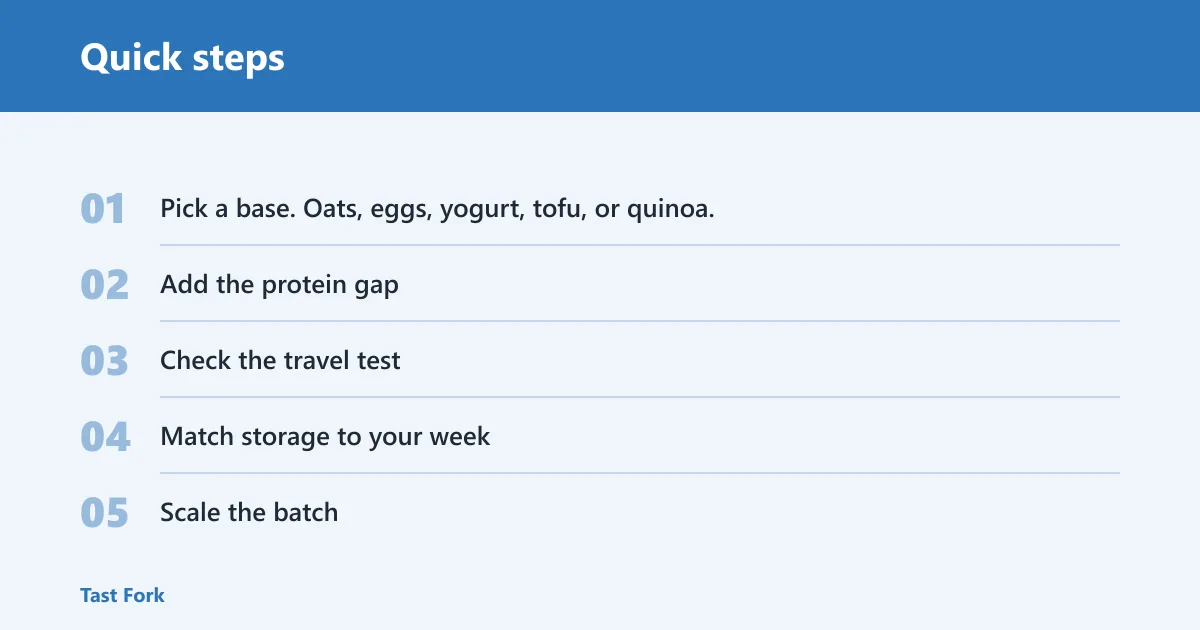
- Pick a base. Oats, eggs, yogurt, tofu, or quinoa.
- Add the protein gap. Use Greek yogurt, cottage cheese, eggs, tofu, or protein powder to reach your target.
- Check the travel test. If it must ride in a bag, choose burritos, jars, muffins, or cups.
- Match storage to your week. Make chilled items for 2 to 4 days and freezer items when you need backup breakfasts.
- Scale the batch. Single adults may need 3 portions; families often do better with 8 to 12 portions.
Say your workday starts at 6:30 a.m. and lunch is not until noon. A 28g jar of overnight oats beats a 12g muffin because the first option is built to last longer. A common first-timer mistake is packing the same breakfast for every day of the week, then getting bored by day three and buying something else.
What can go wrong with breakfast meal prep?
Soggy oats and watery yogurt. Too much liquid, juicy fruit, or a long soak can thin the texture fast. Keep crunchy toppings separate, and add berries or nuts right before eating if you want more bite.
Rubbery eggs and dry baked items. Eggs keep cooking after they leave the oven, so pull them when the center is just set. If you reheat muffins or frittatas, use shorter bursts and cover loosely so steam does not dry them out.
Freezer burn and bland reheats. Burritos and muffin cups need tight wrapping and labels with the date. Freeze them flat, remove air from bags, and season more boldly than you would for same-day food because flavor softens after freezing.
Separation in smoothies. Smoothies made ahead often split, especially if they are too thin. Freeze the fruit and dry ingredients as packs, then blend with liquid at the last minute for a better texture.
Suppose you freeze four breakfast burritos in a thin storage bag with a lot of air left inside. After a month, the tortilla edges can dry out and taste stale even though the filling is still safe. Tight wrapping prevents most of that.
Storage windows that actually matter. Chilled egg dishes are safest and best within a few days, while burritos and some baked items are better as freezer meals. If a breakfast smells off, looks wet in a new way, or has ice crystals from poor wrapping, it is better to discard it than force it into the week.
Frequently asked questions
What are some easy high-protein breakfast meal prep ideas?
Good starter options are Greek yogurt parfait jars, protein overnight oats, egg muffins, sheet pan eggs, breakfast burritos, and smoothie packs. These recipes are easy to portion, and most can be built around a single protein source plus one or two mix-ins. Choose the one that fits your storage space and morning routine.
How much protein should I aim for in a breakfast meal prep?
A practical target is 15 to 25 grams of protein per serving, with 30+ grams often making sense on longer mornings or harder training days. That range helps many people stay fuller longer and avoid a quick midmorning crash. If you already eat a larger lunch, aim toward the lower end.
Can I meal prep high-protein breakfasts that are kid-friendly?
Yes. Egg muffins, sausage egg muffins, baked oatmeal, burritos, and yogurt jars are usually the easiest kid-friendly picks. Keep seasoning mild, cut items into small portions, and avoid crunchy toppings that get soggy. Burritos can be sliced in half for younger kids or packed whole for older ones.
What are good plant-based high-protein breakfast options for meal prep?
Tofu scrambles, chia protein pudding, quinoa yogurt jars made with plant yogurt, and smoothie packs with soy milk or pea protein are strong choices. These options can still hit a useful protein target without eggs or meat. For better flavor, use salt, lemon, cinnamon, maple, or a spice blend.
How long can high-protein breakfast meal preps be stored safely?
Most chilled breakfast meal preps do best within 2 to 4 days, depending on the ingredients. Egg white frittata is listed at up to 2 days refrigerated, while burritos and many baked items can be frozen for longer storage. Texture usually drops before safety does, so plan around quality as well as food safety.
What equipment do I need for effective breakfast meal prep?
You only need a few basics: storage containers, overnight oat jars, a muffin tin, a sheet pan, freezer bags, and labels. A mixing bowl and measuring cups help too. The goal is simple portioning and clear dating so you know what needs to be eaten first.