
30+ Ulam Ideas For Dinner: Delicious Filipino Meals
Finding the perfect ulam ideas for dinner can transform an ordinary evening into a culinary delight, offering a taste of home and comfort with every bite. This post delves into a diverse array of Filipino dishes that are sure to become family favorites, covering everything from quick weeknight meals to more elaborate weekend feasts.
Simply put, this guide offers over 30 Filipino ulam ideas, categorized for easy selection, featuring popular classics and lesser-known gems to inspire your next dinner. From savory stews to grilled delights, discover recipes perfect for any occasion and skill level, making meal planning effortless and enjoyable.
Key Takeaways
- Discover over 30 diverse ulam ideas for dinner, spanning various categories like soups, grilled, fried, and vegetable dishes.
- Learn about popular Filipino classics such as Adobo, Sinigang, and Kare-Kare, along with exciting new options.
- Find quick and easy recipes suitable for weeknights and more complex dishes for special occasions.
- Gain insights into ingredient pairings and preparation tips to elevate your Filipino cooking.
- Explore a rich culinary landscape designed to satisfy a wide range of palates and preferences for your next family meal.
What is Ulam? Understanding Filipino Main Dishes
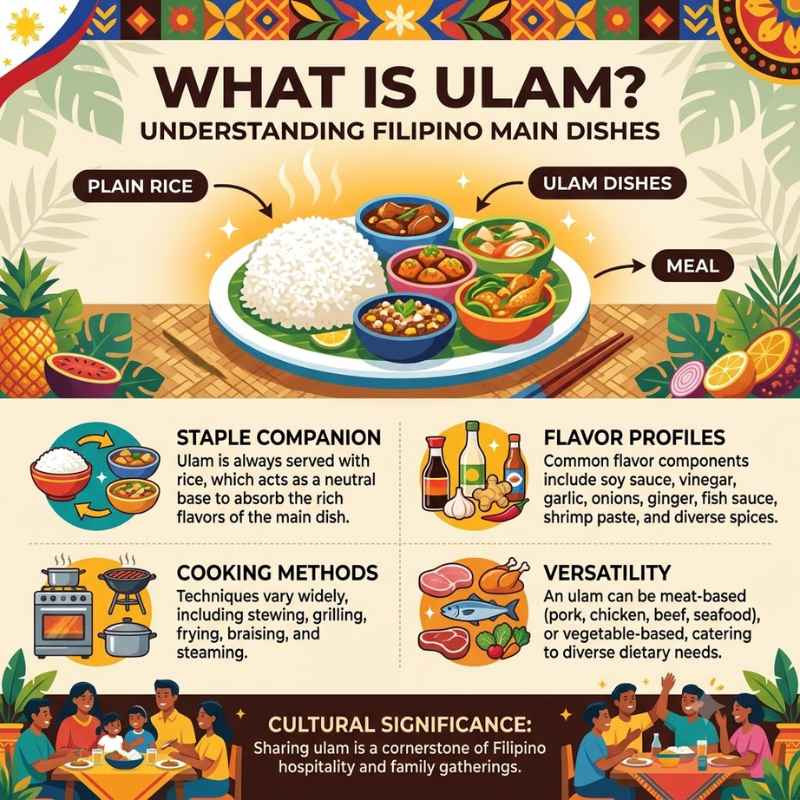
Ulam is a fundamental concept in Filipino cuisine, referring to the main dish that is served with rice. Rice is the staple food in the Philippines, and the ulam is what complements and elevates the meal. Without ulam, a plate of plain rice is considered incomplete.
The variety of ulams is immense, reflecting the diverse regional influences and agricultural bounty of the archipelago.
These dishes are typically savory, rich in flavor, and can range from simple preparations of fresh ingredients to complex, slow-cooked stews. They are the heart of any Filipino meal, fostering a sense of community and shared enjoyment around the dining table. The choice of ulam often depends on the occasion, available ingredients, and personal preference.
- Staple Companion: Ulam is always served with rice, which acts as a neutral base to absorb the rich flavors of the main dish.
- Flavor Profiles: Common flavor components include soy sauce, vinegar, garlic, onions, ginger, fish sauce, shrimp paste, and a variety of spices.
- Cooking Methods: Techniques vary widely, including stewing, grilling, frying, braising, and steaming.
- Versatility: An ulam can be meat-based (pork, chicken, beef, seafood), or vegetable-based, catering to diverse dietary needs and preferences.
- Cultural Significance: Sharing ulam is a cornerstone of Filipino hospitality and family gatherings.
Savory Stews and Soups: Hearty Ulam Ideas
Filipino cuisine boasts a rich tradition of comforting stews and flavorful soups, perfect for warming up any dinner table. These dishes often simmer for hours, allowing the ingredients to meld into a symphony of taste and aroma, making them ideal for preparing ahead of time. The depth of flavor in these ulams is a testament to slow cooking and the skillful use of aromatic ingredients.
The variety in these hearty meals is astounding, from tangy broths to rich, thick sauces. They are designed to be spooned generously over fluffy steamed rice, creating a complete and satisfying meal. For busy weeknights, many of these can be prepared partially in advance, with the final simmering done just before serving.
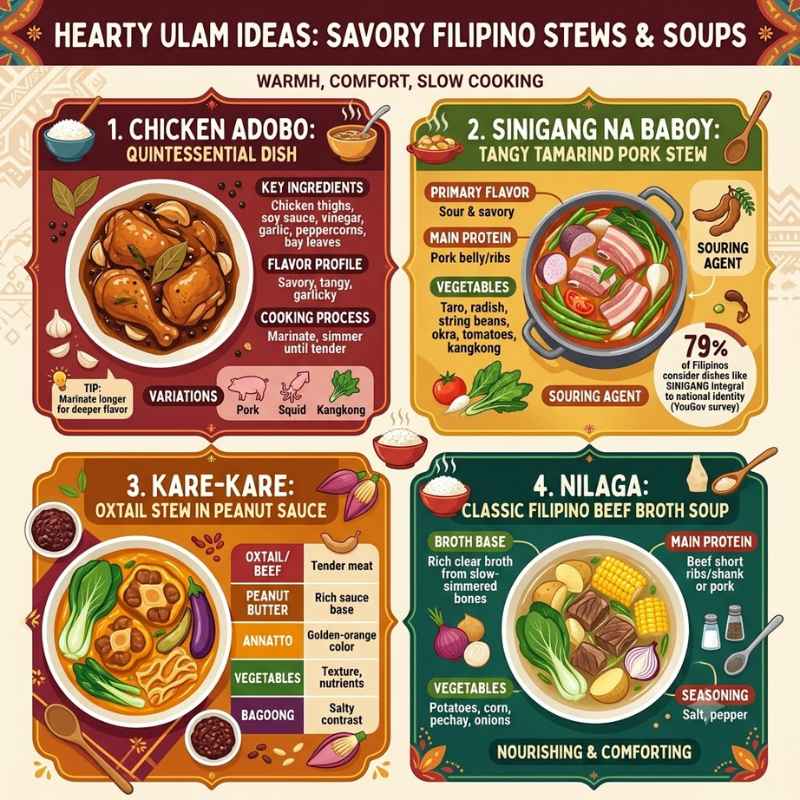
1. Chicken Adobo: The Quintessential Filipino Dish
Chicken Adobo is perhaps the most iconic Filipino dish, known for its distinct savory, tangy, and slightly sweet flavor profile. It’s a dish that varies slightly from household to household, with each family having its own treasured recipe passed down through generations. The key ingredients—soy sauce, vinegar, garlic, peppercorns, and bay leaves—create a marinade that tenderizes the chicken and infuses it with incredible depth.
Traditionally, adobo is simmered until the meat is tender and the sauce has thickened. Some variations involve browning the chicken before simmering, while others are simply simmered in the marinade. The resulting dish is deeply flavorful, with a sauce that is perfect for spooning over rice.
It’s a versatile ulam, with common variations including pork, squid, and even vegetables like kangkong (water spinach).
- Key Ingredients: Chicken (thighs or legs), soy sauce, vinegar, garlic, black peppercorns, bay leaves, water, oil.
- Flavor Profile: Savory, tangy, garlicky, peppery, with a hint of sweetness (optional).
- Cooking Process: Marinate chicken, then simmer in marinade until tender and sauce reduces.
- Serving Suggestion: Serve hot with steamed white rice and a side of fresh tomatoes or a simple green salad.
- Variations: Pork Adobo, Adobong Pusit (Squid Adobo), Adobong Kangkong (Water Spinach Adobo).
Tip: For a richer flavor, allow the chicken to marinate in the adobo sauce for at least 30 minutes, or even overnight, before cooking. This allows the flavors to penetrate the meat more deeply.
2. Sinigang na Baboy: Tangy Tamarind Pork Stew
Sinigang na Baboy is a beloved Filipino sour soup, with its distinctive tartness primarily derived from tamarind (sampalok). This comforting stew is packed with tender pieces of pork (usually belly or ribs), along with a medley of vegetables like taro (gabi), radish (labanos), string beans (sitaw), okra, and leafy greens such as kangkong or spinach. The sourness is invigorating and cuts through the richness of the pork.
The preparation involves boiling the pork until tender, then adding the souring agent and vegetables in stages, depending on how long each vegetable takes to cook. Fresh tamarind pulp is traditionally used, but Sinigang mixes or even guava can provide the signature sourness. It’s a deeply satisfying dish that’s often considered a national comfort food, especially on rainy days.
- Primary Flavor: Sour and savory, with a rich pork broth.
- Main Protein: Pork belly or ribs, bone-in for best flavor.
- Vegetables: Taro, radish, string beans, okra, tomatoes, onions, kangkong or spinach.
- Souring Agent: Tamarind (fresh, paste, or Sinigang mix), sometimes guava or calamansi.
- Health Benefits: Rich in vitamins and minerals from the variety of vegetables.
According to a survey by YouGov, 79% of Filipinos consider traditional Filipino dishes like Sinigang to be an integral part of their national identity.
3. Kare-Kare: Oxtail and Vegetable Stew in Peanut Sauce
Kare-Kare is a uniquely Filipino stew characterized by its rich, savory peanut sauce and a hearty combination of tender oxtail, tripe, and various vegetables like eggplant, string beans, and bok choy. Banana blossoms are also a traditional addition, lending a subtle bitterness and unique texture. The sauce, made from ground roasted peanuts or peanut butter, is the star of this dish.
Traditionally served with bagoong alamang (fermented shrimp paste) on the side, which provides a salty counterpoint to the sweet and savory sauce, Kare-Kare is a true culinary masterpiece. The preparation is a labor of love, often involving boiling the meats until they are fall-off-the-bone tender before the vegetables are added and the sauce is thickened. It’s a celebratory dish, often prepared for family gatherings and special occasions.
| Kare-Kare Ingredients | Typical Use |
|---|---|
| Oxtail, Beef Tripe, Beef Shank | For tender, flavorful meat |
| Peanut Butter or Ground Peanuts | Forms the base of the rich sauce |
| Annatto Powder/Oil | For a distinctive golden-orange color |
| Eggplant, String Beans, Bok Choy, Banana Blossom | Adds texture, nutrients, and a slight bitterness |
| Fermented Shrimp Paste (Bagoong) | Served on the side for a salty contrast |
This table highlights the key components that make Kare-Kare a unique and delicious Filipino favorite.
4. Nilaga: Classic Filipino Beef Broth Soup
Nilaga, meaning “boiled” in Tagalog, is a simple yet profoundly comforting Filipino soup made with boiled beef or pork, typically with bone-in cuts like short ribs or shank. It’s characterized by its clear, flavorful broth derived from slow simmering, and a medley of root vegetables and greens. It’s a staple in many Filipino homes, especially during cooler months or when someone needs a nourishing meal.
The beauty of Nilaga lies in its simplicity and the purity of its flavors. The main ingredients include beef or pork, potatoes, corn on the cob, pechay (or other leafy greens), and onions. The broth is seasoned with salt and pepper, allowing the natural taste of the meat and vegetables to shine through.
It’s often served as a complete meal with rice, or as a side dish to a more elaborate spread.
- Broth Base: Rich, clear broth from slow-simmered beef or pork bones.
- Main Protein: Bone-in beef short ribs, beef shank, or pork.
- Vegetables: Potatoes, corn on the cob, pechay (bok choy or napa cabbage), onions.
- Seasoning: Salt, black pepper.
- Serving: Typically served hot with steamed rice.
Grilled and Fried Delights: Flavorful Ulam Options
For those who love a bit of char or a satisfying crunch, Filipino grilled and fried dishes offer a delicious array of options. These ulams often feature marinades that infuse the meats with smoky or savory flavors, while fried dishes provide that irresistible crispy texture that complements rice perfectly. They are perfect for outdoor gatherings or simply when you crave something with a bit more bite.
The simplicity of grilling allows the natural flavors of the ingredients to come through, often enhanced by tangy or sweet marinades. Fried dishes, on the other hand, are all about achieving that golden-brown perfection, making them incredibly satisfying. From succulent skewers to perfectly crisp pork belly, these options are sure to be a hit.
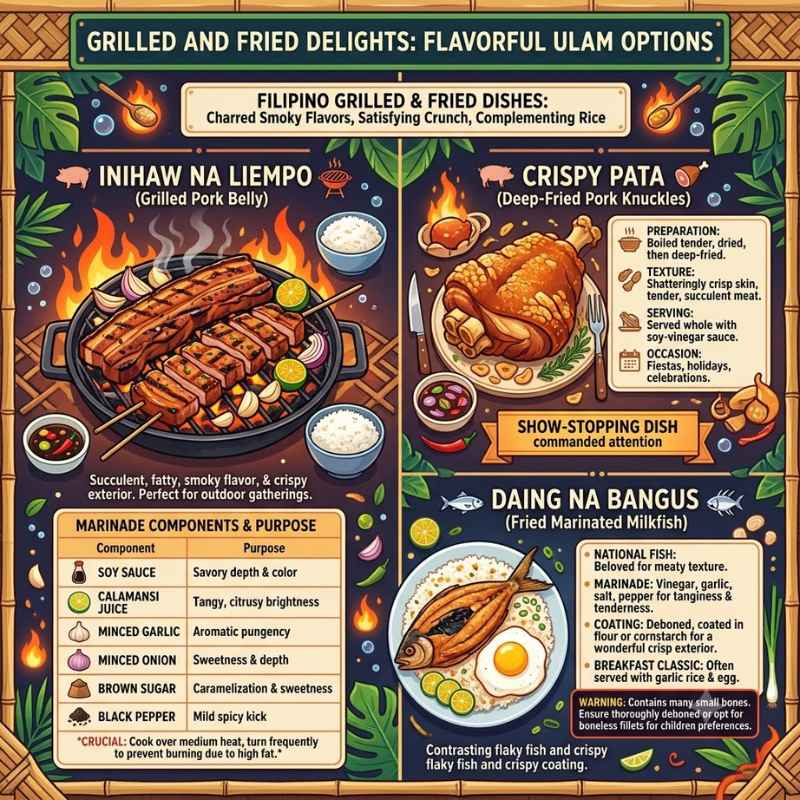
5. Inihaw na Liempo: Grilled Pork Belly
Inihaw na Liempo, or grilled pork belly, is a wildly popular Filipino dish celebrated for its succulent, fatty, and irresistibly smoky flavor. The pork belly is typically marinated in a mixture of soy sauce, calamansi juice, garlic, onions, and a touch of sugar before being grilled to perfection over charcoal. The result is tender meat with a crispy, caramelized exterior.
The key to great Inihaw na Liempo is the balance of fat and meat, and the smoky char from the grill. It’s often served with a dipping sauce made from soy sauce, vinegar, and chilies, which adds another layer of tang and heat. This dish is a crowd-pleaser, perfect for barbecues and family get-togethers, and is always a highlight of any Filipino feast.
| Inihaw na Liempo Marinade Components | Purpose |
|---|---|
| Soy Sauce | For savory depth and color |
| Calamansi Juice (or Lemon Juice) | For a tangy, citrusy brightness |
| Minced Garlic | Adds aromatic pungency |
| Minced Onion | Contributes sweetness and depth |
| Brown Sugar (Optional) | For caramelization and a touch of sweetness |
| Black Pepper | For a mild spicy kick |
This marinade is essential for achieving the perfect balance of flavors in grilled pork belly.
Important: When grilling pork belly, it’s crucial to cook it over medium heat and turn it frequently to ensure even cooking and prevent burning. The high fat content means it can flare up quickly.
6. Crispy Pata: Deep-Fried Pork Knuckles
Crispy Pata is a show-stopping dish featuring deep-fried pork knuckles that are incredibly tender on the inside and shatteringly crisp on the outside. The preparation involves boiling the pork knuckles until they are tender, then refrigerating them to allow the skin to dry out, which is key for achieving maximum crispiness when fried. This dish is a celebration of texture and rich, savory flavor.
It’s a true indulgence, typically served whole and dramatically carved at the table. The accompanying dipping sauce, usually a mixture of soy sauce, vinegar, onions, and chilies, provides a bright, acidic counterpoint to the richness of the pork. Crispy Pata is a dish that commands attention and is a favorite for celebrations and special gatherings.
- Main Component: Pork knuckles (pata).
- Preparation: Boiled until tender, dried, then deep-fried until golden and crispy.
- Texture: Crispy skin, tender, succulent meat.
- Serving: Usually served whole with a side of soy-vinegar dipping sauce.
- Occasion: Popular for fiestas, holidays, and celebratory meals.
7. Daing na Bangus: Fried Marinated Milkfish
Daing na Bangus is a classic Filipino breakfast or ulam dish featuring milkfish that has been marinated and then fried to crispy perfection. Bangus, or milkfish, is the national fish of the Philippines and is beloved for its meaty texture. The marinating process typically involves vinegar, garlic, salt, and pepper, which tenderizes the fish and adds a subtle tanginess.
The fish is often deboned (though some prefer to keep the bones for extra flavor), then coated lightly in flour or cornstarch before frying to achieve a wonderfully crisp exterior. It’s usually served for breakfast alongside garlic fried rice (sinangag) and a fried egg (itlog), but it makes for an excellent ulam any time of day. The contrast between the flaky, flavorful fish and the crispy coating is utterly delicious.
Warning: Milkfish contains many small bones. If serving to children or those who prefer to avoid bones, ensure the fish is thoroughly deboned or opt for boneless fillets.
Vegetable-Centric Ulams: Delicious and Healthy Choices
For those seeking lighter yet equally flavorful options, Filipino cuisine offers a wealth of vegetable-focused ulams. These dishes showcase the freshness and versatility of local produce, proving that plant-based meals can be just as satisfying and delicious as meat-centric ones. They are perfect for adding balance to a meal or as standalone dishes for vegetarians and health-conscious diners.
From sautéed greens to hearty vegetable stews, these ulams are packed with nutrients and vibrant flavors. They often utilize simple seasonings that highlight the natural taste of the vegetables, making them approachable and universally appealing. These dishes are not only healthy but also contribute to the colorful and diverse tapestry of Filipino gastronomy.
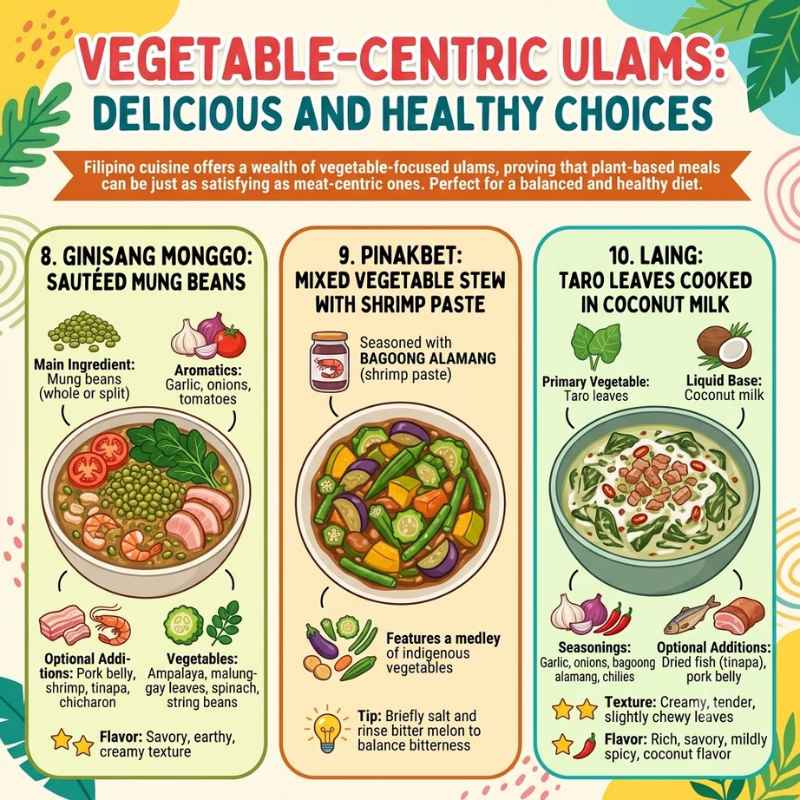
8. Ginisang Monggo: Sautéed Mung Beans
Ginisang Monggo, or sautéed mung beans, is a highly nutritious and popular Filipino vegetable ulam. It’s a dish that’s both hearty and healthy, made by simmering mung beans until tender, then sautéing them with aromatics like garlic, onions, and tomatoes, often with the addition of pork or shrimp for added flavor. Leafy greens like ampalaya (bitter melon) or malunggay (moringa leaves) are typically stirred in towards the end.
The texture of Ginisang Monggo is creamy from the cooked beans, with the vegetables providing a pleasant contrast. It’s a testament to how humble ingredients can be transformed into a deeply flavorful and satisfying meal. This dish is a favorite for its nutritional value, offering a good source of protein and fiber, and is often enjoyed with fried fish or pork for a complete meal.
- Main Ingredient: Mung beans (whole or split).
- Aromatics: Garlic, onions, tomatoes.
- Optional Additions: Pork belly, shrimp, dried fish (tinapa), pork cracklings (chicharon).
- Vegetables: Bitter melon (ampalaya), malunggay leaves, spinach, string beans.
- Flavor: Savory, earthy, with a creamy texture.
9. Pinakbet: Mixed Vegetable Stew with Shrimp Paste
Pinakbet is a vibrant and flavorful Filipino vegetable stew originating from the Ilocos region. It features a medley of indigenous vegetables like eggplant, okra, string beans, bitter melon, and squash, all stewed together and seasoned primarily with bagoong alamang (fermented shrimp paste). The bagoong imparts a distinct salty, umami-rich flavor that defines the dish.
Despite the somewhat bitter vegetables, the bagoong and the natural sweetness of squash create a surprisingly harmonious and delicious combination. Pinakbet is often cooked until the vegetables are tender but still hold their shape, allowing each ingredient to contribute its unique texture and flavor to the stew. It can be served as a standalone vegetarian dish or as an accompaniment to grilled or fried meats and fish.
Tip: To balance the bitterness of some vegetables like bitter melon, you can briefly salt them and rinse them before cooking. This helps to draw out some of the bitterness.
10. Laing: Taro Leaves Cooked in Coconut Milk
Laing is a classic Bicolano dish that features taro leaves simmered in rich coconut milk, typically seasoned with ground chilies, garlic, and shrimp paste (bagoong alamang). The slow cooking process allows the taro leaves to become incredibly tender, and the coconut milk creates a thick, creamy, and deeply flavorful sauce. It’s a dish that embodies the rich culinary heritage of the Bicol region, known for its love of spicy and coconut-based dishes.
The key to authentic Laing is the slow simmering, which ensures the leaves are fully cooked and tender, and the flavors have ample time to meld. Dried fish (like tinapa) or pork belly are sometimes added for extra depth of flavor. Laing is often served with rice and can also be a delicious accompaniment to grilled or fried meats.
- Primary Vegetable: Taro leaves.
- Liquid Base: Coconut milk.
- Seasonings: Garlic, onions, shrimp paste (bagoong alamang), chilies (siling labuyo for heat).
- Optional Additions: Dried fish (tinapa), pork belly.
- Texture: Creamy, tender, slightly chewy leaves.
- Flavor: Rich, savory, mildly spicy, with a distinct coconut flavor.
Seafood Delights: Fresh Catches for Your Table
The Philippines, being an archipelago, boasts an abundance of fresh seafood, making it a star ingredient in many Filipino ulams. From succulent fish and shrimp to tender squid and shellfish, these dishes celebrate the bounty of the ocean with simple yet exquisite preparations. These seafood ulams are often light, flavorful, and quick to prepare, making them perfect for any meal.
Whether grilled, steamed, or simmered in savory broths, seafood ulams offer a delightful alternative to meat dishes. Their natural flavors are often enhanced with citrus, garlic, and herbs, creating dishes that are both healthy and incredibly satisfying. Exploring these options can bring the taste of the sea right to your dining table.
11. Grilled Tuna Belly (Inihaw na Tiyan ng Tuna)
Grilled Tuna Belly is a highly sought-after seafood ulam, renowned for its rich, buttery texture and intensely savory flavor. Tuna belly, or “tiyan ng tuna,” is the fattiest part of the tuna, making it exceptionally tender and succulent when grilled. It’s typically marinated in a simple mixture of soy sauce, calamansi juice, garlic, and pepper, allowing the natural richness of the fish to shine through.
The grilling process imparts a smoky char that beautifully complements the fatty, melt-in-your-mouth quality of the tuna belly. Served with a side of spiced vinegar or a soy-calamansi dip, it’s a luxurious yet straightforward dish that’s a favorite among seafood lovers. The high oil content in tuna belly means it stays moist and flavorful even when grilled.
Tip: Marinate the tuna belly for at least 30 minutes to an hour before grilling. This allows the flavors to penetrate the rich meat and enhances tenderness.
12. Sinigang na Hipon: Shrimp in Sour Tamarind Broth
A lighter, quicker version of the classic Sinigang, Sinigang na Hipon features plump shrimp cooked in a tangy tamarind broth alongside a variety of fresh vegetables. This dish offers all the comforting sourness of traditional Sinigang but with the delicate flavor and quick cooking time of shrimp. It’s an excellent option for a speedy weeknight meal that doesn’t compromise on taste or nourishment.
The shrimp are typically added towards the end of the cooking process to prevent them from becoming tough. Common vegetables include tomatoes, onions, radishes, string beans, and leafy greens like kangkong or spinach. The sour broth is invigorating, making it a perfect dish for any occasion, especially when a refreshing soup is desired.
- Main Protein: Large shrimp (prawns).
- Souring Agent: Tamarind (fresh, paste, or Sinigang mix).
- Vegetables: Tomatoes, onions, radish, string beans, okra, taro, leafy greens.
- Flavor Profile: Tangy, savory, light, and refreshing.
- Preparation Time: Relatively quick compared to pork or beef Sinigang.
13. Ginisang Sayote: Sautéed Chayote with Shrimp
Ginisang Sayote is a simple, healthy, and flavorful vegetable ulam made with sautéed chayote (sayote), often with the addition of shrimp or pork for added flavor and protein. Chayote is a mild-tasting squash that readily absorbs the flavors of the ingredients it’s cooked with. This dish is a testament to how humble vegetables can be transformed into a delightful meal.
The preparation is straightforward: sauté aromatics, add the sliced chayote and any protein, and simmer with a bit of broth or water until the chayote is tender. It’s often seasoned with fish sauce (patis) for saltiness and a hint of pepper. Ginisang Sayote is a versatile dish that pairs well with virtually any other ulam, making it a staple in many Filipino households.
A 2022 report by the Philippine Statistics Authority indicated that vegetables constitute a significant portion of household food consumption, underscoring the importance of dishes like Ginisang Sayote.
Noodle and Rice Dishes as Ulams
While rice is the primary staple, certain noodle dishes and rice preparations can also serve as substantial ulams, especially for lighter meals or when combined with other side dishes. These dishes often incorporate a variety of ingredients, making them complete and satisfying on their own. They offer a different texture and flavor profile compared to traditional stews and grilled items.
These meals are perfect for when you want something comforting yet easy to prepare. They often involve stir-frying or simple simmering, making them efficient for busy schedules. Exploring these options can add a new dimension to your Filipino dining experience.
14. Pancit Canton: Filipino Stir-Fried Noodles
Pancit Canton is a beloved Filipino stir-fried noodle dish that is both a popular celebration food and a common ulam. It features wheat noodles stir-fried with a medley of vegetables like cabbage, carrots, snow peas, and bell peppers, along with your choice of protein such as chicken, pork, shrimp, or a combination. The sauce, typically soy sauce-based with a hint of oyster sauce or fish sauce, coats everything in a savory glaze.
The beauty of Pancit Canton lies in its versatility and customizable nature. It’s often served during birthdays and special occasions, symbolizing long life. While it can be a dish on its own, it’s also frequently paired with other ulams like fried chicken or lumpia for a more complete meal.
The texture of the noodles, combined with the crisp vegetables and savory sauce, makes it incredibly appealing.
- Noodle Type: Thick wheat noodles (Pancit Canton noodles).
- Vegetables: Cabbage, carrots, snow peas, bell peppers, onions.
- Proteins: Chicken, pork, shrimp, liver.
- Sauce Base: Soy sauce, oyster sauce (or fish sauce), sometimes a touch of sugar.
- Serving: Can be a standalone ulam or served with other dishes.
15. Arroz Caldo: Filipino Rice Porridge
Arroz Caldo, meaning “hot rice,” is a comforting and nourishing Filipino rice porridge, similar to congee. It’s made by simmering rice in chicken broth until it breaks down into a thick, creamy consistency. It’s typically flavored with ginger, garlic, onions, and often enriched with chicken pieces, and is garnished with toasted garlic, spring onions, and a hard-boiled egg.
It’s a perfect ulam for when you need something warming and restorative.
While often considered a breakfast or sick-day food, Arroz Caldo is a substantial and flavorful ulam that can be enjoyed any time. The ginger provides a warming spice, while the chicken broth offers a savory depth. It’s often served with a side of calamansi or vinegar for a touch of acidity, and a dash of fish sauce for extra saltiness.
Some variations also include a drizzle of chili oil for those who like a bit of heat.
Warning: While Arroz Caldo is generally mild, ensure it’s not too hot when serving, especially if it’s intended for someone feeling unwell. Allow it to cool slightly before serving.
Quick and Easy Ulams: For Busy Weeknights
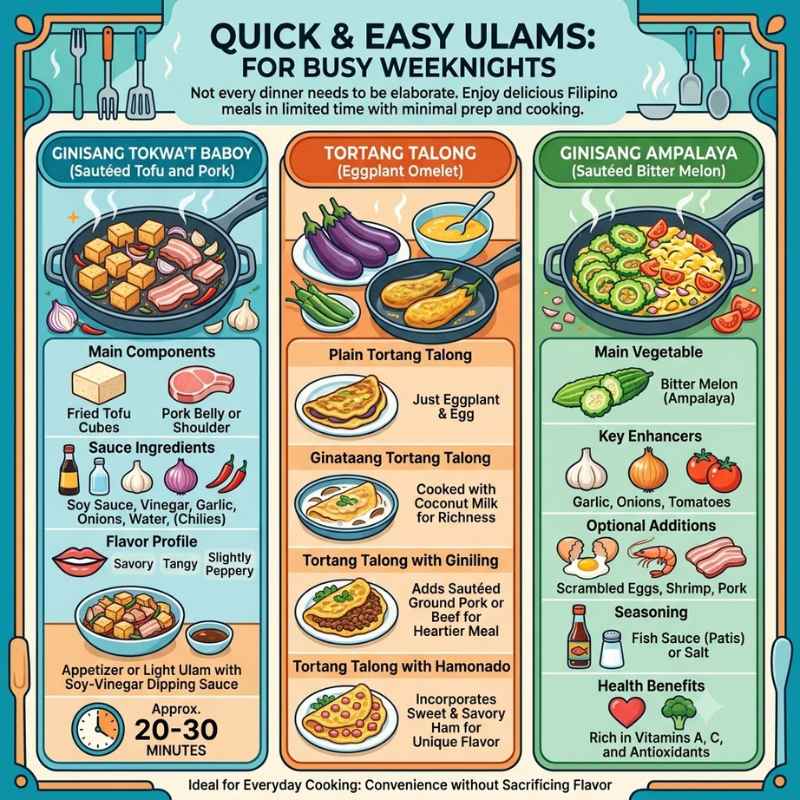
Not every dinner needs to be an elaborate affair. Filipino cuisine offers a fantastic range of quick and easy ulams that are perfect for busy weeknights when time is limited but the desire for a delicious, home-cooked meal remains. These recipes often involve minimal prep and cooking time, utilizing readily available ingredients.
These dishes prove that delicious and satisfying meals don’t always require hours in the kitchen. They are designed for convenience without sacrificing flavor, making them ideal for everyday cooking. From simple stir-fries to quick sautés, these options will become your go-to when you need a fast and tasty ulam.
16. Ginisang Tokwa’t Baboy: Sautéed Tofu and Pork
Ginisang Tokwa’t Baboy is a popular Filipino sauté that features cubes of fried tofu and tender pieces of pork belly or shoulder, cooked in a savory sauce with onions and sometimes chilies. This dish is often served as an appetizer or as a light ulam, commonly accompanied by a dipping sauce made of soy sauce, vinegar, and chilies.
The combination of soft tofu and savory pork, bathed in a flavorful sauce, makes this dish incredibly appealing. It’s a quick and satisfying option that’s easy to customize with different vegetables or spice levels. The contrast in textures between the slightly crisp tofu and the tender pork is delightful.
- Main Components: Fried tofu cubes, pork belly or shoulder.
- Sauce Ingredients: Soy sauce, vinegar, garlic, onions, water, sometimes chilies.
- Flavor Profile: Savory, tangy, slightly peppery.
- Serving Suggestion: As an appetizer or light ulam, often with a soy-vinegar dipping sauce.
- Preparation Time: Approximately 20-30 minutes.
17. Tortang Talong: Eggplant Omelet
Tortang Talong, or eggplant omelet, is a simple yet delicious Filipino dish made from grilled or boiled eggplant that is then coated in beaten egg and fried. It’s a versatile dish that can be enjoyed on its own, served with a side of ketchup or vinegar for dipping, or as a hearty ulam. It’s a popular way to enjoy eggplant, offering a soft texture and savory flavor.
The process involves grilling or boiling the eggplant until tender, peeling it, then dipping the whole eggplant (or segments) into a seasoned egg mixture before frying until golden brown and puffed up. Some variations include adding ground meat or vegetables to the egg mixture for a more substantial dish. It’s a quick, affordable, and satisfying meal option.
| Variations of Tortang Talong | Description |
|---|---|
| Plain Tortang Talong | Classic version with just eggplant and egg. |
| Ginataang Tortang Talong | Eggplant omelet cooked with coconut milk for richness. |
| Tortang Talong with Giniling | Adds sautéed ground pork or beef for a heartier meal. |
| Tortang Talong with Hamonado | Incorporates sweet and savory ham for a unique flavor. |
This table shows the versatility of Tortang Talong, allowing for various flavor profiles and levels of richness.
18. Ginisang Ampalaya: Sautéed Bitter Melon
Ginisang Ampalaya is a healthy and flavorful Filipino dish made with sautéed bitter melon, often with scrambled eggs and sometimes shrimp or pork. Despite its name, the bitterness of the ampalaya is balanced by the other ingredients and the savory seasoning, making it a surprisingly delicious and sought-after vegetable ulam.
The preparation typically involves salting the sliced bitter melon to draw out some of its bitterness, rinsing it, and then sautéing it with garlic, onions, and tomatoes. Scrambled eggs are often added towards the end, binding the ingredients together and adding a creamy texture. This dish is a fantastic way to incorporate more vegetables into your diet, and it pairs wonderfully with steamed rice and other Filipino favorites.
- Main Vegetable: Bitter melon (ampalaya).
- Key Enhancers: Garlic, onions, tomatoes.
- Optional Additions: Scrambled eggs, shrimp, pork.
- Seasoning: Fish sauce (patis) or salt.
- Health Benefits: Rich in vitamins A, C, and antioxidants.
Special Occasion and Celebratory Ulams
Certain dishes are reserved for special occasions, fiestas, and family reunions, embodying the spirit of Filipino festivity and abundance. These ulams are often more labor-intensive or require specific ingredients, making them stand out from everyday meals. They are the centerpiece of any celebration, bringing people together to share in the joy of good food and good company.
These dishes are more than just food; they are edible expressions of love, tradition, and Filipino hospitality. Preparing them is often a communal effort, with family members contributing their skills and time to create a memorable feast. They are a culinary representation of Filipino culture.
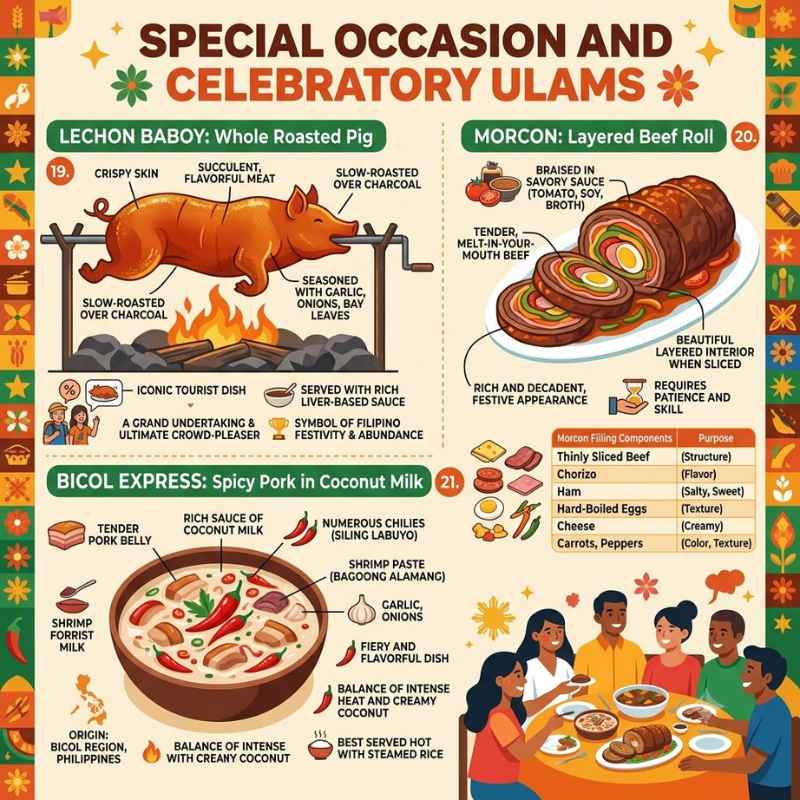
19. Lechon Baboy: Whole Roasted Pig
Lechon Baboy, the whole roasted pig, is arguably the king of Filipino celebratory dishes. It’s a spectacular centerpiece, renowned for its incredibly crispy skin and succulent, flavorful meat. The pig is typically seasoned with a mixture of garlic, onions, bay leaves, and sometimes herbs, then slow-roasted over charcoal for hours until perfectly cooked.
The preparation of Lechon is a grand undertaking, often requiring a specialized setup and significant time. However, the result is an unparalleled culinary experience. The crackling skin and tender, juicy meat make it a dish that is absolutely unforgettable and a guaranteed crowd-pleaser at any significant celebration.
It’s often served with a rich liver-based sauce.
According to tourism statistics, Lechon is one of the most iconic dishes tourists seek when visiting the Philippines, highlighting its cultural significance.
20. Morcon: Layered Beef Roll
Morcon is a rich and festive Filipino dish often prepared for special occasions like Christmas and fiestas. It’s a layered roulade of thinly sliced beef, often stuffed with chorizo, ham, cheese, hard-boiled eggs, and vegetables like carrots and bell peppers. The entire filling is then rolled up tightly in the beef slices, tied, and braised in a savory sauce made with tomato sauce, soy sauce, and broth.
The braising process renders the beef incredibly tender and allows the flavors of the filling and sauce to meld beautifully. When sliced, Morcon reveals its beautiful layered interior, making it as visually appealing as it is delicious. It’s a dish that requires patience and skill, but the decadent result is well worth the effort.
| Morcon Filling Components | Purpose |
|---|---|
| Thinly Sliced Beef (e.g., Rump or Sirloin) | Forms the outer layer and structure of the roll. |
| Filipino Chorizo (or other cured sausage) | Adds a spicy, savory, and sometimes sweet flavor. |
| Ham (sliced) | Contributes a salty, slightly sweet, and smoky element. |
| Hard-Boiled Eggs | Provides a soft, rich texture and completes the layers. |
| Cheese (e.g., Edam or Cheddar) | Adds a creamy, savory, and slightly nutty flavor. |
| Carrots, Bell Peppers (julienned) | Add color, texture, and a touch of sweetness. |
The carefully arranged layers of Morcon contribute to its festive appearance and rich taste.
21. Bicol Express: Spicy Pork in Coconut Milk
Bicol Express is a fiery and flavorful dish originating from the Bicol region, known for its love of spicy and coconut-based cuisine. It features tender pork belly simmered in a rich sauce of coconut milk, chilies (siling labuyo), garlic, onions, and shrimp paste (bagoong alamang). The intense heat from the chilies is balanced by the creamy coconut milk, creating a deeply satisfying flavor profile.
This dish is not for the faint of heart but is incredibly rewarding for those who appreciate a good kick of spice. The combination of tender pork, creamy coconut milk, and pungent shrimp paste is a classic Filipino flavor combination. Bicol Express is a prime example of the bold and exciting flavors that characterize Filipino cooking.
- Key Ingredients: Pork belly, coconut milk, green chilies (siling haba), red chilies (siling labuyo), shrimp paste (bagoong alamang), garlic, onions.
- Flavor Profile: Spicy, savory, creamy, rich.
- Origin: Bicol Region, Philippines.
- Serving: Best served hot with steamed rice.
- Heat Level: Can be adjusted by the amount of chilies used.
Beyond the Classics: Unique and Regional Ulam Ideas
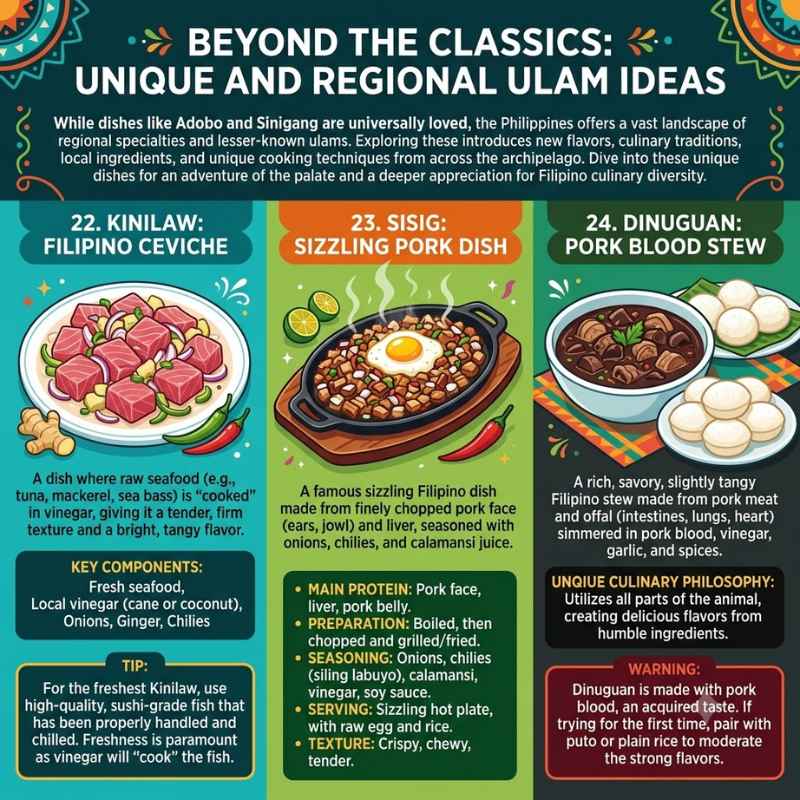
While dishes like Adobo and Sinigang are universally loved, the Philippines offers a vast landscape of regional specialties and lesser-known ulams that deserve a spot on your dinner table. Exploring these can introduce you to new flavors and culinary traditions from different parts of the archipelago. These dishes often highlight local ingredients and unique cooking techniques.
Diving into these unique ulams can be an adventure for your palate, offering a deeper appreciation for the diversity of Filipino cuisine. From intricate preparations to simple yet profound flavors, these dishes are a testament to the rich culinary heritage of the Philippines.
22. Kinilaw: Filipino Ceviche
Kinilaw is the Filipino answer to ceviche, a dish where raw seafood—most commonly fish like tuna, tanigue (mackerel), or sea bass—is “cooked” in vinegar, giving it a tender, slightly firm texture and a bright, tangy flavor. It’s typically mixed with finely chopped onions, ginger, chilies, and sometimes cucumber or radish. The quality of the seafood is paramount, as it is not cooked by heat.
The choice of vinegar is important; local cane vinegar or coconut vinegar are often preferred for their milder flavor. Kinilaw is a refreshing and light dish, perfect as an appetizer or a palate cleanser. It’s a true celebration of fresh seafood and vibrant, zesty flavors, embodying the spirit of coastal Filipino cuisine.
Tip: For the freshest Kinilaw, use high-quality, sushi-grade fish that has been properly handled and chilled. The vinegar will “cook” the fish, so the fresher it is, the better the final dish will be.
23. Sisig: Sizzling Pork Dish
Sisig is a famous Filipino dish made from finely chopped pork face (ears, jowl) and liver, traditionally seasoned with onions, chilies, and calamansi juice, and often served sizzling on a hot plate. While it can be a bar food or appetizer, it’s also a very popular ulam, especially when served with a side of rice and a raw egg cracked on top just before serving, which cooks in the residual heat.
The unique texture and robust flavor of Sisig come from the combination of various pork parts, which are boiled, then grilled or fried until crispy. The addition of chilies and calamansi provides a tangy and spicy counterpoint to the rich, savory pork. It’s a dish that’s celebrated for its bold flavors and satisfying crunch, making it a beloved Filipino classic.
- Main Protein: Pork face (ears, jowl), pork belly, liver.
- Preparation: Boiled, then chopped and often grilled or fried.
- Seasoning: Onions, chilies (siling labuyo), calamansi juice, vinegar, soy sauce.
- Serving: Sizzling hot plate, often with a raw egg on top, served with rice.
- Texture: Crispy, chewy, tender.
24. Dinuguan: Pork Blood Stew
Dinuguan is a rich, savory, and slightly tangy Filipino stew made from pork meat and offal (such as intestines, lungs, heart, and ears), simmered in pork blood, vinegar, garlic, and spices. While its appearance might be daunting to some, Dinuguan is a highly prized delicacy with a unique depth of flavor. The vinegar acts as both a tenderizer and a preservative, while the pork blood gives it its characteristic dark color and rich, iron-like taste.
It’s traditionally served with puto (steamed rice cakes), which provide a slightly sweet and spongy contrast to the intense flavor of the dinuguan. This dish is a testament to the Filipino culinary philosophy of utilizing all parts of an animal and creating something uniquely delicious from humble ingredients. It’s a truly authentic Filipino experience.
Warning: Dinuguan is made with pork blood, which can be an acquired taste. If you’re trying it for the first time, consider pairing it with puto or plain rice to moderate the strong flavors.
More Ulam Ideas to Explore
The world of Filipino ulams is vast and constantly evolving, with countless regional variations and family recipes. Here are a few more ideas to keep your culinary adventures exciting and your dinner table diverse.
25. Lumpiang Shanghai: Filipino Spring Rolls
Lumpiang Shanghai are small, crispy Filipino spring rolls filled with seasoned ground pork and minced vegetables like carrots, onions, and water chestnuts. They are a popular appetizer and often served as an ulam alongside other dishes, especially during celebrations. The thin wrapper fries to a delightful crisp, encasing a savory and moist filling.
26. Fried Chicken (Pinoy Style)
While fried chicken is global, the Filipino version often features a distinct marinade with soy sauce, garlic, and spices, and sometimes served with a thick gravy. It’s a comfort food staple and a beloved ulam that appeals to all ages.
27. Beef Tapa: Cured Beef Slices
Tapa refers to thin slices of cured beef, often marinated in soy sauce, vinegar, garlic, and pepper, then fried or grilled until tender. It’s a classic Filipino breakfast dish but also works perfectly as a flavorful ulam, especially with garlic fried rice.
28. Bistek Tagalog: Filipino Beef Steak
Thinly sliced beef marinated and then pan-fried in a savory sauce made of soy sauce, calamansi juice, and onions. It’s a simple yet deeply satisfying dish, known for its tangy and savory profile.
29. Pork Sinigang sa Miso: Pork in Sour Miso Broth
A variation of Sinigang, this version uses fermented soybean paste (miso) along with tamarind for a richer, more complex sour broth, typically with pork belly and vegetables like water spinach.
30. Kilawin Kambing: Goat Meat Kinilaw
A regional specialty, this dish uses goat meat that is marinated in vinegar and spices, similar to fish kinilaw. It’s a unique way to enjoy goat meat, offering a tangy and robust flavor.
31. Fried Galunggong: Fried Hardtail Scad
Galunggong is a small, affordable fish that is popular in the Philippines. When fried until crispy, it makes for a delicious and accessible ulam, often served with a simple vinegar dipping sauce.
32. Pochero: Filipino Stew with Meats and Vegetables
A hearty stew that can include beef, pork, or chicken, along with plantains, corn, potatoes, and leafy greens, all simmered in a flavorful tomato-based broth. It’s a complete meal in a pot.
Frequently Asked Questions
What are the most popular Filipino ulam dishes?
The most popular Filipino ulam dishes consistently include Chicken Adobo, Sinigang, Kare-Kare, and Inihaw na Liempo. These dishes are staples in Filipino households and are widely recognized both domestically and internationally for their delicious flavors.
Can I prepare these ulams ahead of time?
Many Filipino stews and soups, like Adobo, Sinigang, and Nilaga, actually taste better the next day as the flavors have more time to meld. Dishes like grilled items or fried items are best prepared fresh. Stir-fries can be partially prepped but are best cooked just before serving.
Are there vegetarian or vegan ulam options?
Yes, absolutely! Dishes like Ginisang Monggo, Pinakbet, Laing, Ginisang Sayote, and Tortang Talong (if made without meat) can be prepared without meat or fish products. Many Filipino vegetable dishes are naturally vegan or can be easily adapted.
What is the significance of serving ulam with rice?
Rice is the staple food of the Philippines, and the ulam is the complement that provides flavor, texture, and nutrients to the meal. It’s a cultural practice deeply ingrained in Filipino dining, where rice acts as the foundation for the diverse array of savory dishes.
How can I adjust the spice level in Filipino dishes?
Spice levels can usually be adjusted by controlling the amount of chilies used. For dishes like Bicol Express or Dinuguan, reducing or omitting siling labuyo will significantly lower the heat. For milder versions of spicy dishes, you can also remove the seeds from the chilies before adding them.
Final Thoughts
Exploring the diverse world of Filipino ulam ideas for dinner opens up a culinary journey filled with rich flavors, comforting textures, and heartwarming traditions. From the tangy embrace of Sinigang to the savory depth of Adobo and the vibrant medley of Pinakbet, there’s a ulam to satisfy every palate and occasion. These dishes not only nourish the body but also connect us to the heart of Filipino culture and family gatherings.