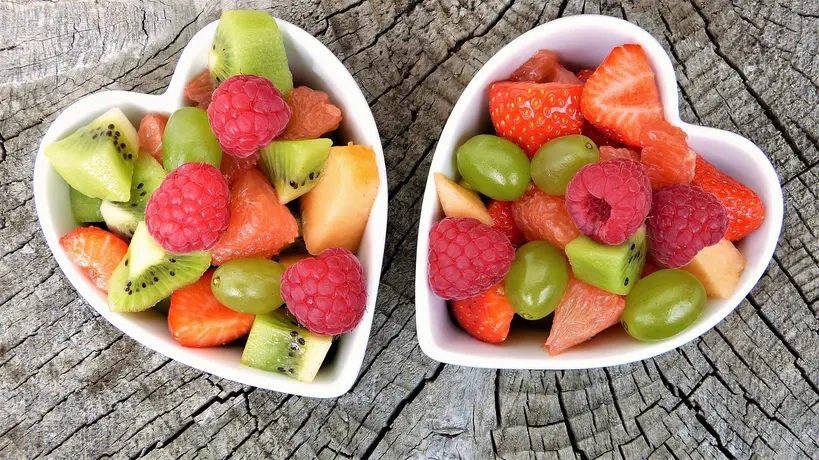
High Volume Low Calorie Snacks: Best Easy Homemade
The best homemade high-volume, low-calorie snacks are mostly produce- or broth-based, giving about 80 to 200 calories per large serving with 5 to 15 grams of protein. Pick poorly, and you get snacks that are small, expensive, and gone before hunger drops. This guide compares easy recipes by calories, cost, prep time, and fit for kids, athletes, and lower-carb eating.
This guide is part of our keto mcdonalds lunch series.
High-volume snacks rely on water, fiber, and protein. Water-rich vegetables and fruit add bulk with little energy. Fiber adds chew and slows eating. Protein helps the snack hold attention longer, which matters when the goal is a filling break rather than a tiny bite.
Why high volume snacks feel more satisfying
What makes these snacks filling without many calories?
Water and fiber give the food its bulk, while protein helps it last. That combination is why a bowl of cucumber, peppers, or berries can feel more satisfying than a few dense crackers or sweets at the same calorie count.
Chewing time matters too. Crunchy foods like celery, bell peppers, and air-popped popcorn slow the pace of eating, which gives fullness cues more time to catch up. Texture matters as much as the ingredient list.
How should you build one at home?
Build the snack around one high-volume base, then add a protein or creamy element if needed. A simple rule works well: start with produce, add one flavoring, and finish with either a lean protein or a light dip so the snack feels complete, not skimpy.
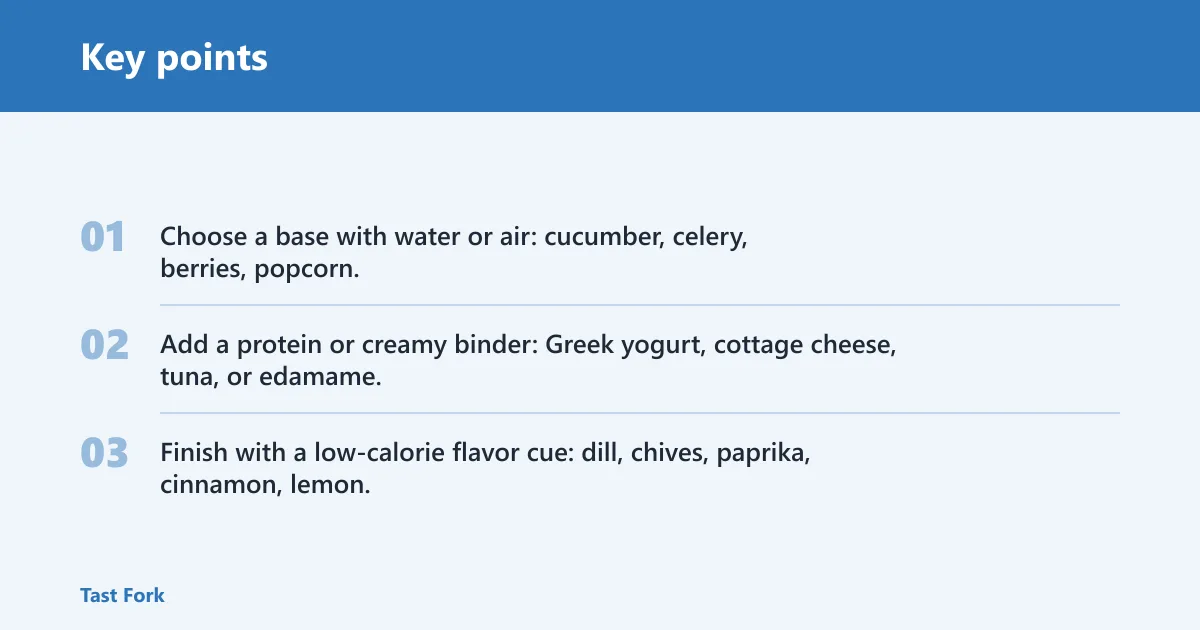
A simple 3-step decision rule
- Choose a base with water or air: cucumber, celery, berries, popcorn, or broth-based soup in a mug.
- Add a protein or creamy binder: Greek yogurt, cottage cheese, tuna, or edamame.
- Finish with a low-calorie flavor cue: dill, chives, paprika, cinnamon, lemon, or black pepper.
Suppose you need a desk snack between meetings. A bowl of cucumber slices with dill yogurt dip is faster and more filling than plain fruit alone, because the protein and salt keep it from feeling like empty crunch.
How to mix crunchy and creamy textures
Crunchy plus creamy works well because it tends to increase satisfaction and reduce cravings. Think cucumber boats with yogurt filling, celery with cottage cheese, or berries with a spoonful of non-fat Greek yogurt.
Keep the crunchy part dry and cold. Keep the creamy part thick. Thin dips run, water down the vegetables, and make the snack feel less substantial within minutes.
Which homemade snacks give the best value?
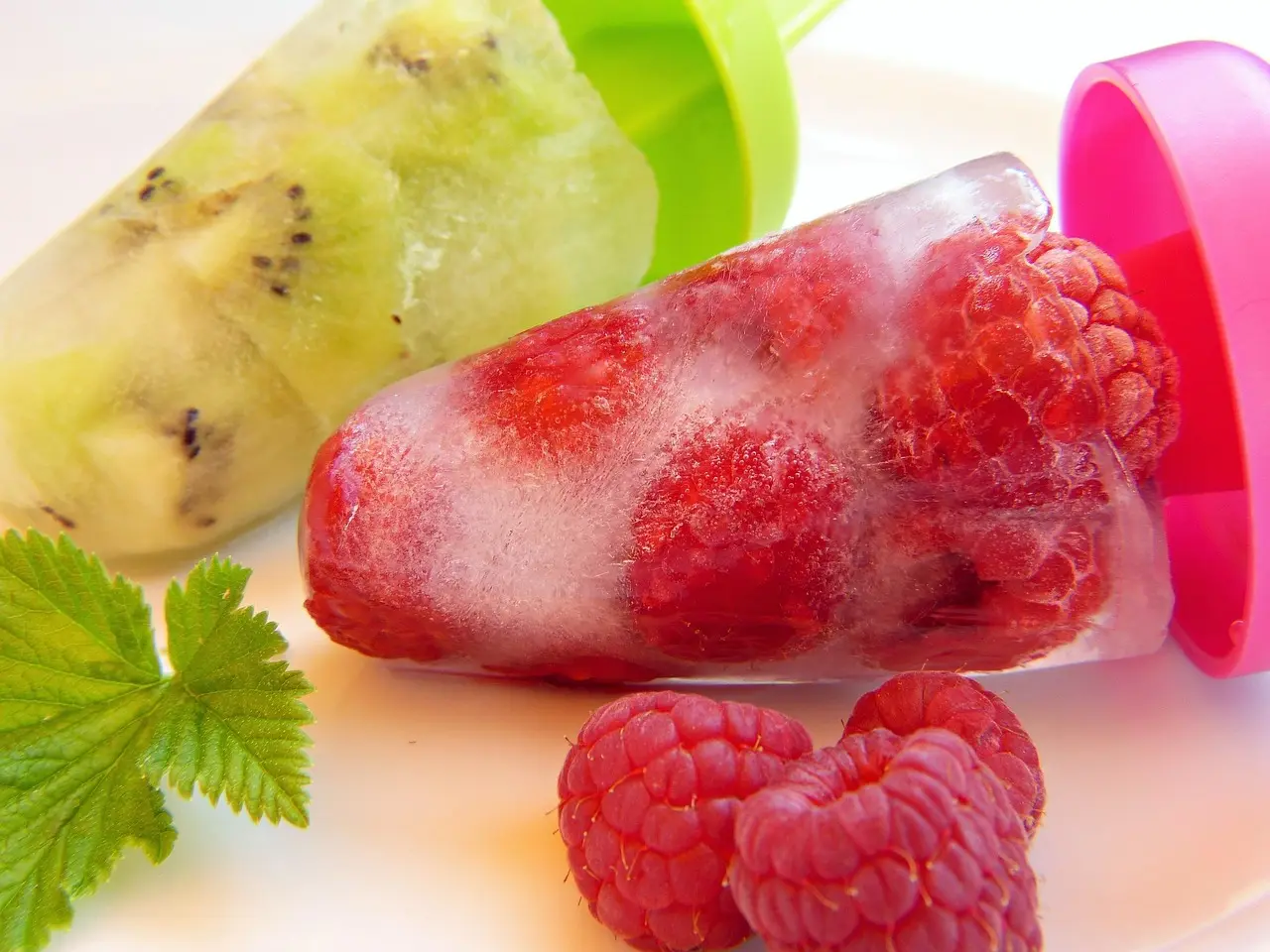
Value depends on more than price. A snack is better if it gives enough volume to curb hunger, enough protein to last, and enough texture to stay appealing. The table below compares 15 easy homemade options so you can choose by goal instead of by recipe title.
| Snack | Calories | Protein | Fiber | Prep time | Cost per serving | Texture and flavor note | Best fit |
|---|---|---|---|---|---|---|---|
| Air-popped popcorn, 3 cups | 95 | 3 g | 3.5 g | 5 min | $0.15–$0.30 | Very crunchy; easy to season with paprika or cinnamon | Kids, budget snacking, movie-style crunch |
| Cucumber boats with non-fat Greek yogurt and dill | 90 | 10 g | 1.5 g | 10 min | $0.75–$1.25 | Cool, crisp, creamy; bright herb flavor | Lower-carb eaters, office snacks |
| Celery sticks with cottage cheese | 110 | 12 g | 2 g | 8 min | $0.60–$1.00 | Crunchy, salty, mild; works well with chives | Protein-first snackers |
| Bell pepper strips with yogurt dip | 100 | 8 g | 3 g | 10 min | $0.75–$1.20 | Sweet crunch with creamy dip | Kids, meal prep, color-focused plates |
| Steamed edamame with salt and paprika | 120 | 12 g | 6 g | 10 min | $0.80–$1.30 | Soft bite, savory finish, very filling | Athletes, higher-protein snackers |
| Berries with plain Greek yogurt | 140 | 14 g | 4 g | 5 min | $1.00–$1.75 | Juicy, creamy, lightly sweet | Breakfast-style snack, sweet cravings |
| Tuna cucumber boats | 130 | 18 g | 1 g | 12 min | $1.25–$2.00 | Fresh crunch with savory filling | High-protein eaters, lower-carb plans |
| Non-fat Greek yogurt with cinnamon and berries | 150 | 15 g | 3 g | 5 min | $1.00–$1.60 | Creamy, sweet-spiced, dessert-like | Sweet tooth, kids, post-workout |
| Cottage cheese with sliced cucumber and chives | 125 | 14 g | 1.5 g | 7 min | $0.90–$1.40 | Cold, creamy, savory, mild | Busy adults, keto-leaning snackers |
| Carrot sticks with dill yogurt dip | 105 | 7 g | 3.5 g | 10 min | $0.70–$1.10 | Sweet crunch and herb tang | Kids, lunchbox prep |
| Snap peas with lemon and salt | 80 | 5 g | 4 g | 5 min | $0.85–$1.40 | Very crisp, fresh, lightly sweet | Low-calorie grazing |
| Mini tomato and mozzarella skewers | 145 | 9 g | 1 g | 10 min | $1.25–$2.00 | Juicy, creamy, savory | Snack plates, informal hosting |
| Frozen berries with cottage cheese | 135 | 13 g | 4 g | 3 min | $0.95–$1.50 | Cold, spoonable, tart-sweet | Fast prep, frozen fruit users |
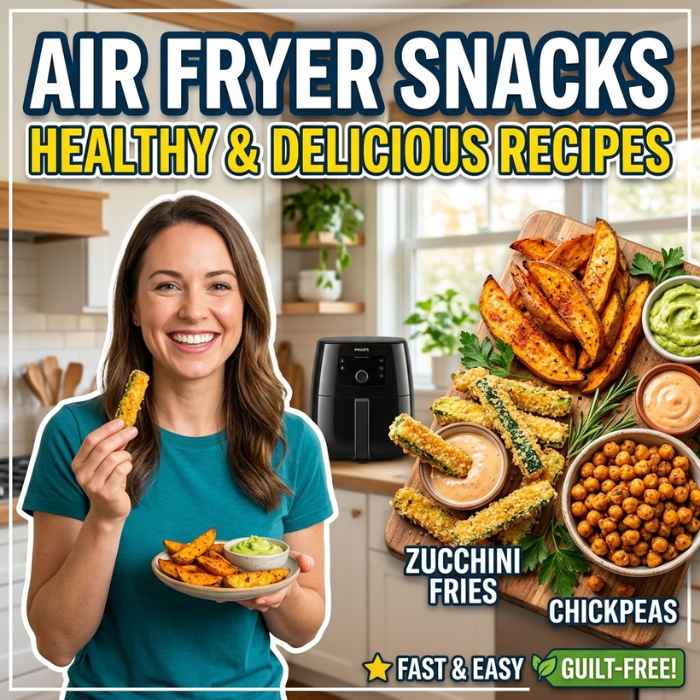
| Roasted chickpeas with paprika | 140 | 7 g | 5 g | 25 min | $0.50–$0.90 | Crunchy, savory, portable | Meal prep, shelf-stable snackers |
| Broth mug with chopped scallions and mushrooms | 70 | 4 g | 1 g | 8 min | $0.50–$1.00 | Warm, light, savory | Late-night hunger, very low-calorie plans |
For cost, popcorn, broth mugs, and roasted chickpeas usually win. For protein, tuna cucumber boats, Greek yogurt bowls, and edamame are stronger choices. For sheer volume, cucumber, celery, peppers, snap peas, and berries give the most food per calorie.
A common first-timer mistake is building a snack around only one texture. A plain bowl of berries can feel thin, while a yogurt cup alone can feel too small. Pairing crunch with cream gives the snack more staying power and makes it easier to stop grazing later.
Best picks by budget, protein, and prep time
If budget is the main goal, start with popcorn, carrots, celery, and chickpeas. If protein matters most, start with edamame, tuna cucumber boats, cottage cheese, and Greek yogurt. If speed matters, berries, peppers, and yogurt-based dips are the quickest options.
Ingredient swaps matter. Greek yogurt can stand in for sour cream in dips, and cottage cheese can replace Greek yogurt when you want a milder taste and a slightly curdier texture. That swap helps keep the snack high in volume without turning it into a heavy meal.
What mistakes should you avoid?
The main failures are soggy produce, bland flavor, and portions that are too small to feel worth eating. Most homemade snacks fail because the texture is off or the seasoning is too timid, not because the idea is bad.
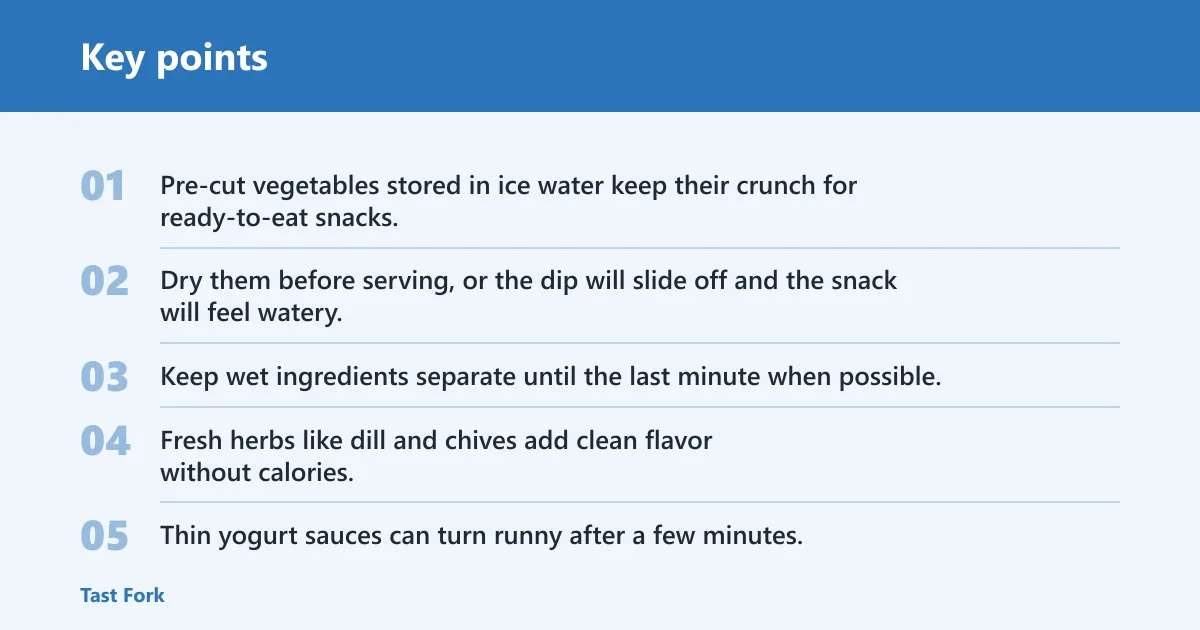
Soggy produce and weak texture
Pre-cut vegetables stored in ice water keep their crunch for ready-to-eat snacks. Dry them before serving, or the dip will slide off and the snack will feel watery. Keep wet ingredients separate until the last minute when possible.
Fresh herbs like dill and chives add clean flavor without calories, but they work best on a thick base. Thin yogurt sauces can turn runny after a few minutes, especially if they sit with salty vegetables.
Bland seasoning and calorie creep
Use herbs and spices early and often. Dill, chives, paprika, and cinnamon can make a plain snack feel complete without adding meaningful calories. Salt, acid, and spice often do more than extra cheese or oil.
Watch calorie creep from extras like nuts, seeds, sweetened yogurt, and heavy dressings. Those ingredients are fine in small amounts, but they can turn a low-calorie snack into a full meal fast.
Portions that are too small to satisfy
High-volume snacks work when the serving is visibly large. A few cucumber rounds are not the same as a full bowl of sliced cucumber with yogurt dip. If the portion looks tiny, it will usually eat like a tiny snack too.
How high-volume snacks help with weight management is simple: they give the stomach more to work with before calories climb. That can make it easier to stay within an overall intake target without feeling deprived.
Picture a late-afternoon snack plate with baby carrots, a tablespoon of dip, and three crackers. It looks neat, but it disappears in a minute. Replace the crackers with a full cup of bell pepper strips and the snack lasts longer for roughly the same calorie range.
Frequently asked questions
What are the best high volume low calorie snacks I can make at home?
The best options are air-popped popcorn, cucumber boats with Greek yogurt, celery with cottage cheese, berries with yogurt, edamame, and bell peppers with dip. They give a lot of food for relatively few calories and are easy to adjust for sweet, savory, or crunchy preferences.
How do high volume snacks help with weight management?
They help by combining water, fiber, and protein, which tend to increase fullness for a lower calorie load. That makes it easier to handle hunger between meals without relying on dense foods that disappear quickly but do little for satiety.
Which ingredients provide the most volume with the least calories?
Cucumber, celery, bell peppers, snap peas, berries, broth-based soups, and air-popped popcorn are strong choices. Fresh vegetables are especially useful because they bring water and crunch, while berries add sweetness with relatively low calorie density.
How can I prepare crunchy and creamy low calorie snacks easily?
Use a crunchy base, a thick creamy element, and a simple seasoning. Cucumber with Greek yogurt and dill, celery with cottage cheese and chives, or peppers with yogurt dip are quick examples. Keep everything chilled and combine it right before eating.
What are some protein-rich low calorie snack options?
Steamed edamame contains about 120 kcal and 12 g protein per 100 g serving. Tuna cucumber boats, cottage cheese with vegetables, and non-fat Greek yogurt with berries also work well. These options are useful when hunger feels more persistent.
How do I keep homemade snacks fresh and crunchy?
Cut vegetables close to serving time when you can, or store them dry and cold. Pre-cut vegetables stored in ice water maintain crunchiness, but dry them before plating. Keep dips separate until the last minute so the texture stays crisp.
Are there snack ideas suitable for kids that are low calorie and filling?
Yes. Bell pepper strips, carrots with yogurt dip, berries with plain Greek yogurt, and air-popped popcorn are kid-friendly choices. Use mild seasoning first, then add a little paprika, cinnamon, or chives if the child likes stronger flavor.
What flavoring tips keep low calorie snacks interesting without adding calories?
Use dill, chives, paprika, cinnamon, black pepper, lemon juice, and vinegar-based seasoning blends. Herbs and spices are useful because they raise flavor without adding much energy. Keep the seasoning bold enough that the snack feels intentional, not plain.