What Makes a Traditional Christmas Cake Special
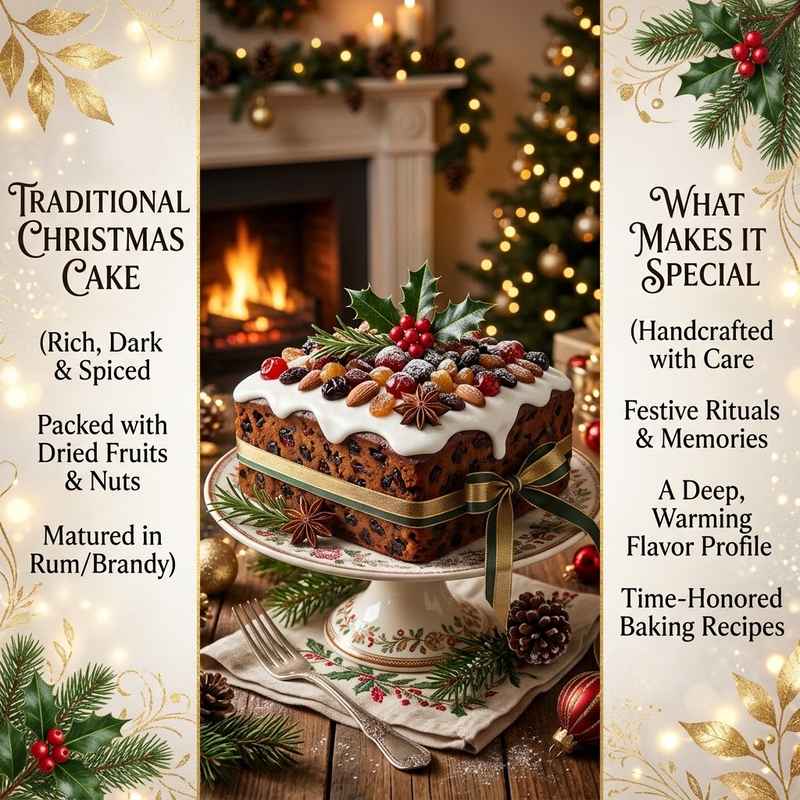
A traditional Christmas cake is a dense, rich fruitcake. It is different from lighter American fruitcakes. The British version uses lots of currants, sultanas, raisins, and glacé cherries. These fruits soak in brandy or another spirit. Warm spices like mixed spice, cinnamon, and nutmeg add depth. Dark brown sugar gives the cake its deep colour and caramel taste.
People often bake it weeks or even months ahead. This lets the flavours mature. The cake is then “fed” with more brandy so it stays moist. Many cover it with marzipan and white icing for a festive look. You can keep it plain if you prefer.
This cake has roots in older plum cakes and Twelfth Night cakes. Over time it became a Christmas Day favourite. Today it remains a symbol of celebration and sharing.
Ingredients for a Classic Traditional Christmas Cake
This recipe makes one 20 cm (8-inch) round cake. It serves about 16 people. All ingredients are easy to find in most supermarkets.
| Ingredient | Amount | Notes |
|---|---|---|
| Currants | 450 g | Main dried fruit base |
| Sultanas (golden raisins) | 200 g | Adds sweetness and colour |
| Raisins | 200 g | Seedless preferred |
| Glacé cherries | 150 g | Halved and rinsed |
| Mixed candied peel | 75 g | Finely chopped |
| Orange zest | From 1 large orange | Freshly grated |
| Brandy or orange juice | 150–200 ml | Plus extra for feeding |
| Butter (or margarine) | 275 g | Softened at room temperature |
| Soft dark brown sugar | 275 g | Muscovado works well |
| Eggs | 5 large | At room temperature |
| Ground almonds | 75 g | Helps keep the cake moist |
| Plain (all-purpose) flour | 350 g | Sifted |
| Mixed spice | 1 tsp | Traditional British blend |
| Ground cinnamon | 1 tsp | Warm flavour |
For decoration (optional): apricot jam, marzipan, royal icing or fondant, and festive decorations.
You can find more classic versions and variations on reputable sites such as the BBC Food Mary Berry Christmas cake recipe.
Equipment You Will Need
- 20 cm (8-inch) deep round cake tin
- Baking parchment or greaseproof paper
- Brown paper or newspaper for wrapping the tin
- Large mixing bowls
- Electric mixer or wooden spoon
- Skewer or toothpick
- Cooling rack
- Foil and extra parchment for storage
Lining the tin properly is important. Double layers of paper protect the outside of the cake from burning during the long bake.
Step-by-Step Guide to Making Traditional Christmas Cake
1. Soak the Fruit (Night Before or Longer)
Put the currants, sultanas, raisins, halved cherries, mixed peel, and orange zest into a large bowl. Pour over the brandy or orange juice. Stir well so every piece is coated. Cover the bowl and leave it in a cool place overnight. Stir once or twice if you can. The fruit will plump up and become juicy. This step builds deep flavour.
For even better results, soak the fruit for two or three days. Stir daily.
2. Prepare the Tin and Oven
Preheat your oven to 140°C (275°F) or 130°C fan / Gas Mark 1. Grease the cake tin. Line the base and sides with a double layer of baking parchment. Cut a circle for the base and a long strip for the sides that stands a little above the rim. Tie a double layer of brown paper or newspaper around the outside of the tin with string. This insulation stops the edges from drying out.
3. Make the Cake Batter
In a large bowl, beat the softened butter and dark brown sugar until light and fluffy. This takes about 3–5 minutes with an electric mixer. Add the eggs one at a time, beating well after each addition. If the mixture looks like it might curdle, add a spoonful of the flour.
Stir in the ground almonds. Sift the flour, mixed spice, and cinnamon together. Fold the dry ingredients into the butter mixture gently. Then add the soaked fruit with any remaining liquid. Mix until everything is evenly combined. The batter will be thick and full of fruit.
4. Bake the Cake
Spoon the mixture into the prepared tin. Level the top with the back of a spoon. Make a slight hollow in the centre so the cake rises evenly. Place the tin on a baking tray in the centre of the oven.
Bake for 3½ to 4 hours. Check after 3 hours. If the top is browning too fast, cover it loosely with a piece of parchment or foil. The cake is ready when a skewer inserted into the centre comes out clean. The top should feel firm.
Turn off the oven and leave the cake inside for 15–30 minutes with the door slightly open. This gentle cooling helps prevent sinking.
5. Cool and Feed the Cake
Remove the cake from the oven. Leave it in the tin on a wire rack until completely cold. Once cold, turn it out carefully. Peel off the parchment. Use a skewer to poke several holes in the top of the cake. Spoon 2–3 tablespoons of brandy over the surface. Let it soak in.
Wrap the cake in clean baking parchment, then in foil. Store it in an airtight tin in a cool place. Every 1–2 weeks until Christmas, unwrap it and feed it with another 1–2 tablespoons of brandy. Do not feed it in the final week if you plan to ice it, so the surface can dry a little.
For more detailed feeding advice, see guides from trusted sources like BBC Good Food on feeding Christmas cake.
Helpful Tips for Beginners
- Use room-temperature eggs and butter for a smooth batter.
- Rinse glacé cherries and dry them well so they do not sink or make the cake sticky.
- Do not open the oven door too often during baking. Heat loss can cause problems.
- If you do not have mixed spice, use a mix of cinnamon, nutmeg, and a pinch of cloves or allspice.
- Weigh ingredients for the best results. Cups can vary.
- The cake may look dark. That is normal for a traditional fruitcake.
Alcohol-Free Version
Replace the brandy with strong black tea, orange juice, or apple juice. Soak and feed the cake the same way. The flavour will be milder but still delicious and suitable for children or those who avoid alcohol.
Decorating Your Christmas Cake
Many people cover the cake with marzipan and then royal icing or ready-to-roll fondant.
- Warm a little apricot jam and brush it over the top and sides of the cake.
- Roll out marzipan on a surface dusted with icing sugar. Cover the cake smoothly. Leave it to dry for a day or two.
- Brush with more jam or a little water. Cover with white fondant or spread royal icing for a snowy look.
- Add simple decorations such as holly leaves made from coloured icing, silver balls, or a ribbon around the base.
You can also leave the cake undecorated and dust it with icing sugar just before serving.
Storage and How Long It Keeps
A well-fed traditional Christmas cake keeps for several months in a cool, dry place. Wrap it tightly in parchment and foil inside an airtight tin. Once iced, it is best eaten within a few weeks. You can also freeze the un-iced cake for up to three months. Thaw it fully before feeding or decorating.
| Stage | Storage Method | Approximate Time |
|---|---|---|
| After baking, before icing | Parchment + foil in airtight tin | Up to 3 months with feeding |
| Iced cake | Airtight container in cool place | 2–4 weeks |
| Frozen (un-iced) | Well wrapped | Up to 3 months |
Why This Cake Tastes Better Over Time
The dried fruits continue to absorb the liquid and spices. The flavours blend and deepen. Feeding adds moisture and a gentle boozy note that mellows. This is why many bakers start in October or on Stir-up Sunday (the last Sunday before Advent).
Dried fruits also bring natural sweetness and fibre. For general information on the nutritional value of dried fruits, you can check resources from the USDA or similar authoritative sites.
Common Mistakes and How to Avoid Them
- Dry cake: Soak the fruit well and feed regularly.
- Burnt edges: Always wrap the tin with paper and bake at a low temperature.
- Fruit sinking: Toss the fruit in a little flour before adding, or make sure the batter is thick enough.
- Cracked top: Do not overmix after adding flour. Bake low and slow.
FAQ – Beginner Questions Answered
How far in advance should I make a traditional Christmas cake?
Ideally 4–8 weeks before Christmas. This gives time for feeding and maturing. You can still make it 1–2 weeks ahead and it will taste good.
Can I use other dried fruits?
Yes. Add chopped dried apricots, cranberries, or figs if you like. Keep the total weight of fruit roughly the same.
What can I use instead of mixed spice?
Mix equal parts ground cinnamon, nutmeg, and allspice, with a small pinch of ground cloves or ginger.
Why is my cake dense?
Fruitcakes are meant to be dense and moist. This is normal. Proper soaking and gentle mixing help the texture.
Do I have to use alcohol?
No. Orange juice, tea, or fruit juice work well as substitutes for both soaking and feeding.
How do I know when the cake is fully baked?
A skewer pushed into the centre should come out clean. The top should feel firm and spring back slightly when pressed.
Can I make a smaller cake?
Yes. Halve the ingredients and use a 15 cm tin. Reduce the baking time and start checking earlier.
Conclusion
You now have everything you need to bake a traditional Christmas cake with confidence. From soaking the fruit to the final feed and optional icing, each step is simple when taken one at a time. The result is a rich, fragrant cake that fills your home with festive scent and makes a wonderful centrepiece or gift.
Start early if you can, enjoy the process, and share the finished cake with family and friends. There is real joy in creating something so special with your own hands. Happy baking, and may your Christmas be warm, delicious, and full of good moments around the table.