
What Do Indians Eat for Breakfast? 20 Traditional Dishes to Try
Have you ever wondered what people in India eat before starting their day? The answer will surprise you — and probably make you hungry.
Indian breakfast is nothing like cereal or plain toast. It is bold, spicy, deeply flavorful, and incredibly diverse. From crispy crepes in the South to stuffed flatbreads in the North, every region has its own morning ritual. And once you try one of these dishes, you will never look at breakfast the same way again.
What Makes Indian Breakfast So Special?
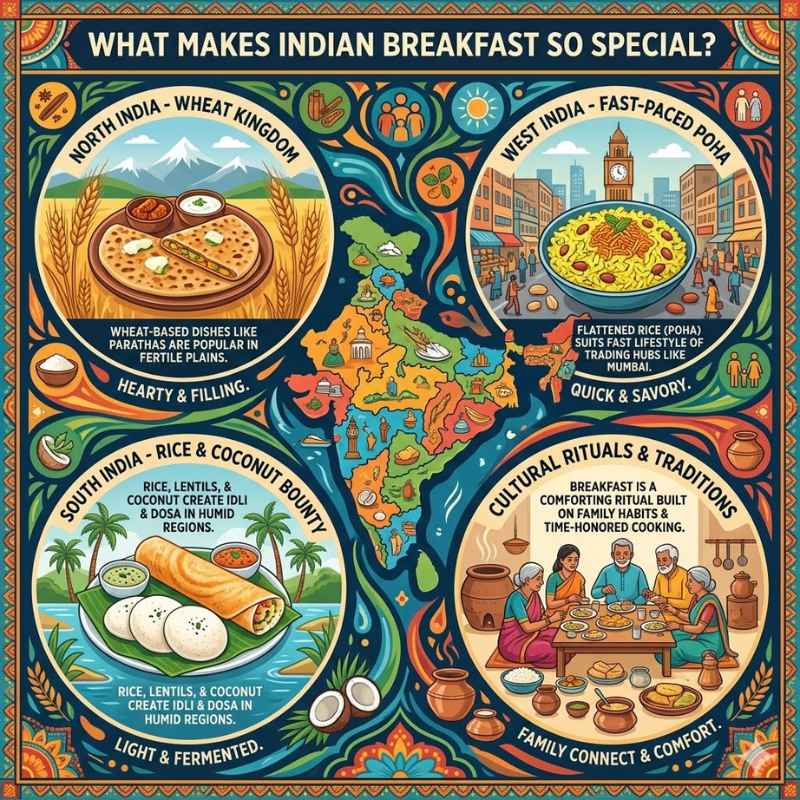
India is a country of 1.4 billion people spread across dozens of states and cultures. <br>There is no single “Indian breakfast.” Instead, there are hundreds of them.
In the humid South, rice and coconut grow in abundance, leading to the dominance of idli and dosa. In the fertile plains of the North, wheat is the king, making parathas the logical choice. In the West, flattened rice (poha) fits the fast-paced lifestyle of trading hubs like Mumbai.
Breakfast in India is more than a quick start to the day. It is a comforting ritual built on family habits, seasonal ingredients, and time-honoured methods of cooking.
That is what makes it so fascinating — and so delicious.
Quick Overview
| Detail | Info |
|---|---|
| Cuisine Type | Indian (North, South, East, West) |
| Difficulty | Easy to Medium |
| Meal Type | Breakfast |
| Diet | Mostly Vegetarian |
| Best For | All ages, all skill levels |
Why You’ll Love Indian Breakfast Dishes
- Incredibly filling — most dishes keep you full for hours
- Mostly vegetarian — great for plant-based eaters
- Budget-friendly — made from simple pantry staples like rice, lentils, and flour
- Hugely diverse — new flavors to discover every single day
- Nutritious — fermented foods, lentils, and spices add real health benefits
- Easy to make — many recipes take under 20 minutes
20 Traditional Indian Breakfast Dishes You Must Try
South Indian Breakfasts
1. Idli with Sambar and Chutney
Idli is the most iconic South Indian breakfast. Idlis are steamed rice cakes made from fermented rice and lentil batter, poured into circular molds to create fluffy, moon-like savory cakes.
They are light, soft, and easy to digest. Serve them hot with sambar (spiced lentil soup) and coconut chutney on the side.
Why try it: Low in fat, high in protein, and gut-friendly thanks to fermentation.
2. Masala Dosa
Dosa is a thin, crispy crepe made from fermented rice and lentil batter. The masala version is stuffed with a spiced potato filling inside.
Down south, fermentation creates light, airy batters that are cooked on a hot griddle. Masala Dosa is often filled with spiced potatoes.
It is crunchy on the outside and soft on the inside — a perfect contrast of textures.
Why try it: It is gluten-free, filling, and absolutely delicious.
3. Upma
Upma is a savory semolina porridge cooked with mustard seeds, curry leaves, and vegetables. It takes less than 15 minutes to make.
Upma is semolina porridge cooked with mustard seeds, curry leaves, and veggies — simple ingredients that come together into something deeply satisfying.
Why try it: Super quick, beginner-friendly, and customizable with any vegetables.
4. Medu Vada
Medu vada are crispy, ring-shaped fritters made from urad dal (black lentils). Think of them as India’s answer to a savory donut.
They are golden outside, fluffy inside, and usually served alongside idli with sambar and chutney.
Why try it: A crunchy, protein-packed snack that doubles as a full breakfast.
5. Pongal (Ven Pongal)
Made with rice and lentils, Ven Pongal is a satisfying South Indian breakfast enjoyed with sambar and chutney, deliciously seasoned with curry leaves, cumin seeds, and black pepper. It is vegetarian and gluten-free.
The texture is creamy and comforting — like a savory rice porridge.
Why try it: Warm, wholesome, and perfect for cold mornings.
6. Uttapam
Uttapam is like a thick dosa but topped with vegetables — onions, tomatoes, green chilies, and coriander. It is cooked like a pancake on a hot griddle.
It is softer and heartier than a dosa, with a lovely mix of flavors in every bite.
Why try it: A great way to sneak vegetables into breakfast.
North Indian Breakfasts
7. Aloo Paratha
Aloo paratha is a whole wheat flatbread stuffed with a spiced mashed potato filling. It is pan-fried with butter or ghee until golden and crisp.
In the north, breakfast is often a hearty affair — parathas stuffed with potatoes (aloo), cauliflower (gobi), or paneer, cooked with ghee and served hot with curd or pickle on the side.
Why try it: Rich, hearty, and the ultimate comfort food breakfast.
8. Chole Bhature
Chole bhature is a weekend favorite in North India. It is spicy chickpea curry (chole) served with deep-fried, pillowy bread (bhature).
Chole bhature is a popular spicy chickpea curry paired with deep-fried bread. Pair it with a tall glass of lassi and you’re set.
Why try it: Bold, filling, and absolutely unforgettable.
9. Poha
Poha is flattened rice cooked quickly with onions, mustard seeds, turmeric, and roasted peanuts. It is light, slightly tangy, and incredibly easy to make.
In Mumbai, the distinct aroma of poha fills the streets in the morning. It is a quick breakfast that takes minutes to prepare.
Why try it: One of the fastest Indian breakfasts you can make — under 10 minutes.
10. Paneer Bhurji
Paneer bhurji is a popular North Indian breakfast made from crumbled paneer (cottage cheese). Bhurji means scrambled, so the paneer is literally scrambled with spices and herbs.
It is rich in protein and incredibly flavorful. Eat it with toast, paratha, or roti.
Why try it: High-protein, quick to cook, and endlessly satisfying.
11. Puri Bhaji
Puri bhaji is deep-fried puffed wheat bread served with spiced potato curry. It is a celebration breakfast in most North Indian homes — often made on Sundays or during festivals.
Why try it: Indulgent, comforting, and pure joy on a plate.
12. Gobi Paratha
Gobi paratha consists of unleavened whole wheat flatbreads stuffed with a savory, spiced grated cauliflower filling. It is also served in dhabas (roadside restaurants).
It is a great vegetarian alternative to aloo paratha with a slightly different, earthy flavor.
Why try it: Light yet satisfying, with a delicious spiced filling.
West Indian Breakfasts
13. Dhokla
Dhokla is a steaming, spongy chickpea flour cake that is light, tangy, and impossible to resist — a signature Gujarati morning treat.
It is steamed (not fried), making it one of the healthiest Indian breakfast options available.
Why try it: Fluffy, tangy, low-fat, and ready in 30 minutes.
14. Thepla
In Gujarat, breakfast often means thepla — spiced flatbreads with fenugreek — eaten with pickle or yogurt.
Theplas are thin, soft, and lightly spiced. They also travel well, which is why you will often find them in Indian lunchboxes and on train journeys.
Why try it: Long shelf life, great flavor, and perfect with a cup of chai.
15. Sabudana Khichdi
Sabudana khichdi is a delicious and nutritious dish cooked with tapioca pearls (sago), potatoes, and roasted peanuts. It is especially popular during Hindu fasting periods.
It has a wonderfully chewy texture with a crunchy bite from the peanuts.
Why try it: Naturally gluten-free and absolutely unique in texture and taste.
16. Moong Dal Chilla
Moong dal chilla is a protein-packed Indian breakfast made from split yellow moong dal, onions, ginger, chilies, spices, and herbs.
It looks like a pancake but tastes boldly savory. Serve with yogurt or green chutney.
Why try it: One of the most nutritious Indian breakfasts — high in protein, low in fat.
East Indian Breakfasts
17. Luchi with Aloo Torkari
Bengal brings its own flair with luchi (deep-fried wheat puris) paired with aloor torkari (spiced potato curry).
It is the Bengali equivalent of puri bhaji — lighter in spice but equally delicious.
Why try it: A deeply comforting and culturally rich breakfast experience.
18. Kolkata Egg Roll
The Kolkata egg roll is an iconic dish from the streets of Kolkata, West Bengal — thinly sliced veggies, eggs, a sprinkle of chaat masala, and a drizzle of ketchup wrapped in flaky parathas. A perfect combination of veggies, protein, and carbs.
Why try it: A portable, filling, street-food classic that is endlessly fun to eat.
Pan-Indian Favorites
19. Besan Chilla (Chickpea Flour Pancake)
Besan chilla is a savory pancake made from chickpea flour (besan), onions, tomatoes, and spices. It cooks in minutes and is incredibly satisfying.
It is naturally gluten-free and high in plant protein.
Why try it: Fast, healthy, and great for both breakfast and a quick snack.
20. Masala Chai (the essential companion)
No Indian breakfast is complete without a cup of masala chai — strong black tea brewed with milk, ginger, cardamom, and other spices.
The beverage of choice for breakfast is chai. In recent years, coffee has also become popular.
It is sweet, spicy, warming, and the perfect partner to every dish on this list.
Why try it: Because every good Indian breakfast deserves a hot cup of chai alongside it.
Pro Tips for Making Indian Breakfast at Home
- Prep fermented batters the night before. Dosa and idli batter need 8–12 hours to ferment. Plan ahead.
- Use a non-stick tawa (griddle). It makes dosas, parathas, and chillas much easier to cook.
- Stock your pantry with the basics. Rice, urad dal, semolina, whole wheat flour, potatoes, onions, and mustard seeds will take you very far.
- Don’t rush the tempering. Letting mustard seeds pop in hot oil before adding vegetables adds a huge depth of flavor.
- Start simple. Poha and upma are the best dishes for beginners — ready in under 10 minutes with minimal prep.
- Serve everything hot. Indian breakfast loses its magic quickly as it cools. Eat immediately.
Common Mistakes to Avoid
- Skipping the fermentation step for idli/dosa batter. The fermentation creates flavor, texture, and nutritional value. You cannot rush it.
- Adding too much water to dosa batter. The batter should be thin but not watery — similar to crepe batter.
- Over-kneading paratha dough. Knead gently for a soft, pliable flatbread.
- Not roasting semolina for upma. Dry roast it first — this prevents lumps and adds a nutty flavor.
- Burning the tempering. Watch your mustard seeds closely. Once they pop, add the next ingredient quickly.
Variations to Explore
Healthy versions: Try baked dhokla instead of fried vada. Swap ghee for less oil in parathas. Add extra vegetables to your upma and chilla.
Vegan options: Most South Indian dishes (idli, dosa, upma, pongal) are naturally vegan. Skip the ghee topping and use coconut oil instead.
High-protein versions: Load up on moong dal chilla, paneer bhurji, or besan chilla. Add eggs to your uttapam for extra protein.
Quick weekday versions: Poha, upma, and besan chilla are all under 15 minutes. Keep batter ready in the fridge for fast dosas.
What to Drink with Indian Breakfast
- Masala Chai — the classic choice. Works with everything.
- Filter Coffee — especially popular in South India, strong and sweet.
- Lassi — a cold yogurt drink, sweet or salty, pairs beautifully with heavy dishes like chole bhature.
- Fresh Coconut Water — light and refreshing alongside heavier dishes.
- Nimbu Pani — fresh lime water with a pinch of salt and sugar.
Storage and Meal Prep Tips
Idli/Dosa batter: Store in an airtight container in the fridge for up to 3 days. Ferment at room temperature before storing.
Parathas: Cook them fully and store in the fridge for up to 2 days. Reheat on a hot tawa with a little butter.
Poha and upma: Best eaten fresh. They do not store well — make only what you will eat.
Dhokla: Stores well in the fridge for up to 2 days. Steam briefly to reheat.
Thepla: Can be stored at room temperature for 2–3 days — one of the few Indian breakfasts that travels well.
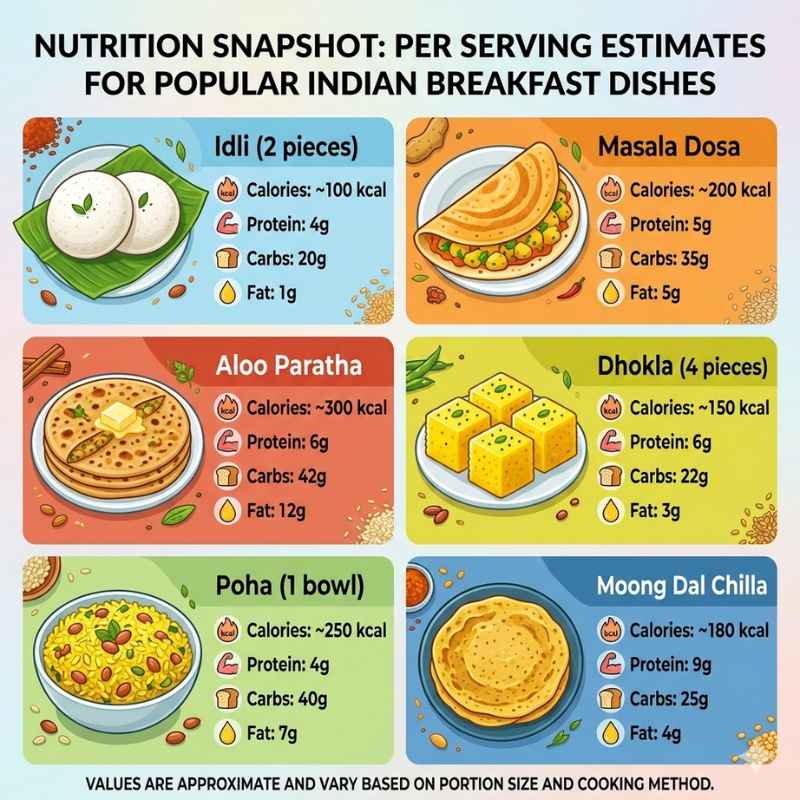
Nutrition Snapshot (Per Serving Estimates)
| Dish | Calories | Protein | Carbs | Fat |
|---|---|---|---|---|
| Idli (2 pieces) | ~100 kcal | 4g | 20g | 1g |
| Masala Dosa | ~200 kcal | 5g | 35g | 5g |
| Aloo Paratha | ~300 kcal | 6g | 42g | 12g |
| Dhokla (4 pieces) | ~150 kcal | 6g | 22g | 3g |
| Poha (1 bowl) | ~250 kcal | 4g | 40g | 7g |
| Moong Dal Chilla | ~180 kcal | 9g | 25g | 4g |
Values are approximate and vary based on portion size and cooking method.
Frequently Asked Questions
What is the most common breakfast in India?
It depends on the region. Idli with sambar and chutney is the most popular in South India. Aloo paratha is the go-to in the North. Poha is the quick everyday breakfast in Maharashtra and Gujarat. Nationally, poha and idli are among the most widely eaten morning dishes.
Is Indian breakfast healthy?
Most traditional Indian breakfasts are very healthy. Fermented foods like idli and dosa improve gut health. Lentils and rice provide complete protein. Vegetables in sambar and upma add fiber. Spices like turmeric and ginger have anti-inflammatory benefits. The only exceptions are fried versions like bhatura or deep-fried vada, which are higher in fat.
Can I make Indian breakfast without special equipment?
You can steam idli and dhokla in a regular pot with a colander or heatproof plate placed above boiling water, covered with a lid, steamed for 10–15 minutes. For dosa, you just need a non-stick pan. Poha and upma cook on the stove in under 10 minutes.
What do Indians drink for breakfast?
Masala chai (spiced milk tea) is by far the most common breakfast drink across India. In recent years, coffee has also become popular. Filter coffee is especially common in South India. Lassi (yogurt drink) is popular in Punjab and North India.
Are Indian breakfasts vegetarian?
Most traditional Indian breakfasts are vegetarian. In Indian culture, there are many savory and sweet recipes that are traditionally full of flavor and spice. Eggs are used in some dishes like egg rolls and egg bhurji, particularly in urban areas and Bengal. Meat is rarely part of a traditional Indian morning meal.
How long does it take to make Indian breakfast?
It varies. Quick dishes like poha, upma, and chilla take 10–15 minutes. Parathas take about 20–25 minutes. Dosa and idli require overnight batter fermentation but cook in just 5–10 minutes once the batter is ready. Dhokla takes about 30 minutes start to finish.
Conclusion
Indian breakfast is one of the most exciting and diverse morning food traditions in the world.
Whether you start with a simple bowl of poha or tackle a crispy masala dosa, every dish tells a story — of a region, a season, and a family’s morning routine.
If you are ever in an Indian city and want a true taste, skip the hotels and hit a local food joint, a railway station, or a busy street vendor during morning rush hour. The freshness and chaos — plates constantly refilled, spicy chutneys lined up, and tea always brewing — make breakfast here a little bit of morning magic.
You do not need to travel to India to experience it, though. Pick one dish from this list, gather your ingredients, and give it a try this weekend.
Start with poha or besan chilla if you are a beginner. Work your way up to masala dosa and chole bhature as you get more confident.
Either way — your mornings are about to get a whole lot more delicious.
Are you ready to try any of these dishes? Share your experiences in the comments below — we’d love to know which one was your favorite!