Healthy Mcdonalds Lunch
For a lighter McDonald’s lunch, start with one entrée under 500 calories, choose water or an unsweetened drink, and keep add-ons to one sauce or one slice of cheese. Ignore that rule, and lunch can jump in sodium, calories, and saturated fat fast. This guide gives a checklist for lower-calorie orders, higher-protein picks, sides, drinks, and swaps for different goals.
This guide is part of our keto mcdonalds lunch series.
It is best for people choosing lunch around weight loss, protein, lower sodium, vegetarian needs, or lower-carb eating. It leaves out breakfast orders, regional limited-time items, and any nutrition claim that cannot be checked against current menu data.
What this guide covers
The basics worth knowing first
A healthier McDonald’s lunch is not one single item. It is the whole order after you count the entrée, side, sauce, and drink together. Low calorie means the meal stays modest in energy. High protein means the lunch gives more protein per calorie. Low sodium, low carb, vegetarian, and keto-friendly all depend on the final build.
Portion size matters more than the menu name. A sandwich can shift from moderate to heavy after cheese, sauces, or a larger side. McDonald’s nutrition calculator, ingredient lists, and portion sizes are the best tools for checking the final order before you pay.
What those labels mean here
- Low calorie: a lunch that stays around your target, often 500 calories or less for many weight-conscious orders.
- High protein: a lunch built around an item that gives protein without relying on fries or a sweet drink.
- Low sodium: a meal that trims sauces, processed meats, and extra cheese.
- Low carb: a meal with buns, breading, or sugary drinks removed or reduced.
- Vegetarian: a lunch without meat, with egg or dairy only if that fits your preference.
- Keto-friendly: a lower-carb order that removes bun, ketchup, and other sugar-heavy extras.
McDonald’s lunch options and nutrition table
The clearest way to compare McDonald’s lunch items is to start with the main protein, then see what the add-ons do. Use this table to compare common orders and practical modifications. The goal is not perfect food. The goal is a better order for your target.
| Item | Calories | Protein | Sodium | Carbs | Fat | Customization tips | Diet fit |
|---|---|---|---|---|---|---|---|
| Plain hamburger | 250 | 12 g | Check calculator | Check calculator | Check calculator | Keep it plain if you want a smaller lunch; add apple slices instead of fries. | Weight loss, lower-calorie |
| 6-piece Chicken McNuggets | 250 | 14 g | Check calculator | Check calculator | Check calculator | Choose a low-calorie sauce or skip sauce entirely. | Weight loss, flexible |
| 4-piece Chicken McNuggets | 220 | Check calculator | Check calculator | Check calculator | Check calculator | Use as a lighter side portion; pair with apple slices. | Lower-calorie |
| Filet-o-Fish without tartar sauce | Check calculator | 14 g | 470 mg | Check calculator | Check calculator | Leaving off tartar sauce lowers sodium load from the full build. | Lower-sodium, pescatarian-friendly |
| McChicken without mayonnaise | Check calculator | Check calculator | About 500 mg | Check calculator | Check calculator | Skip mayonnaise to cut calories; keep in mind sodium still stays notable. | Lower-calorie, weight loss |
| Quarter Pounder with Cheese Deluxe without bun or ketchup | Check calculator | Check calculator | Check calculator | 5 g net carbs | Check calculator | Best used when you want a low-carb build and can live with a fork-and-knife order. | Keto-friendly, low carb |
| Egg McMuffin | 310 | 11 g | Check calculator | Check calculator | Check calculator | Vegetarian option if you accept egg and dairy; better as a lighter lunch than a large combo. | Vegetarian, weight loss |
| Grilled Chicken Salad | 140 | 25 g | Check calculator | Check calculator | Check calculator | Watch dressing portions; this is one of the strongest protein-to-calorie picks. | Weight loss, high protein |
| Apple slices | 15 | Check calculator | Check calculator | Check calculator | Check calculator | Use as a side when you want the lowest-calorie add-on. | Weight loss, low calorie |
| Strawberry Banana Smoothie, small | 190 | Check calculator | Check calculator | Check calculator | Check calculator | Light meal option, but not a low-carb pick because the drink is fruit-based. | Light lunch, not keto |
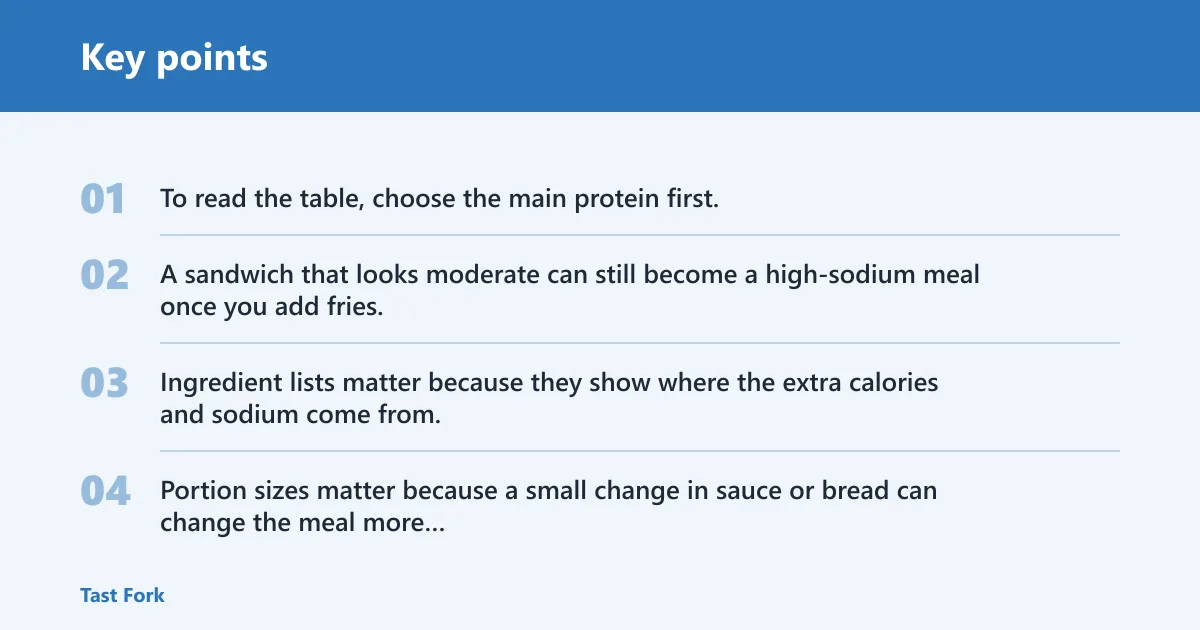
To read the table, choose the main protein first, then check whether the side and drink keep the order inside your target. A sandwich that looks moderate can still become a high-sodium meal once you add fries, a sweet drink, and extra sauce.
Ingredient lists matter because they show where the extra calories and sodium come from. Portion sizes matter because a small change in sauce or bread can change the meal more than the main entrée itself.
How to choose the best order
A simple rule works well: start with an entrée under 500 calories, look for at least 12 to 20 grams of protein if your goal is fullness, and check sodium before you add sauce or a side. If you want lower carb, remove bun or breaded extras before you remove the protein.
Pick a full sandwich when you want convenience and can stay within your calorie and sodium target. Pick a bunless order when carbs are the main concern. Pick a smaller combo when you want a lighter meal and plan to add fruit instead of fries.
A fast decision rule
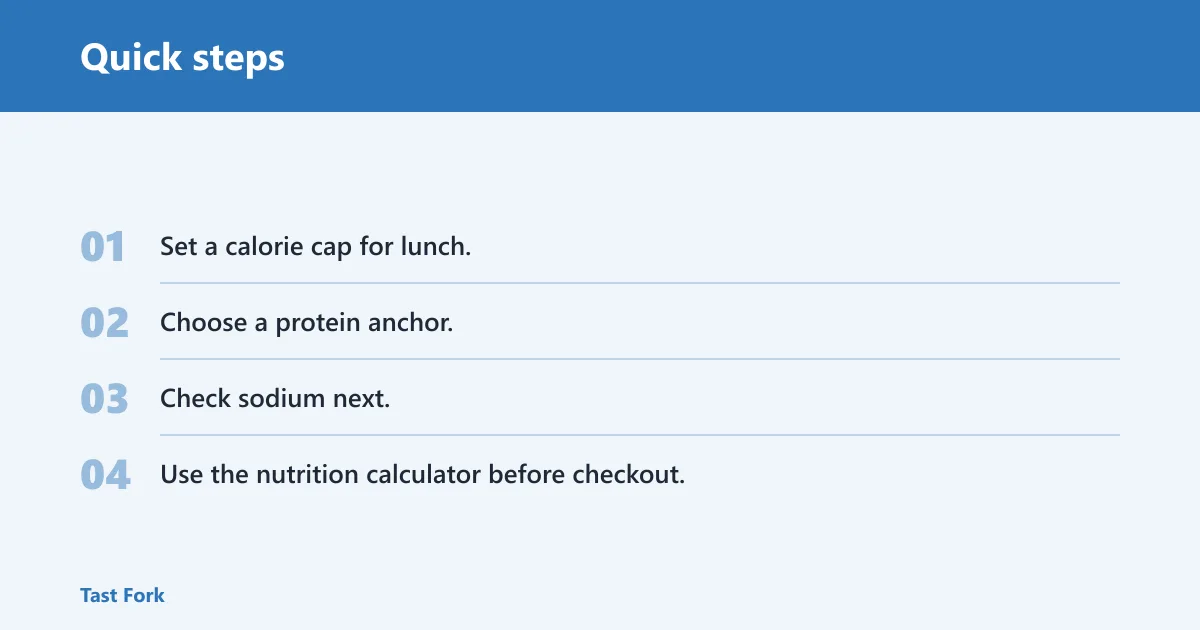
- Set a calorie cap for lunch. For many people, that means staying near 500 calories or less.
- Choose a protein anchor. A grilled salad, plain hamburger, nuggets, or fish order works better than a side-only lunch.
- Check sodium next. If the entrée is already high, drop sauces and cheese before adding anything else.
- Use the nutrition calculator before checkout. The expected result is a final order that matches the numbers you actually want.
If you want a lower-carb lunch, a bunless Quarter Pounder with Cheese Deluxe can fit better than a standard sandwich because the bun and ketchup are the easiest carb-heavy parts to remove. The next check is sodium, because low carb does not automatically mean low sodium.
Say your lunch target is weight loss with enough protein to stay full. A grilled chicken salad gives 25 grams of protein and only 140 calories, which makes it a strong base. The main risk is dressing, so the order only stays light if you keep the add-on measured.
Build a healthier lunch step by step
Use this order of operations every time. It keeps the decision simple and helps you avoid a meal that looks light but eats like a full combo.
Step 1: Pick the main protein
Choose the item that gives you the most useful base. A plain hamburger, nuggets, fish, Egg McMuffin, or grilled chicken salad can all work, depending on your goal. The expected result is a lunch that starts with protein instead of bread or sauce.
Step 2: Cut the biggest calorie source
Remove the add-on that adds the most energy for the least fullness. That is often fries, a sugary drink, or a creamy sauce. The expected result is a smaller calorie total without shrinking the whole meal.
Step 3: Check sodium and carbs
Review the nutrition page for the final build, not just the base item. Skip tartar, mayonnaise, ketchup, or cheese if the sodium or carb count is climbing too fast. The expected result is a meal that matches your eating goal instead of drifting away from it.
Step 4: Confirm the final order in the nutrition calculator
Use McDonald’s nutrition calculator to confirm the exact combination. Check the item name, portion size, and every add-on. The expected result is a final order you can compare with your target before you pay.
Common ordering problems and fixes
Most bad lunch orders at McDonald’s fail in the same few ways. The fix is usually simple once you know which part of the meal pushed the numbers up.
Calories climb fast
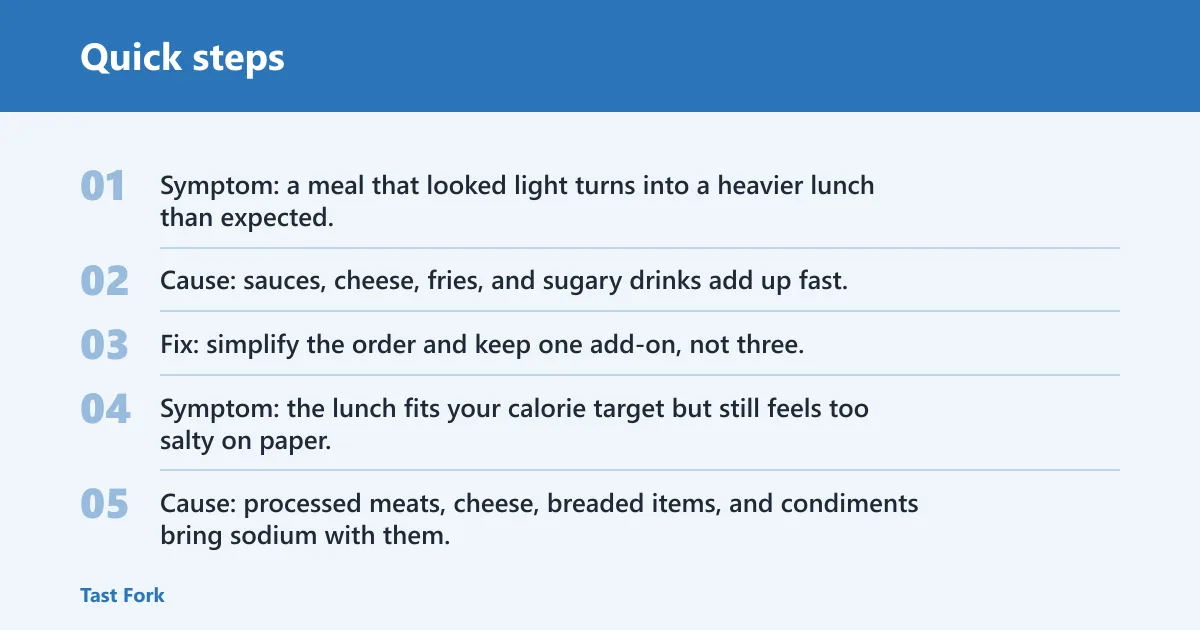
Symptom: a meal that looked light turns into a heavier lunch than expected. Cause: sauces, cheese, fries, and sugary drinks add up fast. Fix: simplify the order and keep one add-on, not three.
Sodium is too high
Symptom: the lunch fits your calorie target but still feels too salty on paper. Cause: processed meats, cheese, breaded items, and condiments bring sodium with them. Fix: remove extras and choose smaller portions or a plainer build.
The meal is low in protein
Symptom: you feel hungry again soon after eating. Cause: the order leaned too hard on bread, fruit, or side items. Fix: keep the main protein and drop filler foods that do not help fullness much.
Vegetarian choices feel limited
Symptom: the menu seems meat-heavy and hard to work with. Cause: most lunch items are built around beef, chicken, or fish. Fix: use the Egg McMuffin if dairy and egg fit your diet, or pair sides like apple slices with the most suitable item available.
A common first-timer mistake is ordering nuggets, fries, and a sweet drink because each item looks small on its own. Together, they can turn a short lunch into a high-calorie meal with little room left for protein or sodium control.
How often should you check the menu?
Check the menu every time you want a precise lunch, especially if you are choosing between similar items. McDonald’s recipes, seasonal items, and discontinued products change often enough that a familiar order can be different from the last time you saw it.
Recheck three things before ordering: the item name, the portion size, and the add-ons. That is enough to catch most surprises. If an item is seasonal or regional, confirm it in the nutrition calculator before you rely on it.
Simple update schedule
- Before ordering today: verify the item is still on the menu.
- Before trying a seasonal item: check the nutrition page and ingredient list.
- Every time you change a sauce, bun, or side: recalculate the meal.
- Whenever your goal changes: rebuild the order around the new calorie, protein, or sodium target.
Frequently asked questions
What is healthy at McDonald’s for lunch?
For lunch, the healthiest choices usually start with a smaller entrée, a plain side, and no sugary drink. The Grilled Chicken Salad is one of the strongest picks because it has 25 grams of protein and only 140 calories. Plain hamburgers, 4-piece nuggets, and apple slices can also fit a lighter meal.
What’s the healthiest McDonald’s lunch item?
If the goal is the best protein-to-calorie tradeoff, the Grilled Chicken Salad stands out with 25 grams of protein and only 140 calories. If you want a sandwich-style choice, a plain hamburger is still modest at 250 calories and 12 grams of protein. The best item depends on your sodium and carb target too.
How healthy is McDonald’s food overall?
McDonald’s food can fit a planned lunch, but many items are easy to overbuild with sauces, cheese, fries, and drinks. The menu includes lighter choices, such as apple slices at 15 calories and a small strawberry banana smoothie at 190 calories. The final order matters more than the brand name.
What are healthy McDonald’s lunch options for weight loss?
For weight loss, the best picks are the ones that stay controlled in calories and still give enough protein to help with fullness. A grilled chicken salad, plain hamburger, 4-piece nuggets, or apple slices can work. Skip fries and sugary drinks first; they add calories fast without much satiety.
What are keto-friendly McDonald’s lunch choices?
Low-carb orders work best when you remove the bun, ketchup, and sweet extras. The Quarter Pounder with Cheese Deluxe without bun or ketchup has 5 grams net carbs and is the clearest keto-leaning option in this guide. Keep an eye on sodium, because keto-friendly does not mean low-sodium.
What vegetarian lunch options does McDonald’s offer?
Vegetarian lunch choices are limited, but the Egg McMuffin is a practical option because it has 310 calories and 11 grams of protein. Apple slices can work as a side, and a small smoothie can fit a lighter meal. Always verify ingredients if you avoid meat, fish, or animal-based extras strictly.