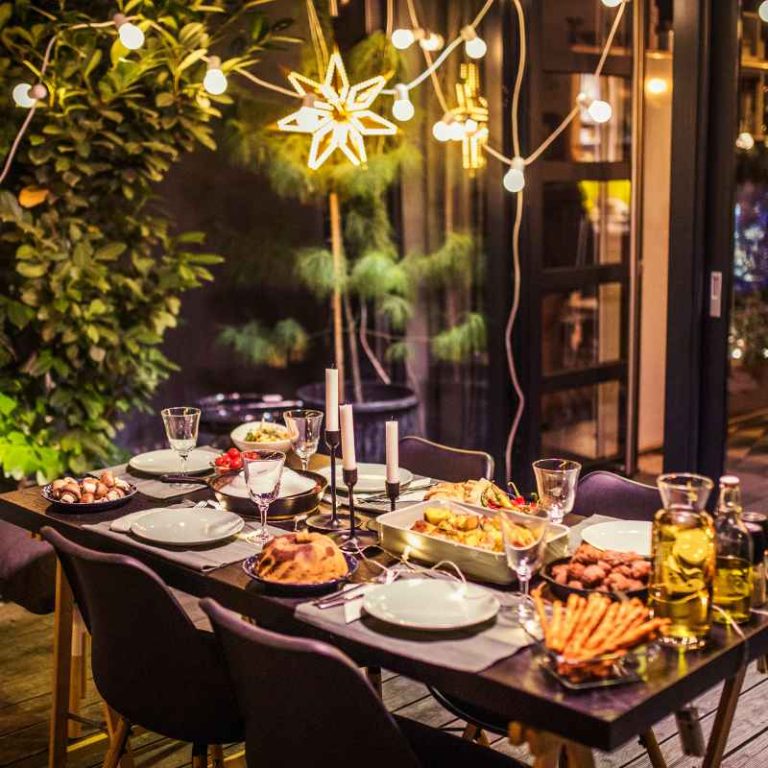
How to Host a Successful Dinner Party (Tips That Actually Work)
Hosting a successful dinner party is simple when you plan ahead, choose easy make-ahead dishes, and focus on making your guests feel welcome. With good timing, a relaxed menu, and a warm vibe, even beginners can create a fun evening everyone enjoys without stress.
Hey there, friend! If you’ve ever thought about hosting a dinner party but felt a little nervous, you’re not alone. Many of us want to bring people together for good food and great chats, but the idea of cooking, setting the table, and keeping everyone happy can feel overwhelming at first.
The good news? A successful dinner party doesn’t need fancy skills or expensive ingredients. It just takes some smart planning and a friendly attitude. In this guide, I’ll walk you through everything step by step so you can host with confidence. We’ll cover planning, menu ideas, setting the scene, and simple tips that actually work. By the end, you’ll feel ready to invite friends over and create memories that last. Let’s get started!
Why Hosting a Dinner Party is Worth It
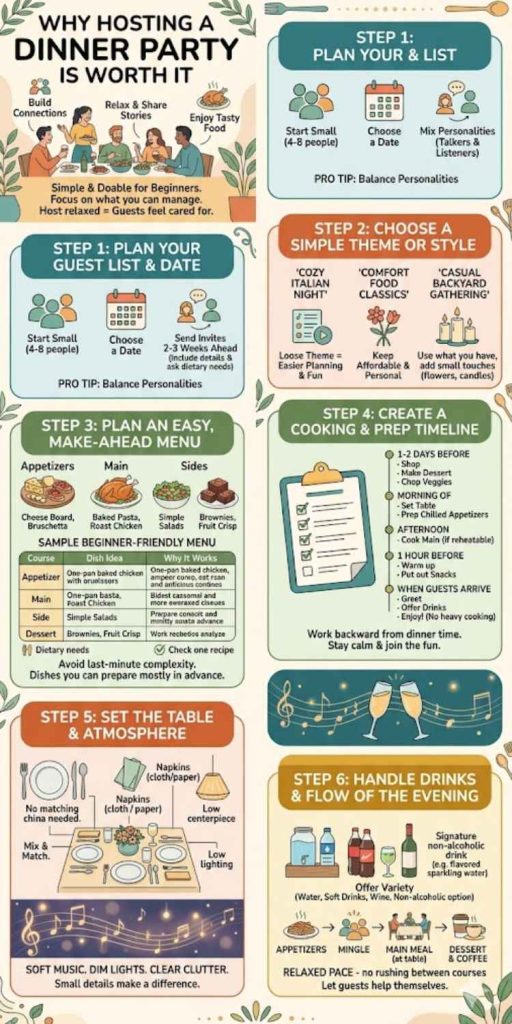
Bringing people together around a table builds connections in a busy world. Whether it’s close friends, family, or new neighbors, a dinner party lets everyone relax, share stories, and enjoy tasty food without the rush of a restaurant.
For beginners, the key is keeping things simple and doable. You don’t need chef-level recipes or a perfect home. Focus on what you can manage comfortably, and your guests will feel the care you put in. Many hosts say the best parties happen when the host is relaxed and having fun too.
Step 1: Plan Your Guest List and Date
Start small if it’s your first time. Aim for 4 to 8 guests so you can manage everything without feeling overwhelmed. Think about who gets along well and who might spark interesting conversations.
Choose a date that works for most people. Send invites 2-3 weeks ahead. Include details like time, what to bring (if anything), and any dietary needs to ask about early.
Pro tip: Mix personalities gently — a good balance of talkers and listeners keeps the energy nice.
Step 2: Choose a Simple Theme or Style
A loose theme makes planning easier and adds fun. It could be “cozy Italian night,” “comfort food classics,” or just “casual backyard gathering.” You don’t need decorations everywhere — even matching napkins or a playlist can set the mood.
Keep it affordable and personal. Use what you have at home and add small touches like fresh flowers or candles.
Step 3: Plan an Easy, Make-Ahead Menu
The secret to stress-free hosting is choosing dishes you can prepare mostly in advance. Avoid recipes that need last-minute attention in the kitchen.
Here’s a simple structure for 6-8 people:
- Appetizers: Easy items like a cheese board, veggie sticks with dip, or bruschetta.
- Main Course: One hearty dish like baked pasta, roast chicken, or a big pot of chili.
- Sides: Simple salads or roasted vegetables.
- Dessert: Something you can make the day before, like brownies or fruit crisp.
Consider dietary needs — ask guests ahead and have at least one vegetarian option.
Sample Beginner-Friendly Menu
| Course | Dish Idea | Why It Works |
|---|---|---|
| Appetizer | Cheese and fruit platter + crackers | No cooking needed; looks colorful and inviting |
| Main | One-pan baked chicken with veggies | Mostly hands-off; serves many easily |
| Side | Green salad with simple dressing | Fresh and quick to toss together |
| Dessert | Chocolate chip cookies or store-bought ice cream with toppings | Make ahead or minimal effort |
Focus on flavors you know and love. Test one new recipe if you want, but keep the rest familiar.
Step 4: Create a Cooking and Prep Timeline
Good timing keeps you calm. Work backward from dinner time.
Here’s a helpful example timeline for a 7 PM dinner:
- 1-2 days before: Shop for groceries, make dessert, chop veggies.
- Morning of: Set the table, prepare appetizers that can chill.
- Afternoon: Cook main dish if it can be reheated.
- 1 hour before guests arrive: Warm what needs heating, put out snacks.
- When guests arrive: Greet them, offer drinks, and enjoy — no more heavy cooking!
Make a simple checklist so nothing gets forgotten. Many experienced hosts prep almost everything ahead so they can join the fun.
Step 5: Set the Table and Create a Welcoming Atmosphere
You don’t need matching china. Mix and match what you have for a relaxed, personal feel.
Basic table setup:
- Plates, forks, knives, spoons
- Glasses for water and drinks
- Napkins (cloth if you have them, or nice paper)
- Centerpiece like flowers or candles (keep it low so people can see each other)
Play soft background music. Dim the lights a bit if it feels cozy. Clean the bathroom and clear clutter from common areas — small details make a big difference.
Step 6: Handle Drinks and Flow of the Evening
Have a simple self-serve drink station so guests can help themselves. Offer water, soft drinks, wine, or a signature non-alcoholic option like flavored sparkling water with fruit.
Plan the flow: appetizers while mingling, then move to the table for the main meal, followed by dessert and coffee. Keep the pace relaxed — no rushing between courses.
Food Safety Tips for Your Dinner Party
Keeping food safe is important so everyone stays healthy and happy. Follow basic rules from trusted sources.
Key guidelines include:
- Wash hands often and clean surfaces.
- Keep raw and cooked foods separate to avoid cross-contamination.
- Cook foods to safe temperatures and use a food thermometer.
- Keep hot foods hot (above 140°F) and cold foods cold (below 40°F).
- Don’t leave perishable food out longer than 2 hours (or 1 hour if it’s very warm).
For more details, check these helpful resources:
FDA tips for serving safe buffets and FoodSafety.gov event planning guide.
These small steps prevent problems and let you focus on enjoying the party.
Common Mistakes to Avoid
Even seasoned hosts learn from experience. Here are a few pitfalls and how to skip them:
- Trying brand-new complicated recipes the same day.
- Not checking dietary restrictions ahead.
- Doing too much cooking while guests are there.
- Forgetting to relax and join the conversation.
- Running out of ice, drinks, or extra plates.
Remember: Perfection isn’t the goal. A warm welcome and good company matter most.
Budget-Friendly Hosting Ideas
You can host beautifully without spending a lot. Shop seasonal ingredients, make big-batch dishes like pasta bakes or soups, and ask guests to bring a side or dessert if they offer.
Use what you already own for decor and serving. Potluck-style elements can make it even easier while keeping costs low.
| Budget Tip | How to Do It | Benefit |
|---|---|---|
| Make-ahead mains | Choose casseroles or slow-cooker recipes | Less stress, often cheaper ingredients |
| Simple appetizers | Vegetable platter or homemade dips | Affordable and fresh |
| Group contributions | Ask for drinks or dessert | Shared effort, more variety |
After the Party: Clean-Up and Follow-Up
Enlist help politely if needed, or tackle clean-up in stages. Many hosts do dishes the next morning after enjoying the night.
Send a quick thank-you message the next day. Share a photo from the evening if you took one — it keeps the good feelings going.
FAQ
How many people should I invite for my first dinner party?
Start with 4 to 6 guests. This size is manageable and lets you give everyone attention without feeling rushed.
What if I’m not a great cook?
No problem! Choose simple recipes you’ve made before or use easy one-pan meals. Guests care more about the company than fancy techniques.
Do I need to serve multiple courses?
Not at all. A good main dish with sides and a simple dessert works perfectly. Keep it to what feels comfortable for you.
How do I handle guests who arrive late?
Have appetizers and drinks ready so early guests can enjoy themselves. Start the main meal within 15-30 minutes of the planned time.
What should I do about dietary restrictions?
Ask guests when you invite them. Prepare at least one option without common allergens, like a vegetarian dish or gluten-free side.
Can I host on a tight budget?
Yes! Focus on affordable staples like pasta, beans, seasonal veggies, and homemade desserts. Potluck elements help too.
How do I keep the conversation flowing?
Ask open questions like “What’s something fun you did recently?” Mix seating so people who don’t know each other well sit together.
Conclusion
Hosting a successful dinner party is all about creating a warm space where people feel cared for and comfortable. With thoughtful planning, simple make-ahead food, and a focus on enjoyment rather than perfection, you can throw a gathering that feels special without the stress.
Remember, the best parties happen when the host is relaxed and present. Your guests will remember the laughter, the good food, and how welcome they felt — not whether every plate matched perfectly.
So go ahead and send those invites! Start small, use the tips here, and build your confidence with each party. You’ve got this. Cooking and hosting at home is one of the most rewarding ways to show love and creativity. Your friends will be glad you did, and you’ll create memories that bring everyone back to your table again and again.
Happy hosting! I can’t wait to hear how your dinner party turns out.