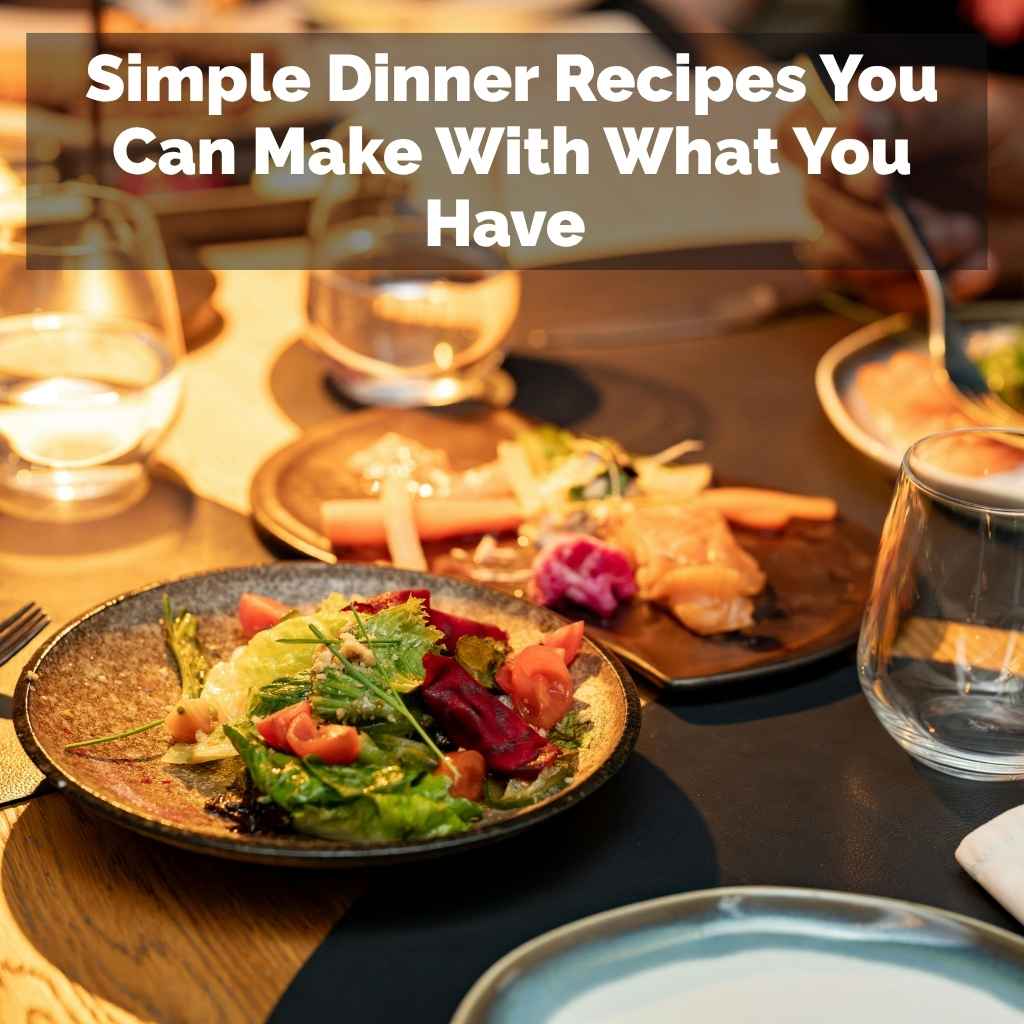
Simple Dinner Recipes You Can Make With What You Have
Simple dinner recipes you can make with what you have turn pantry staples, fridge leftovers, and frozen veggies into tasty, satisfying meals in under 30 minutes. No extra shopping trips needed—these beginner-friendly ideas save money, reduce waste, and build kitchen confidence with simple steps anyone can follow.
Ever opened your fridge at dinner time and wondered what to cook with just a few random items? You’re not alone. Most home cooks face this moment daily. The good news? You can create delicious, filling dinners right now using what you already have on hand. These simple dinner recipes you can make with what you have focus on creativity over complicated ingredients.
In this guide, you’ll learn practical tips, easy techniques, and step-by-step recipes that turn basic pantry items into flavorful meals. Whether you’re a busy parent, student, or total beginner, these ideas make cooking fun and stress-free. You’ll feel proud serving homemade food that tastes amazing—and costs almost nothing extra. Let’s dive in and get you cooking with confidence!
Why Cooking Dinner with What You Have Changes Everything
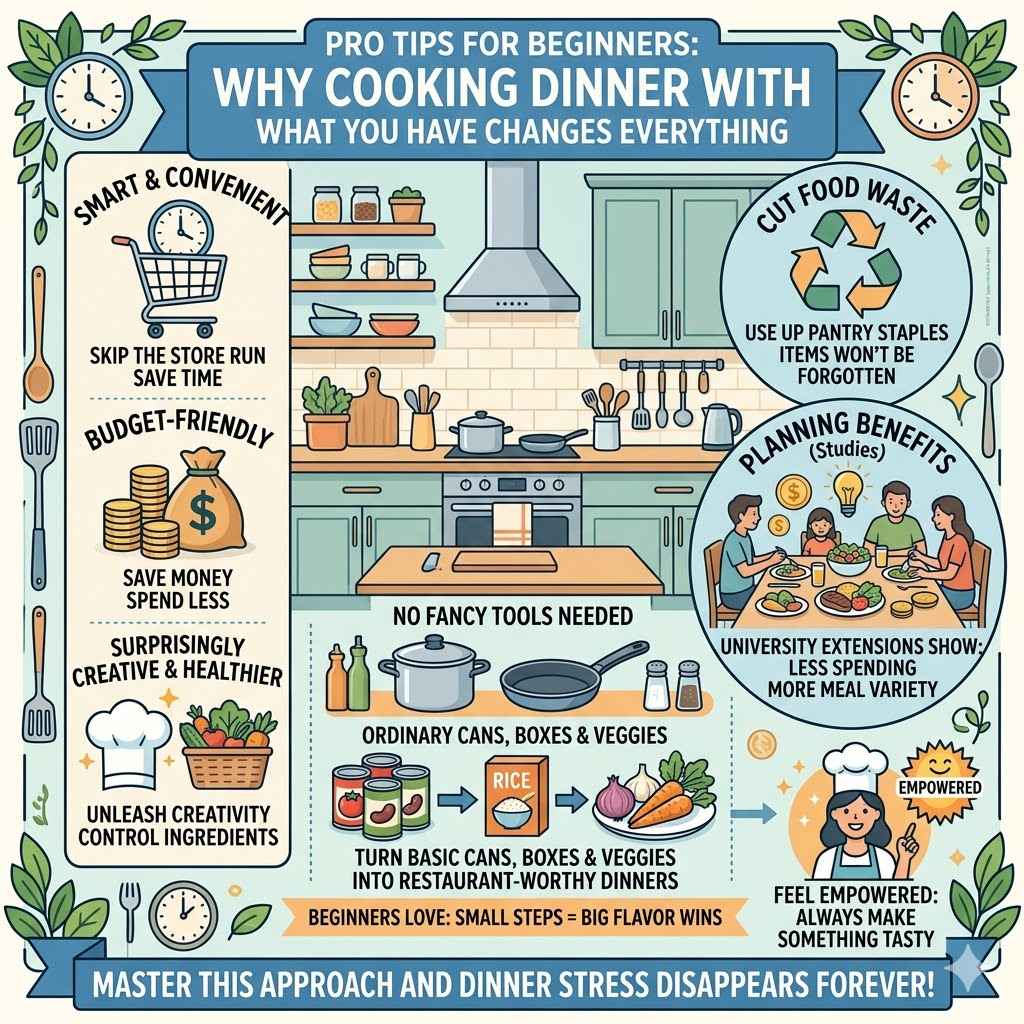
Cooking with pantry staples isn’t just convenient—it’s smart, budget-friendly, and surprisingly creative. You save time by skipping the store run. You cut food waste by using items that might otherwise sit forgotten. Plus, you eat healthier because you control every ingredient.
Studies from university extensions show families who plan meals around what they already own spend less and enjoy more variety. These recipes prove you don’t need fancy tools or chef skills. A simple pot, a skillet, and basic seasoning turn ordinary cans, boxes, and veggies into restaurant-worthy dinners. Beginners especially love how small steps lead to big flavor wins.
Best part? Once you master this approach, dinner stress disappears forever. You’ll feel empowered knowing you can always make something tasty—no matter what’s in your kitchen.
Stock Your Pantry for Endless Dinner Ideas
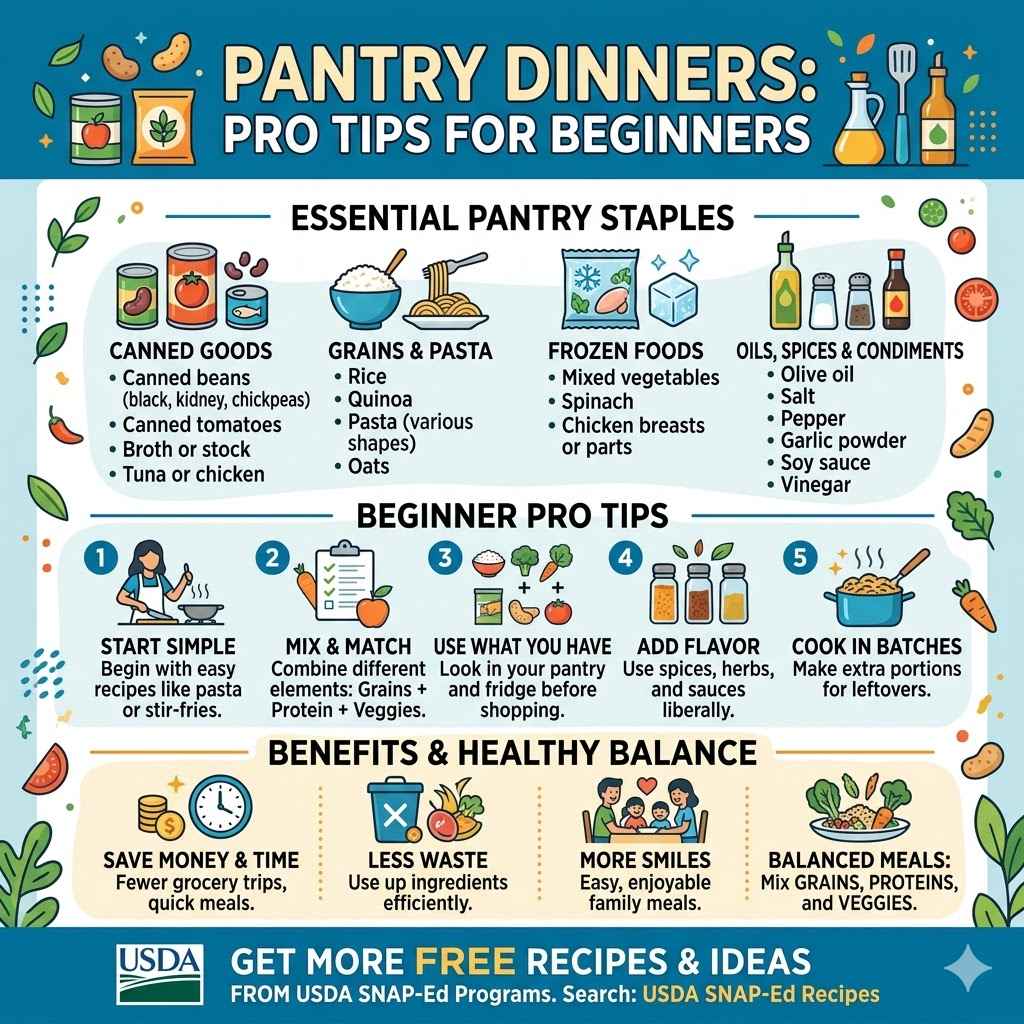
Great dinners start with a smart pantry. Focus on versatile items that last and mix well together. Here’s a quick table of must-have staples most kitchens already own or can keep on hand:
| Category | Common Examples | Why It’s Useful |
|---|---|---|
| Grains & Carbs | Rice, pasta, quinoa, bread, potatoes, oats | Form the filling base of any meal in minutes |
| Proteins | Canned beans, tuna, lentils, eggs, peanut butter, chickpeas | Add satisfying protein without cooking meat from scratch |
| Vegetables | Canned tomatoes, frozen mixed veggies, onions, garlic, potatoes | Bring color, nutrition, and flavor to every dish |
| Flavor Boosters | Oil, soy sauce, spices, vinegar, broth, cheese | Turn plain ingredients into exciting meals |
Keep these organized so you can see options at a glance. According to experts at Penn State Extension, creative pantry cooking helps stretch food budgets while keeping meals exciting. Check their pantry meal planning guide here: Penn State Extension – Meal Planning with Pantry Boxes.
Smart Beginner Tips Before You Start Cooking
Follow these simple rules to stay safe and make every recipe taste better:
- Always wash hands and surfaces first.
- Check use-by dates on canned goods and leftovers.
- Taste as you go and adjust seasonings slowly.
- Use low to medium heat to avoid burning pantry staples.
- Store leftovers properly—refrigerate within two hours.
For food safety basics, visit the official guide at FoodSafety.gov. It covers everything from proper chilling to safe reheating so your meals stay healthy and delicious.
General 4-Step Method for Any Pantry Dinner
- Assess what you have. Open the fridge, freezer, and pantry. Pick one carb, one protein, and one veggie.
- Choose a cooking style. Stir-fry, one-pot boil, bake, or skillet sauté—whatever matches your ingredients.
- Build flavor layers. Start with onion or garlic, add protein, then veggies, and finish with sauce or spices.
- Plate and enjoy. Add any fresh herbs, cheese, or crunch you have on top.
This method works every single time and keeps dinners balanced. The USDA’s MyPlate guide recommends filling half your plate with veggies or fruits for better nutrition: MyPlate.gov.
Recipe 1: One-Pot Tomato Pasta with Beans (15 Minutes)
This hearty Italian-inspired dish uses pantry pasta and canned beans for a complete meal. No draining needed!
- 8 oz pasta (any shape you have)
- 1 can diced tomatoes (or sauce)
- 1 can beans (kidney, black, or chickpeas), drained
- 1 onion or garlic cloves, chopped
- 2 cups water or broth
- 1 tsp dried herbs or spices
- Salt, pepper, and optional cheese or oil
- Heat a little oil in a large pot. Cook chopped onion or garlic for 2 minutes.
- Add pasta, tomatoes, beans, water, herbs, salt, and pepper. Stir well.
- Bring to a boil, then simmer 10–12 minutes until pasta is tender. Stir occasionally.
- Taste and add more seasoning. Top with cheese if you have it. Serves 4.
Tip: Frozen spinach or peas stirred in at the end adds extra veggies without extra work.
Recipe 2: Easy Chickpea Stir-Fry Rice Bowl (20 Minutes)
Transform leftover rice or quick-cook rice into a colorful Asian-style bowl. Inspired by university extension recipes.
- 2 cups cooked rice (or quick-cook rice)
- 1 can chickpeas, drained
- 2 cups frozen mixed vegetables
- 2 tbsp soy sauce or any sauce you have
- 1 tsp garlic powder or fresh garlic
- Oil for cooking
- Optional: egg or canned tuna for extra protein
- Heat oil in a skillet. Add garlic and chickpeas. Cook 3 minutes until golden.
- Toss in frozen veggies. Stir-fry 5 minutes until hot.
- Add cooked rice and soy sauce. Mix everything together for 4–5 minutes.
- Optional: scramble an egg in the pan first for a fried-rice twist. Serve hot. Serves 3–4.
This recipe shines because chickpeas provide protein while veggies add crunch and color.
Recipe 3: Quick Bean Chili (25 Minutes)
A cozy, filling chili using only cans and spices. Perfect for cold evenings or meal prep.
- 2 cans beans (any mix—black, kidney, pinto)
- 1 can diced tomatoes
- 1 onion or garlic
- 1 cup frozen corn or any veggie
- 2 tsp chili powder or cumin
- 1 cup water or broth
- Salt and optional hot sauce
- Cook chopped onion in a pot for 3 minutes.
- Add beans, tomatoes, corn, spices, and water. Stir.
- Simmer 15–20 minutes until thick and flavorful.
- Taste and adjust spices. Top with any cheese, crackers, or yogurt you have. Serves 4.
Leftovers taste even better the next day. Freeze extras for future quick dinners.
Recipe 4: Cheesy Potato Hash with Eggs (18 Minutes)
Crispy potatoes meet fluffy eggs for a comforting breakfast-for-dinner winner.
- 3–4 potatoes (or frozen hash browns)
- 1 onion
- 2–4 eggs
- Oil, salt, pepper, and any spices
- Optional: cheese, canned tuna, or frozen peas
- Dice potatoes small and cook in a skillet with oil and onion for 10 minutes until golden.
- Make wells in the hash and crack eggs into them. Cover and cook 5 minutes until eggs set.
- Sprinkle cheese or add tuna if desired. Season well. Serves 2–3.
Use whatever herbs or leftover veggies you find to customize.
Substitution Guide: Make It Work with Exactly What You Have
Flexibility is key. Here’s a handy table to swap ingredients without stress:
| If You Don’t Have | Swap With | Example in Recipe |
|---|---|---|
| Pasta | Rice, quinoa, or bread | Use rice in the pasta recipe for a new twist |
| Beans | Lentils, tuna, eggs, or peanut butter | Tuna works great in the stir-fry |
| Fresh veggies | Frozen mix, canned corn, or potatoes | Frozen peas replace spinach perfectly |
| Soy sauce | Vinegar + salt or any sauce | Keeps flavor balanced in any stir-fry |
Benefits of These Pantry Dinners
Besides saving money and time, you’ll notice less waste and more family smiles. These meals stay balanced when you mix grains, proteins, and veggies. SNAP-Ed programs from the USDA offer even more free recipes using staples: USDA SNAP-Ed Recipes.
Frequently Asked Questions
What if I have almost nothing in the pantry?
Start with rice or pasta plus any canned tomato or bean. Add spices and an egg if possible. Even plain rice with oil and salt makes a comforting base—build from there.
Are these recipes safe for beginners?
Absolutely! Every step uses one pan or pot and everyday kitchen tools. Follow the safety tips and you’ll succeed every time. Practice makes it even easier.
How do I store leftovers safely?
Cool food quickly, store in clean containers, and refrigerate within two hours. Use within 3–4 days. Reheat to steaming hot. See full guidelines at FoodSafety.gov.
Can I make these gluten-free or vegetarian?
Yes! Swap pasta for rice or quinoa. Most recipes are naturally vegetarian with beans or eggs. Skip tuna and use extra beans for vegan versions.
What if my kids are picky eaters?
Let them help choose ingredients or toppings. Mild flavors and familiar shapes (like cheesy potatoes) win them over. Add cheese or a favorite spice to make it fun.
How long do pantry staples really last?
Canned goods last 2–5 years unopened. Dried pasta and rice keep 1–2 years. Rotate stock and check for off smells before using. Proper storage keeps them fresh longer.
Do I need special equipment?
No! A basic pot, skillet, knife, and spoon are enough. Microwave or oven work too for many recipes.
You now have everything you need to turn simple pantry items into satisfying dinners tonight. These recipes prove that great food doesn’t require perfect ingredients or fancy skills—just a little creativity and the willingness to try.
Pick one recipe, gather what you have, and start cooking. Your first successful meal will boost your confidence and spark new ideas. Share your creations with family or friends—they’ll love the story behind each dish. Remember, every great cook started exactly where you are right now.
Happy cooking! Your kitchen is full of possibilities, and delicious dinners are always within reach. Try these ideas this week and watch how quickly pantry meals become your new favorite habit.